
In the world of startups, strategy often reveals itself not in what companies say, but in the order in which they do things. The choices founders make early on – what to prioritize, what to delay, and what to bet the company's reputation on – quietly shape everything that follows.
Two startups can enter the same market, around the same time, with similar resources, yet end up telling very different stories. Not because one worked harder than the other, but because their strategic sequencing was different: what they chose to accelerate, and what they believed could be fixed later.

The contrasting journeys of Ola Electric and Ather Energy offer a powerful lens into this idea. Not as a comparison of products or industries, but as a case study in how strategic intent – when translated into action – eventually shows up in outcomes.
Two Different Paths at Similar Starting Lines
Ola Electric and Ather Energy started in roughly the same timeframe, attracted significant capital, and generated early excitement within their respective ecosystems. But the strategic choices they made early on set the tone for what followed.
Ola Electric's strategy was unapologetically aggressive. It prioritized:
a) Rapid product roll-outs
b) Broader geographic expansion
c) High-visibility launches and marketing
d) Quick distribution footprints

This approach helped Ola capture early mindshare and significant market share in a short period. It appeared to be the archetype of modern startup growth: bold, fast, and uncompromising.
Ather Energy, while also ambitious, chose a contrasting path. Its strategy emphasized:
a) Engineering maturity and product refinement
b) Incremental geographic expansion
c) A tighter focus on customer experience
d) Gradual scaling of operations
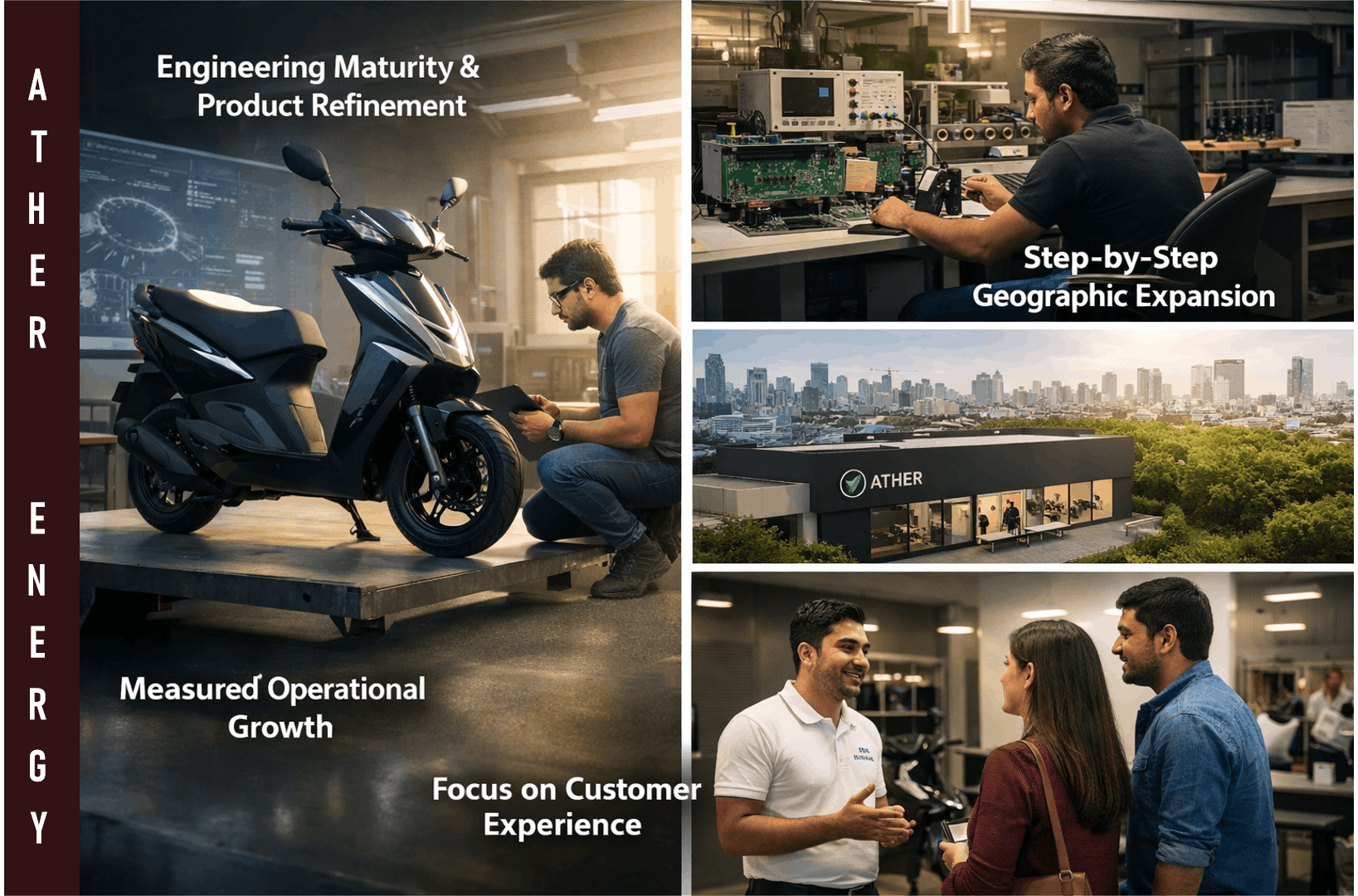
Rather than racing to be everywhere at once, Ather invested deeply in getting things right before amplifying its reach.
The First Chapter: Early Momentum vs Quiet Engineering
In the early years, Ola Electric's aggressive strategy translated into rapid uptake and notable sales performance. The company's scooters were everywhere, its brand was visible, and its growth trajectory drew attention from investors and customers alike.
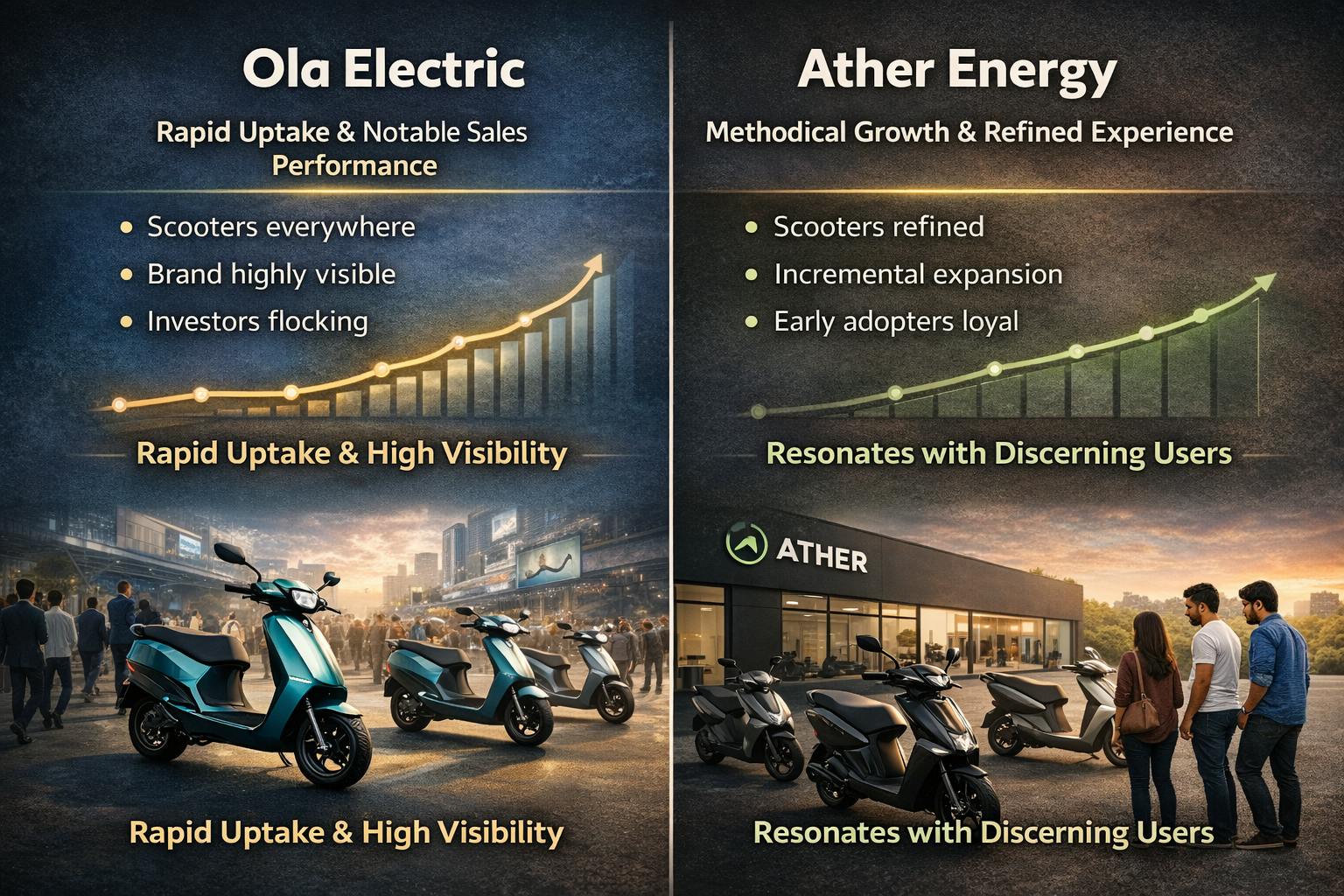
Ather, on the other hand, grew more methodically. Its scooters, refined through multiple iterations, did not deliver overnight headlines, but they resonated with early adopters for their quality, reliability, and thoughtful user experience.
The Second Chapter: Numbers Tell the Real Story
By 2025, market data began to reflect the downstream impact of these different strategic choices.
Ola Electric's share of the market, once among the highest in its category, contracted sharply over the year. From commanding well over one-third of the market in 2024 (around 36-37%), its share fell to less than half of this by the end of 2025, with industry trackers placing it at around 15-16% in retail registrations. The shift was not gradual; it was compressed into a relatively short period, making it one of the most closely watched reversals in the space.

Ather Energy's trajectory, while far less dramatic, moved in the opposite direction. Starting from a low double-digit share (roughly 10-11% in 2024), it claimed steadily to around 15% by late 2025, closing he gap with competitors that had once seemed far ahead. Its growth did not come from sudden spikes, but from consistent month-on -month performance, an indicator often associated with repeat purchases, customer advocacy, and operational stability.
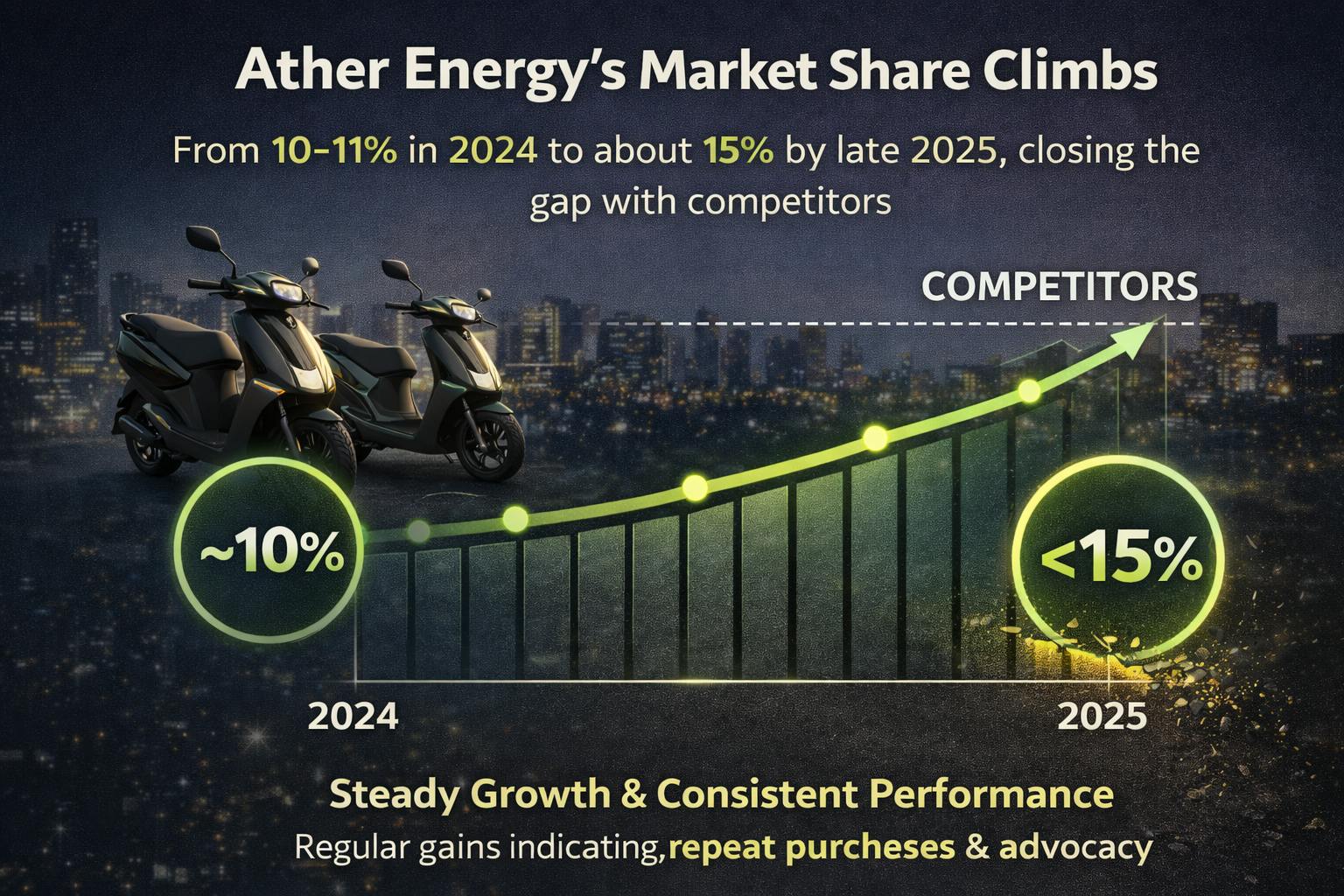
The contrast is not merely statistical. It illustrates how early strategic decisions – around product readiness, expansion pace, and customer experience – eventually surface as measurable business outcomes, particularly in competitive and rapidly evolving markets where user experience becomes the decisive differentiator.

What This Contrast Really Reveals and Across Industries
The stories of Ola Electric and Ather Energy don't simply teach lessons about electric vehicles – they teach lessons about strategic choice, market positioning, and the compounding effects of early decisions.
Here are the broader insights that any startup – whether in technology, consumer products, services, or platforms – can take to heart:
1. First Impression is Memorable but Not Always Durable
An early splash can attract attention and customers, but if the backend systems, product quality, or customer experience aren't mature enough, that first impression becomes a benchmark against which future performance is judged, often harshly.

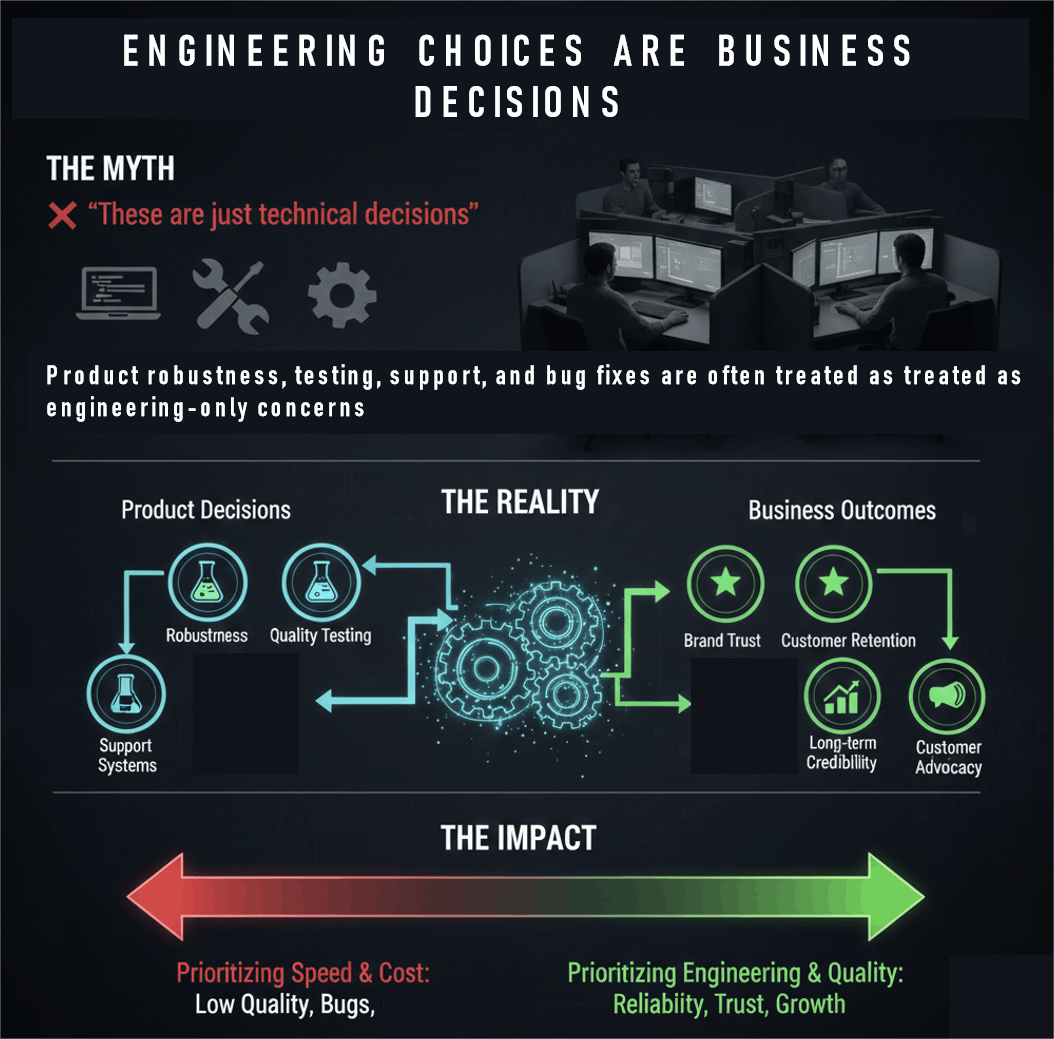
2. Engineering and Product Readiness Are Business Decisions
Choices about product robustness, quality testing, support systems, and flexibility in fixing bugs are not "technical" decisions alone. They directly impact brand perception, customer retention, and long-term credibility.
3. Customer Trust Is a Strategic Asset
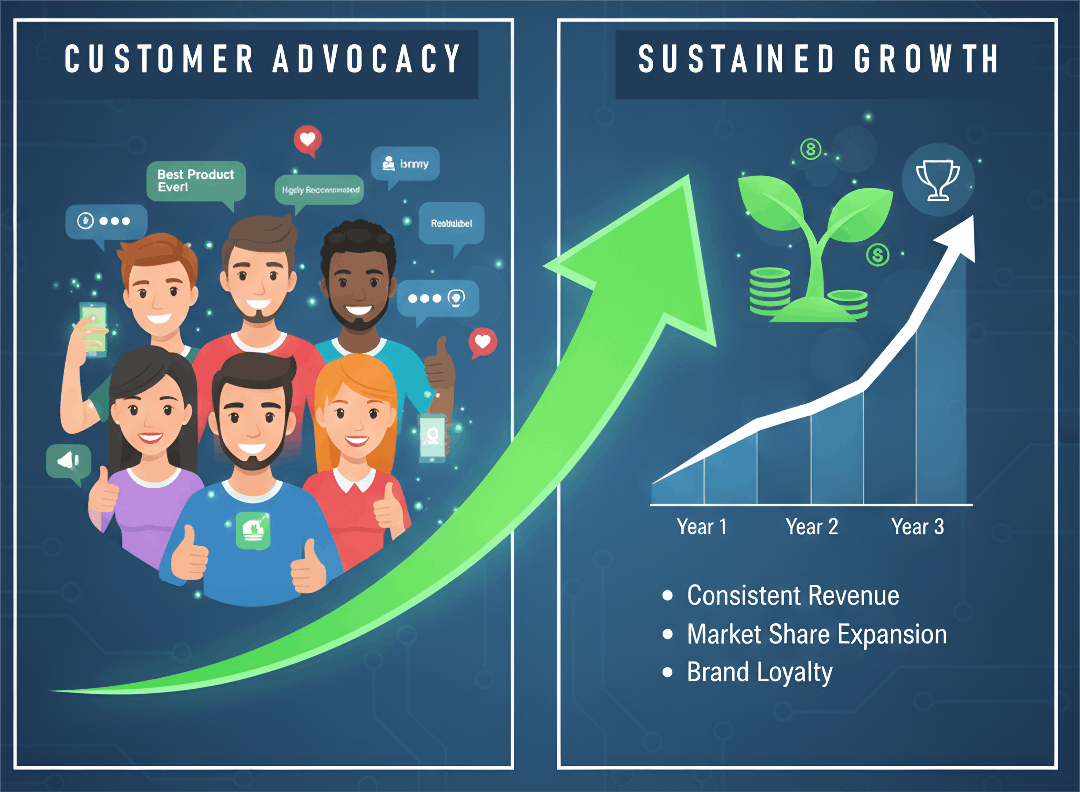
Fast growth can sometimes mask underlying weaknesses. When customers feel heard, supported, and confident in a product's performance, trust builds – and sustained trust often matters more than rapid scale when markets shift or competitors improve.
4. Balanced Growth Outperforms Extremes
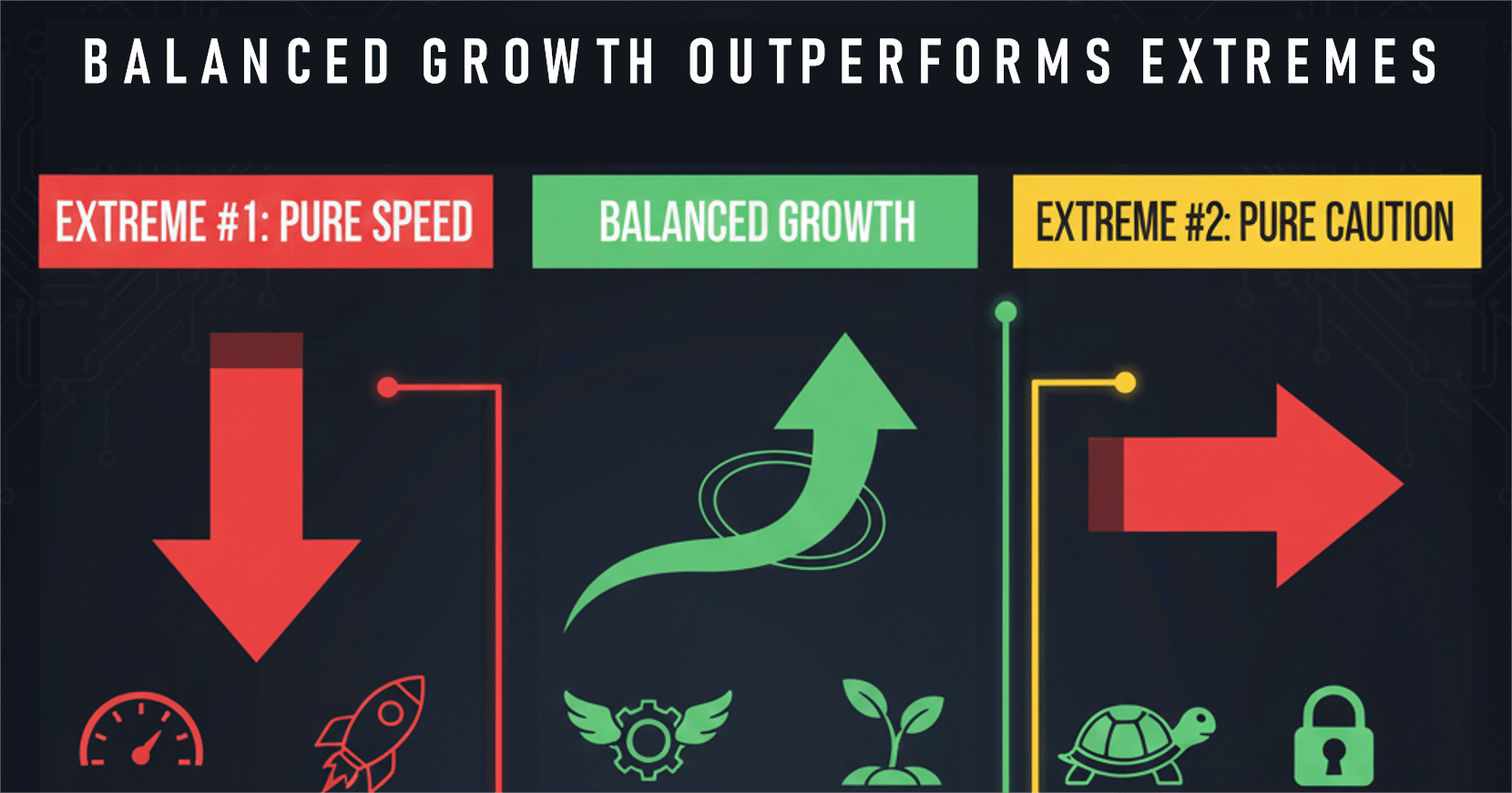
There's rarely a single right way to build a business, but extremes, whether pure speed or pure caution, carry risks. The startups that thrive over time often find the balance between being bold and being prepared.
5. What You Do First Echoes Longest
Every startup faces moments of choice: push a product to market now or wait to polish it; expand fast or improve core systems first; chase vanity metrics or invest in reliability. These choices create patterns, and patterns compound into outcomes – positive or challenging.
A Balanced Perspective: Neither Approach Is Perfect
It is important to stress that neither startup's philosophy is "the right one" in universal terms. Ola's ambition fuelled rapid awareness and customer acquisition; Ather's meticulous engineering fostered deeper trust. Both have strengths and drawbacks.
What the broader business community can learn from them, regardless of sector, is how strategy shapes experience, and how experience shapes longevity.
This isn't about picking a side. It's about understanding the trade-offs startups face and choosing a path that reflects not just the desire to grow quickly, but the ability to grow meaningfully.
The ArthaVerse Perspective: Prioritizing Sustainable Growth
At ArthaVerse, we help businesses and startups rethink growth so it doesn't come at the expense of durability.
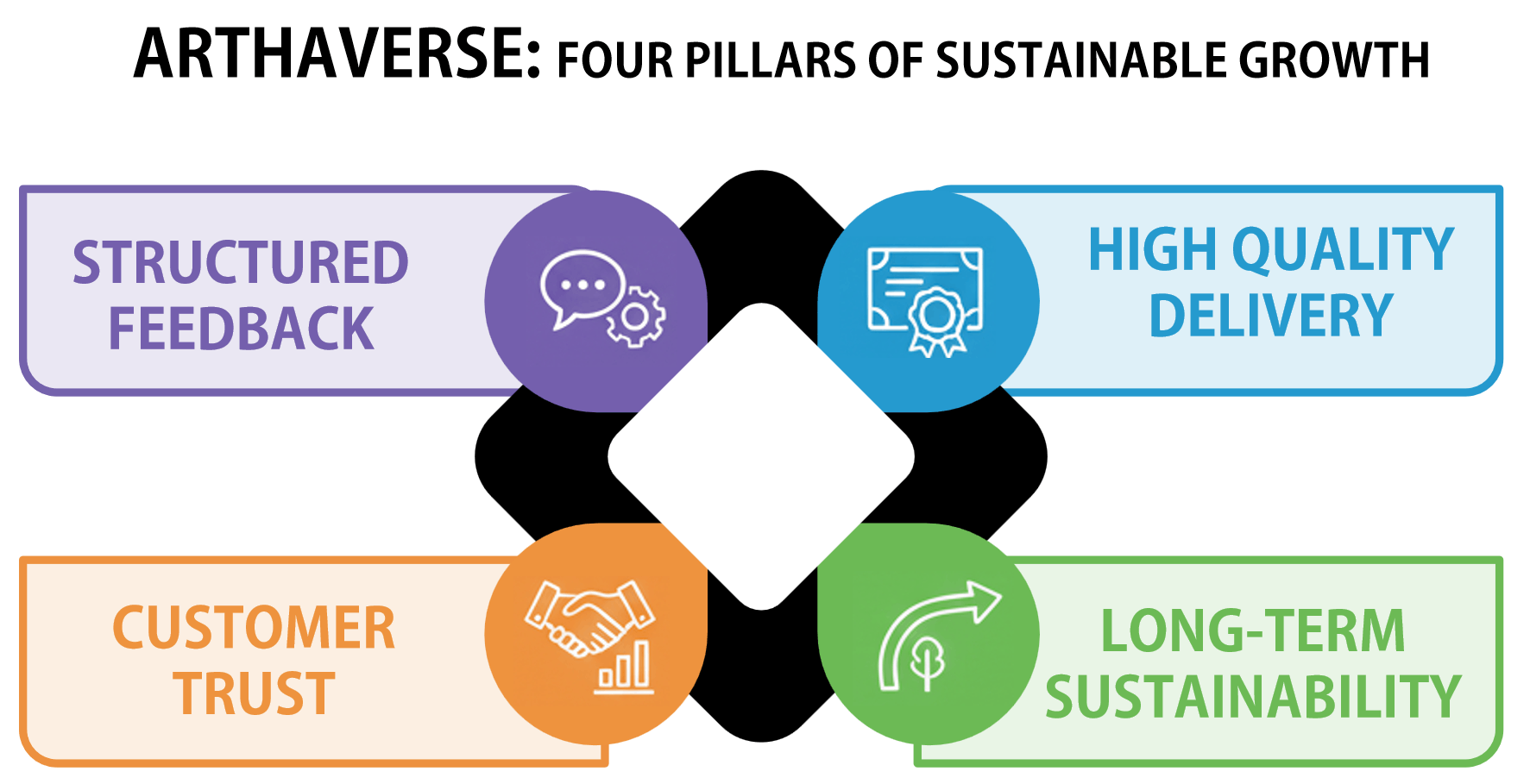
In our work with leaders across industries, we emphasize principles such as:
a) Long-term sustainability over short-term success
b) High-quality delivery over superficial momentum
c) Customer trust as a measurable asset
d) Structured feedback systems that drive product maturity
Frameworks like our High Reliability Index are designed to help organisations monitor not just how fast they are growing, but how well they are building the foundation that support that growth.
Because when speed and substance align, businesses don't just scale – they endure!

