
Neuroplasticity in Leadership: Why Growth Happens When We Stretch

I’ve been thinking a lot about what really makes leaders grow. It is not titles, not tenure and definitely not having all the answers.
I was reminded of an old line : “Ships are safest in the harbour. But that’s not what ships are built for.” That line has stayed with me for years.
In fact, it carried me through one of the most uncertain seasons of my life. Back in 2007, I was taking my first tentative steps into the world of learning and facilitation—unsure whether this Dubai boy would even survive India, unsure whether I’d still have a job a few months later.
During that season, a dear friend, scribbled those words in my training manual.
At the time, I didn’t fully grasp what they meant. I only knew that everything felt unfamiliar. Unstable. Slightly scary.
Years later, I find myself asking the same question again: What does this mean for me today?

Growth usually begins when we’re out of depth
Most real growth doesn’t happen when we feel fully prepared.
It happens when we’re slightly out of our depth.
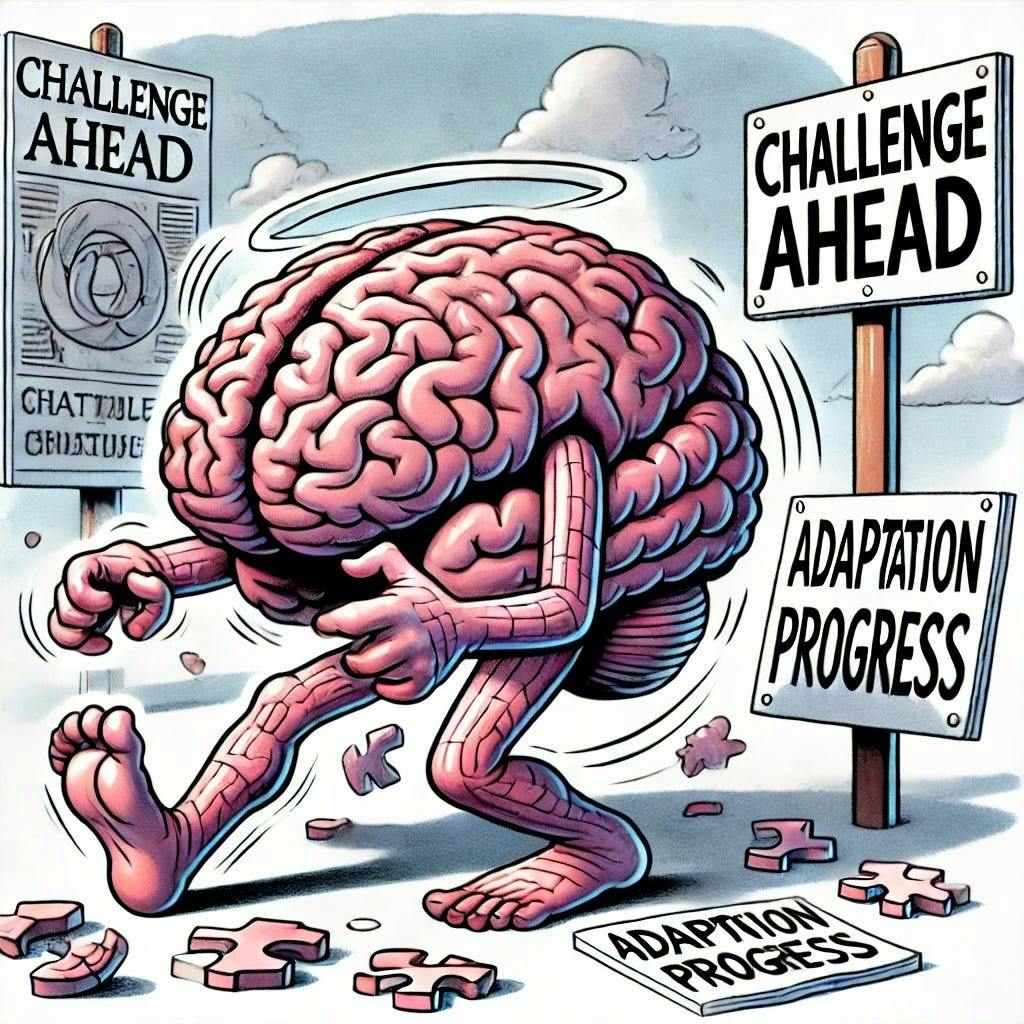
There’s a concept from neuroscience that explains this beautifully. It’s called neuroplasticity. In simple terms, it means our brains can keep changing and rewiring themselves throughout life—not just when we’re young.
But there’s a catch. The brain only adapts when it’s challenged. For leaders, that insight matters more than we often realise.
When experience starts to work against us
Most leaders are successful because certain patterns worked for them in the past. Over time, those patterns become familiar. Comfortable. Reliable.
And that’s where the risk quietly creeps in.
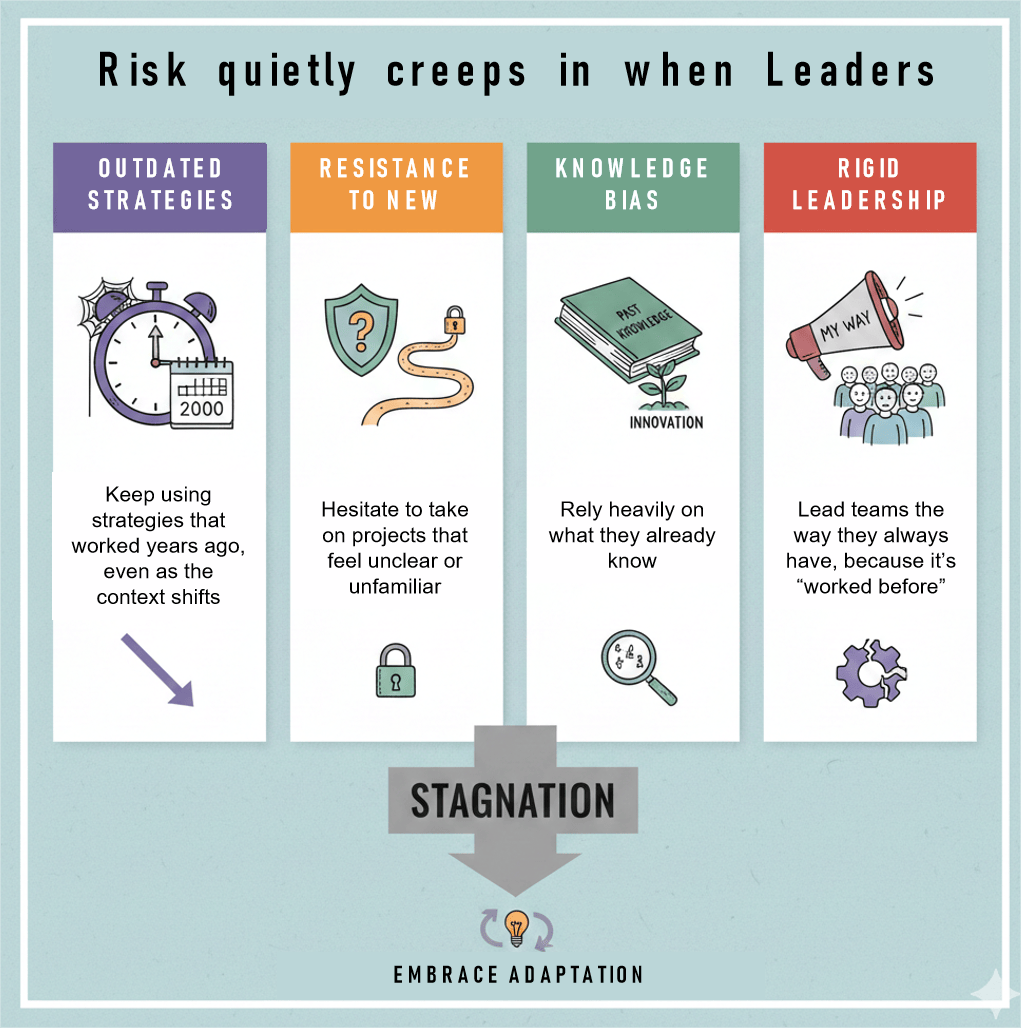
From the brain’s point of view, this makes sense. Familiar ways of thinking require less effort. They’re efficient. But leadership today doesn’t reward efficiency alone.
It rewards adaptability.

And adaptability only grows when the brain is asked to think differently.
Stretch is not recklessness
One of the most practical ways leaders can build this adaptability is through stretch.
Not reckless risk-taking. Not chasing novelty for its own sake. But intentional stretch.
A stretch project is simply work that nudges you beyond your usual way of operating while still being rooted in real business needs.
It might look like:
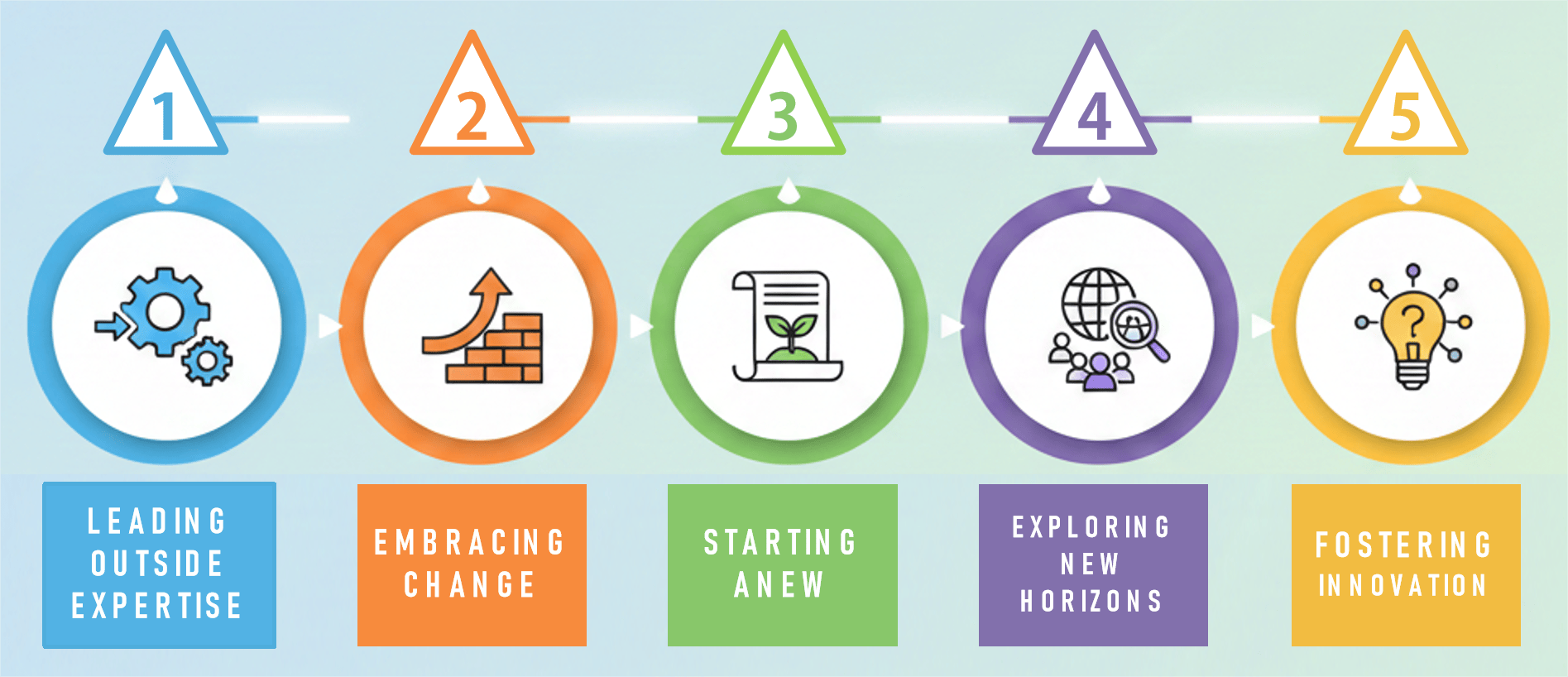
1. Leading an initiative outside your core expertise
2. Taking responsibility for change, not just stability
3. Building something new instead of only improving what exists
4. Entering a new market or working with a new kind of client
5. Supporting innovation without having everything figured out
The real value of these experiences isn’t just the outcome.
It’s what happens internally.
When we operate at the edge of our comfort zone, the brain switches off autopilot. We pay more attention. We listen better. We learn. That’s neuroplasticity at work.
Making stretch practical in real life
Stretch doesn’t have to mean doing more. Often, it means doing things differently.
A few small but powerful shifts help:
1. Choosing discomfort deliberately instead of avoiding it
2. Redesigning roles and responsibilities, not just adding tasks
3. Taking measured steps into the unknown rather than big leaps
4. Creating space to reflect so learning actually sticks
5. Speaking openly about what you’re learning along the way
When leaders do this, something interesting happens. Teams feel safer to experiment, To learn, To grow. Growth becomes part of the culture, not an exception.
A final thought
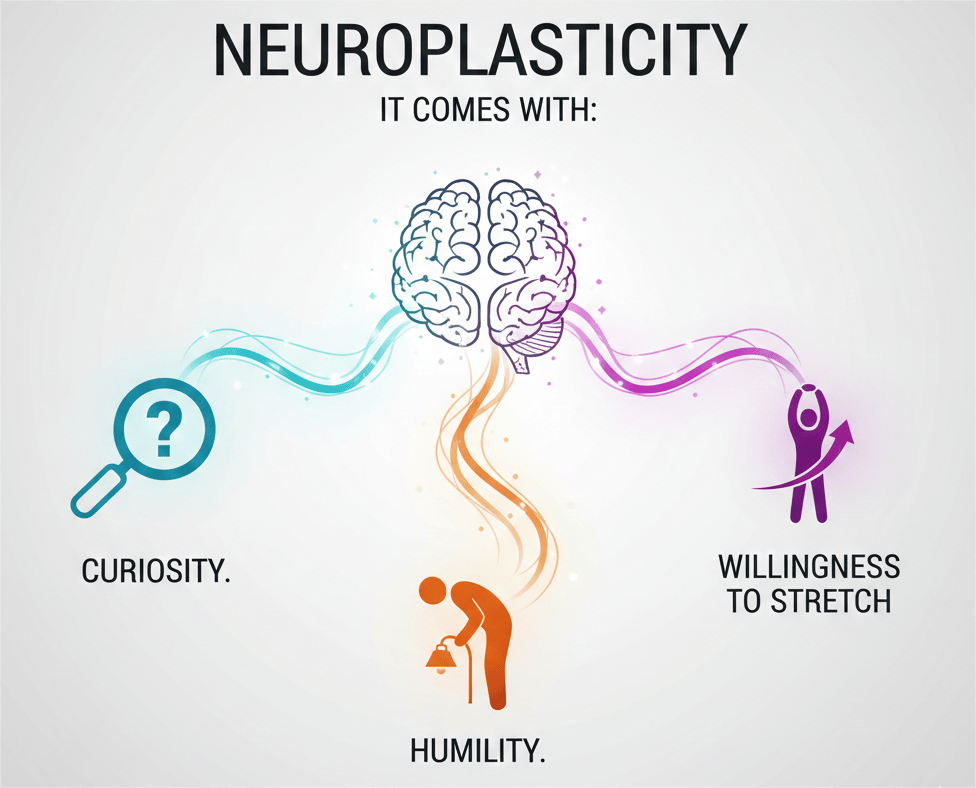
Neuroplasticity doesn't come automatically with seniority.
It comes with curiosity. With Humility. With a willingness to stretch.
In a world that keeps changing, the biggest risk isn’t getting it wrong once in a while. It’s becoming too comfortable while the world moves on.
Leadership isn’t measured by how well we navigate familiar waters, but by the willingness to sail when those waters are no longer enough.

