
How to Scale a Business Without Losing Customer Experience or Quality
Scaling up every entrepreneur's dream. More customers, wider markets, and higher revenue often feel like the ultimate validation of years of hard work.
Yet, many businesses discover an uncomfortable truth along the way: growth can quietly erode the very things that made customers fall in love with the brand in the first place. Personal attention fades, quality becomes inconsistent, and trust begins to weaken.

The real challenge of growth is not scaling fast–it's scaling well.
Based on insights from growing Indian startups and established brands, one lesson is clear: when businesses grow without systems, customer experience and quality are usually the first casualties.
The Risk of Scaling Too Fast
Scaling without strong operational foundations almost always impacts quality. Let's look at two real-world examples from India–one cautionary, one inspiring.

Real-World Examples of Scaling Done Right and Wrong
A) Scaling Without Safeguards: A Food Delivery Startup
A mid-sized food delivery startup built its reputation on a compelling promise: fresh, locally sourced meals delivered within 30 minutes. Early customers loved the consistency and care.
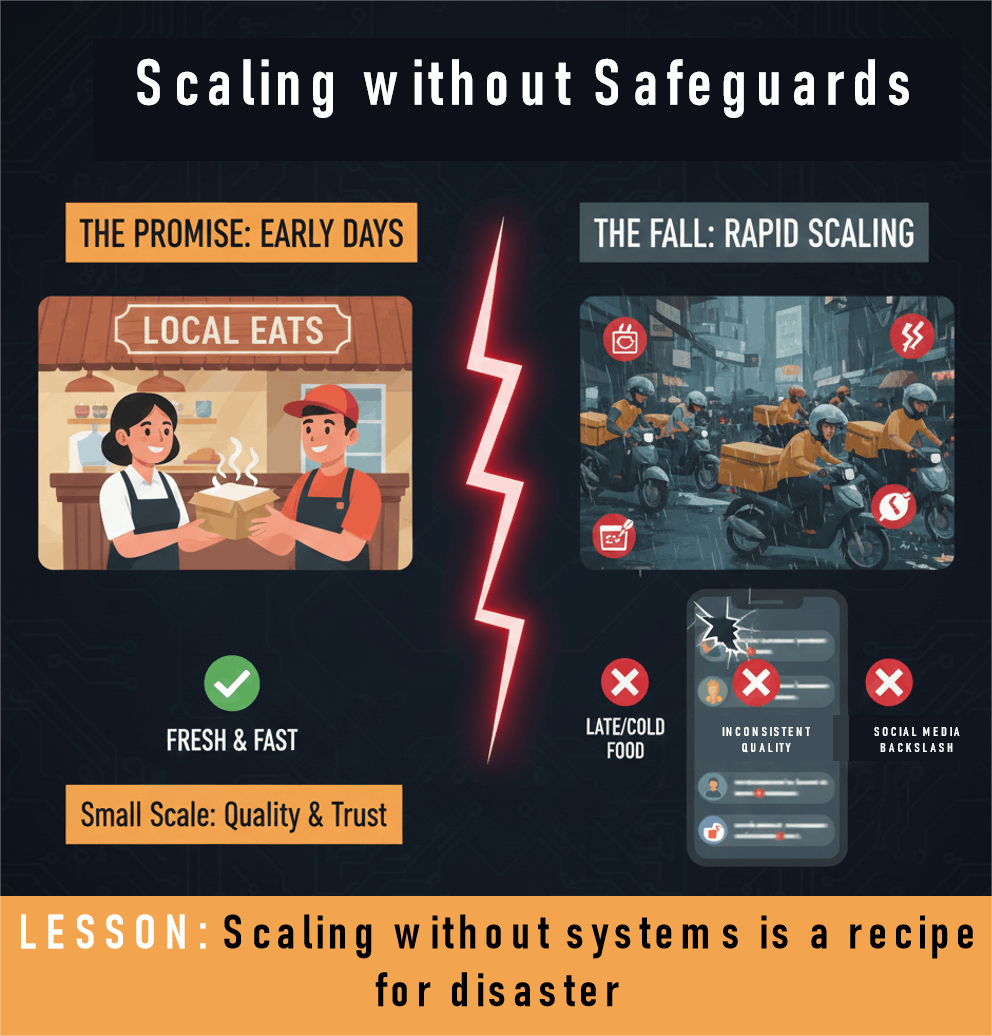
As demand surged, the company expanded rapidly into multiple cities. To keep up, they rushed vendor onboarding, outsourced logistics, and relaxed quality checks.
The results were immediate:
1. Meals arrived late or cold
2. Taste and portion sizes became inconsistent
3. Customer complaints flooded social media
Within two years, the brand's credibility suffered so badly that they were forced to retreat back to a single city.
Lesson: Scaling fast without systems doesn't just slow growth–it can reverse it.
B) Scaling With Care: What Amul Got Right
Now consider Amul, one of India's most trusted and enduring brands.
What began as a small dairy cooperative in Gujarat scaled into a nationwide household name–without losing trust or quality.
Amul succeeded because they:
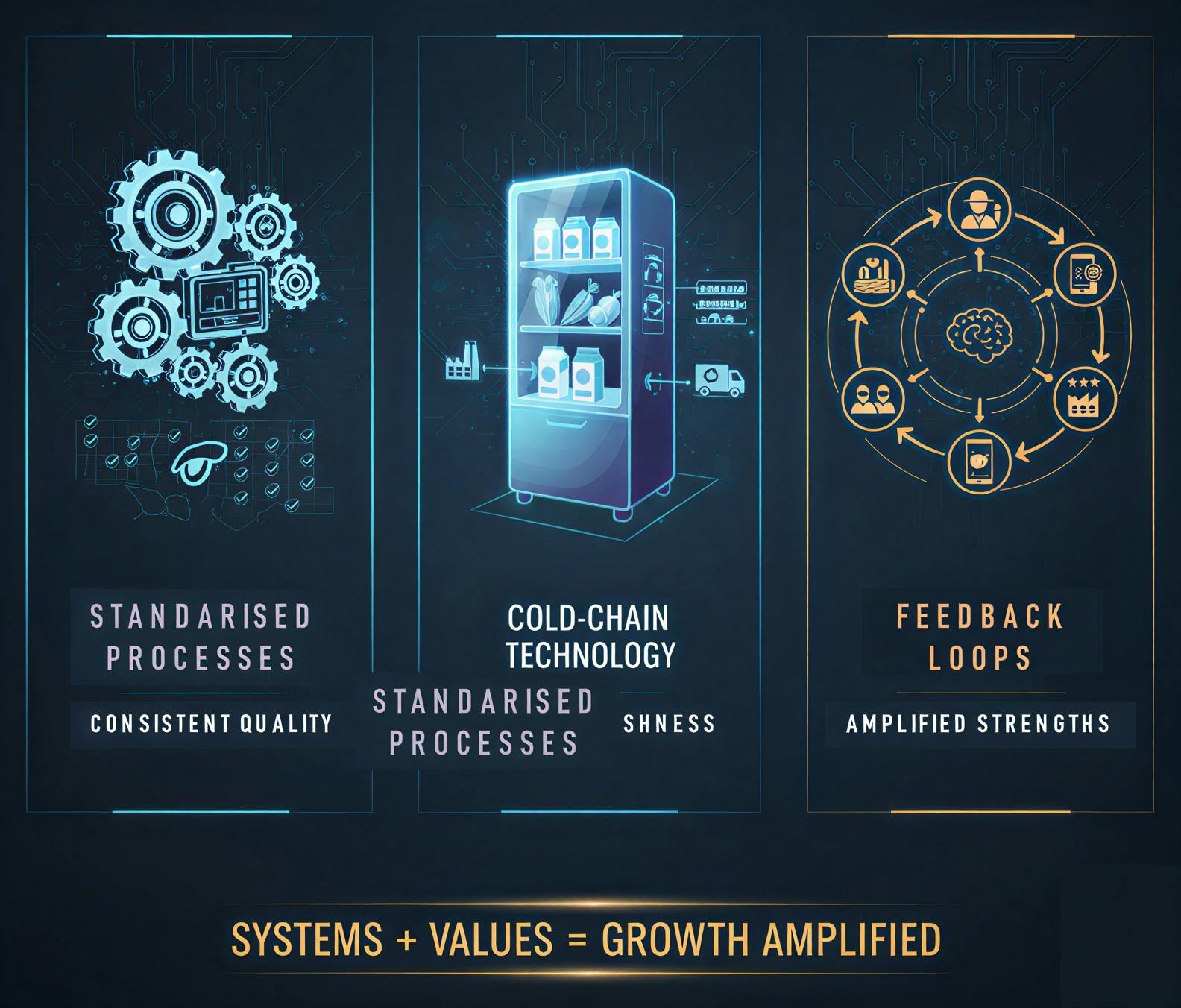
a) Standardized processes so products tasted the same across regions
b) Invested in cold-chain technology to ensure freshness
c) Built feedback loops with farmers and consumers to continuously improve
Rather an diluting their promise, Amul strengthened it at scale.
Lesson: With the right systems and values, growth can amplify strengths instead of weakening them.
4 Practical Ways to Scale Without Losing Quality
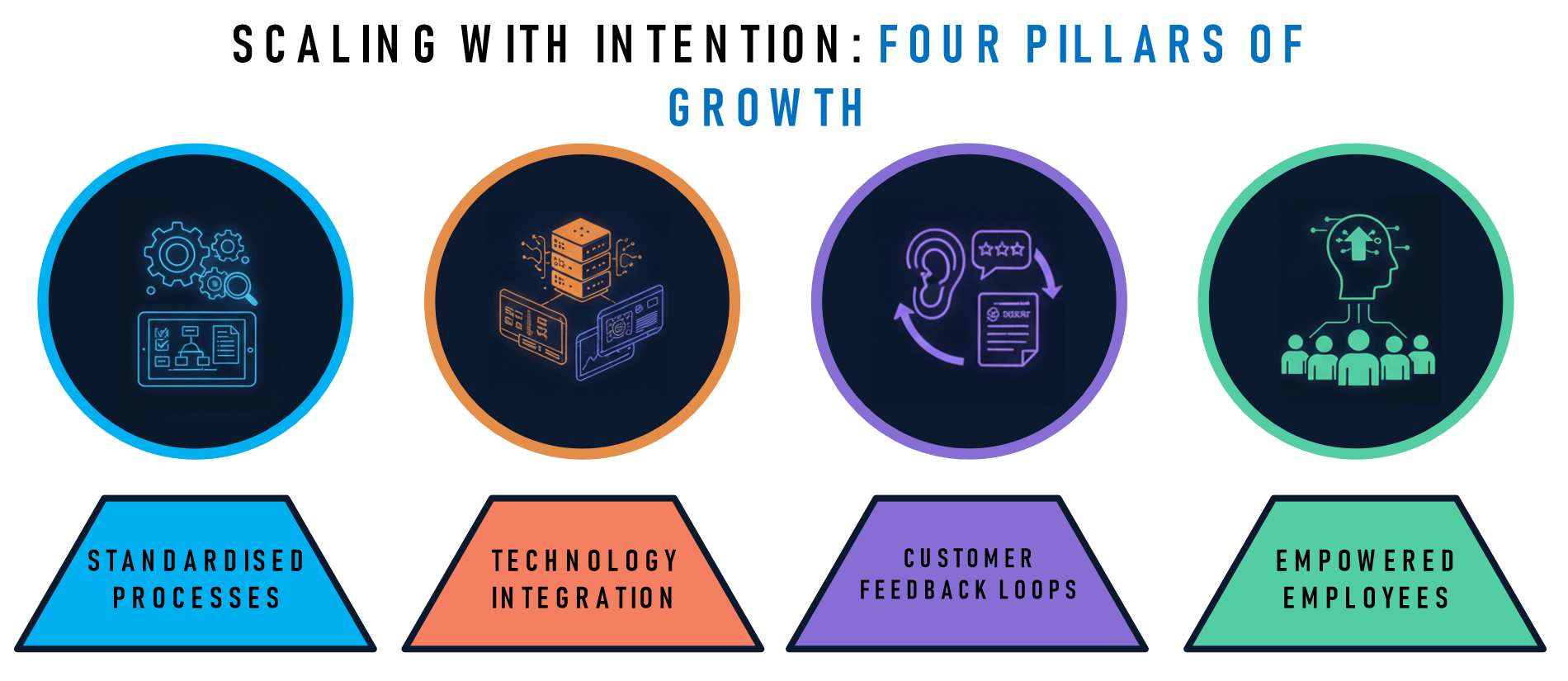
A) Standardise What Works
Identify the processes that define your quality–whether it's product standards, service workflows, or response times. Document them clearly and replicate them consistently across teams and locations.
Standardisation doesn't kill creativity. It protects what matters most.
B) Use Technology Smartly
CRM systems, automation tools, and quality-control software help maintain consistency as volume increases. Technology enables visibility, accountability, and faster corrective action–especially during rapid growth.
C) Stay Close to the Customer
Scaling doesn't mean distancing yourself from customers. In fact, it requires deeper listening.
Using surveys, reviews, support interactions, and direct conversations to understand how customer experience changes as you grow. Retaining customers is significantly more cost-effective than acquiring new ones, making feedback a critical growth tool.
D) Invest in Your People
Systems only work when people believe in them.
Train teams not just in skills, but in why your brand exists and what it stands for. Employees who understand your values protect quality even when no one is watching.
Key Takeaways for Sustainable Growth
a. Scaling without safeguards erodes trust. Customers expect more from growing brands, not less.
b. Systems protect customer experience. Standardisation, technology, and feedback loops are essential.
c. Values matter as mush as processes. People carry quality forward at scale.
d. Growth should amplify, not dilute. The strongest brands grow bigger while staying better.

