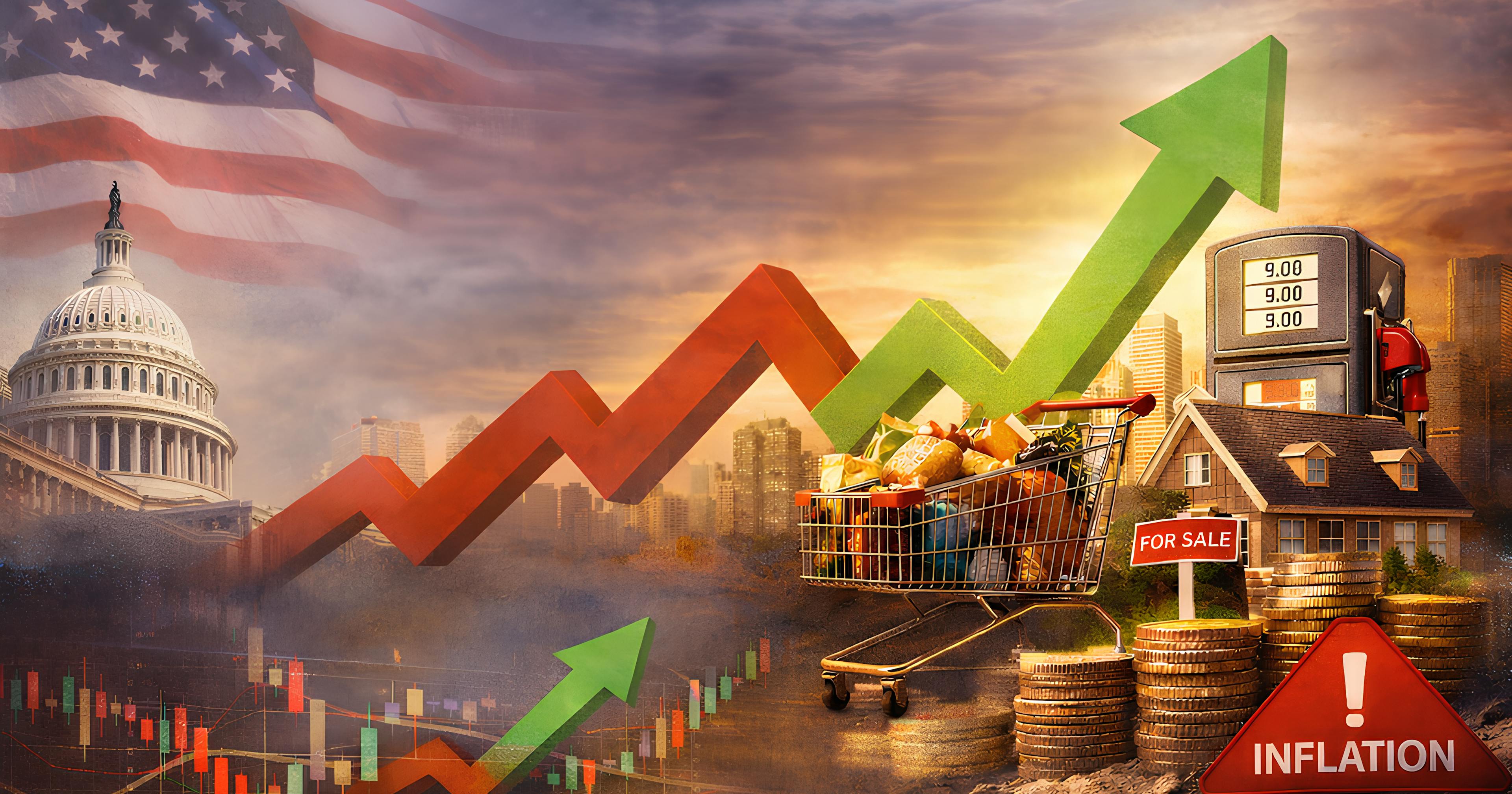
The Inflation Reality Check: When Political Victory Meets Economic Truth
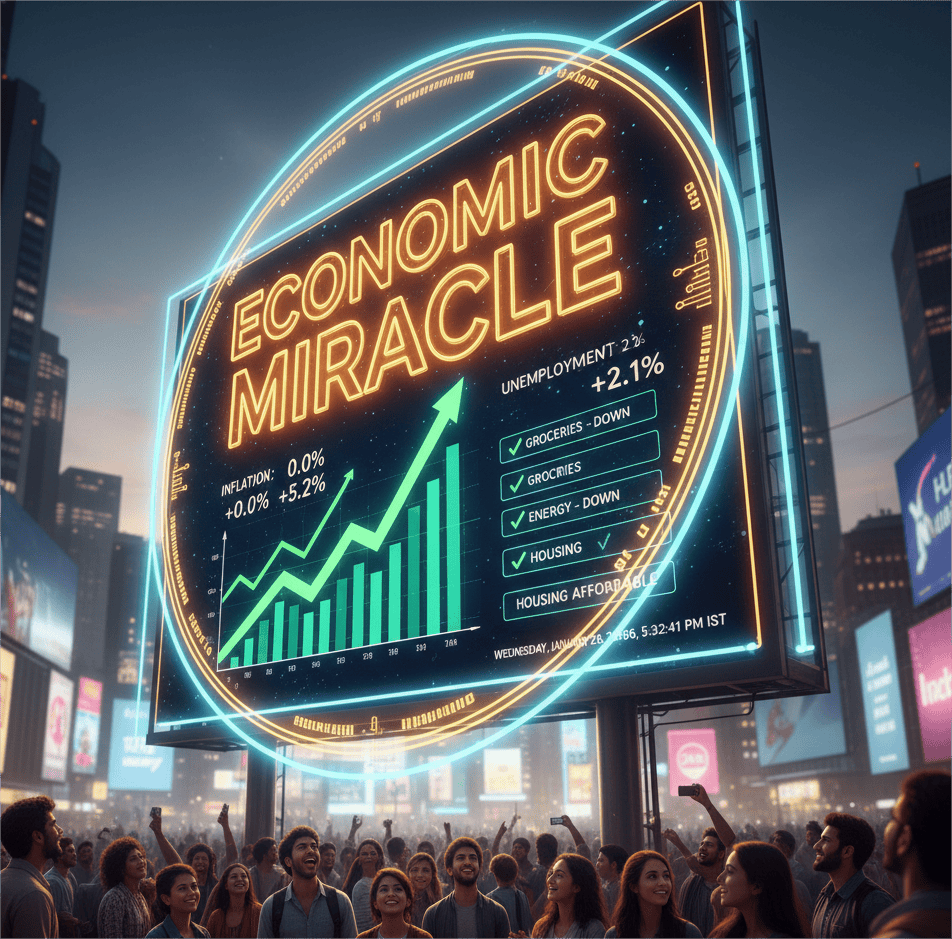
At the gleaming halls of the World Economic Forum in Davos (January 2026), President Donald J. Trump stood before global leaders and delivered a triumphant proclamation: inflation had been “defeated.” According to the president, America was experiencing “virtually no inflation,” with prices tumbling across groceries, energy, and housing. He painted a portrait of an “economic miracle,” marking the end of his first year of his return to office and, as expected, attributed this supposed transformation entirely to his policies.
It was a bold declaration, the kind that makes for compelling headlines and resonates with voters weary of rising costs. Yet beneath the rhetoric lies a more complex economic reality – one that economists, Federal Reserve officials, and everyday consumers are experiencing quite differently. The gap between Trump’s victory lap and the actual state of American prices reveals not just a political narrative, but a fundamental truth about inflation: it's rarely as simple as defeated or triumphant.

The Ground Reality: A More Nuanced Picture
Data shows cooling, not defeat.

While inflation has eased from its peak, it remained around 2.7% in late 2025 – still above the Federal Reserve's 2% target, a figure economists say continues to pressure consumer budgets.
Mixed price changes tell the real story.

Gasoline prices have fallen, offering relief at gas pumps. However, certain food items have actually risen in price, partly due to tariffs, according to analysts and Fed Chair Jerome Powell.
Contradictory signals abound.
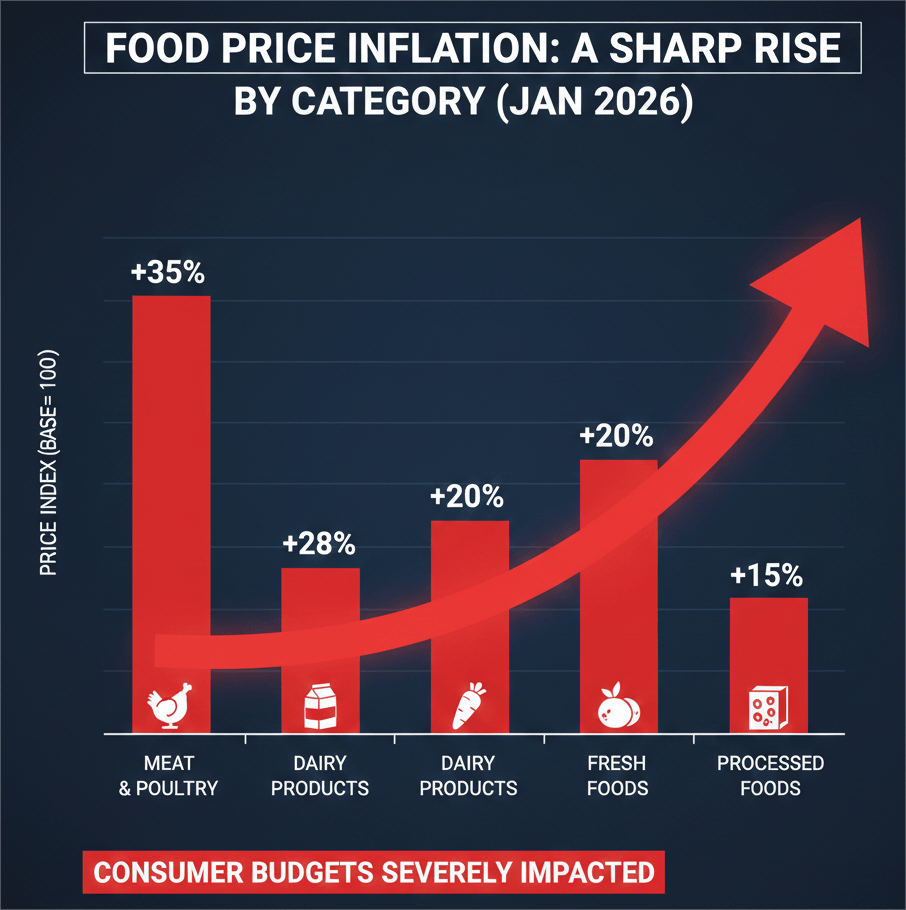
The economic data presents a more moderate picture, with some costs decreasing but not across the board, contrasting sharply with Trump’s broad claims of complete victory over inflation.
This mixed experience explains why public sentiment about the economy often diverges from political messaging. One consumer might celebrate cheaper gas while another struggles with the rising cost of their weekly groceries.
Understanding Inflation: A Brief Overview
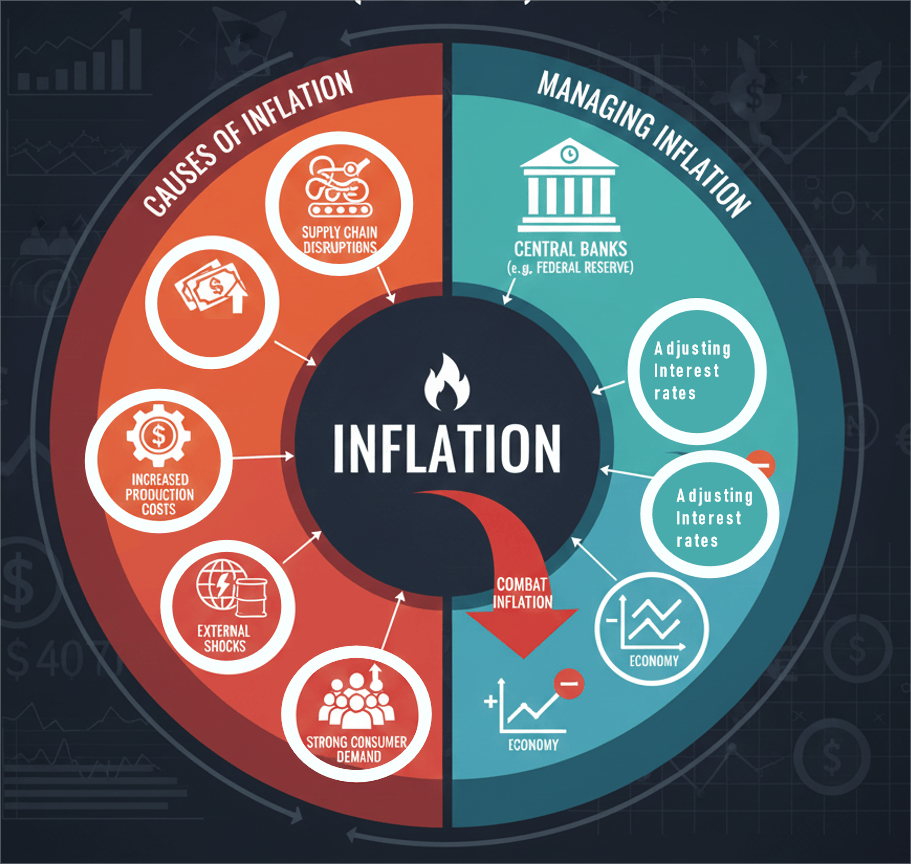
Inflation occurs when the general price level of goods and services rises over time, eroding purchasing power. It's typically caused by a combination of factors: excessive money supply growth, supply chain disruptions, increased production costs, strong consumer demand outpacing supply, and external shocks like energy crises or geopolitical events. Central banks like the Federal Reserve attempt to manage inflation through monetary policy, primarily by adjusting interest rates to either stimulate or cool economic activity.
How Inflation Impacts Economies and Businesses
For national economies, sustained inflation creates widespread consequences. It erodes purchasing power, effectively making everyone poorer with each passing month. When prices rise faster than wages, households can afford less, forcing difficult choices between necessities. This squeeze on consumer spending can slow economic growth as people pull back on discretionary purchases.
Central banks respond by raising interest rates to cool demand, but this makes borrowing more expensive for mortgages, car loans, and business investments. The ripple effects persist for years, influencing employment levels and economic confidence.
For businesses, inflation presents multifaceted challenges that test management at every level:
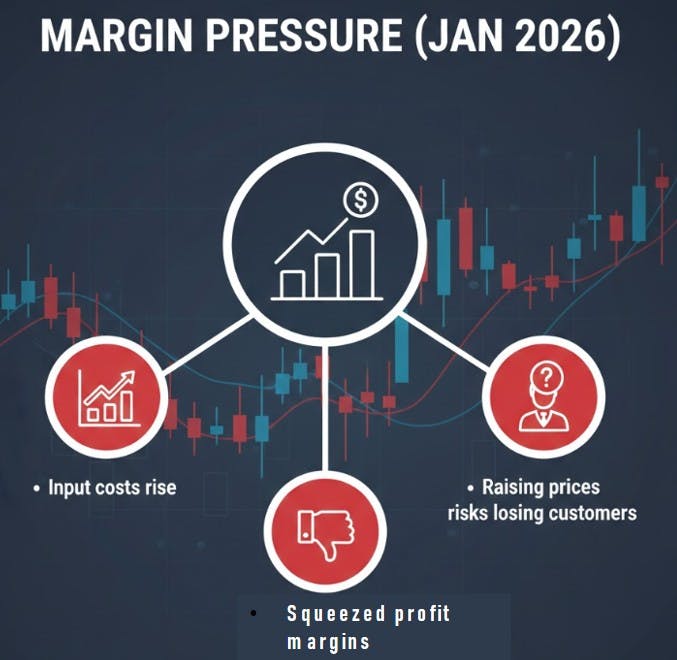
Margin Pressure:
Input costs rise, squeezing profit margins unless companies can pass those increases to customers. But raising prices risks losing customers or dampening demand altogether.
Supply Chain Complexity:
Contracts signed months earlier may no longer reflect current costs, forcing renegotiations or losses. Businesses must decide whether to lock in prices through long-term agreements or remain vulnerable to further increases.

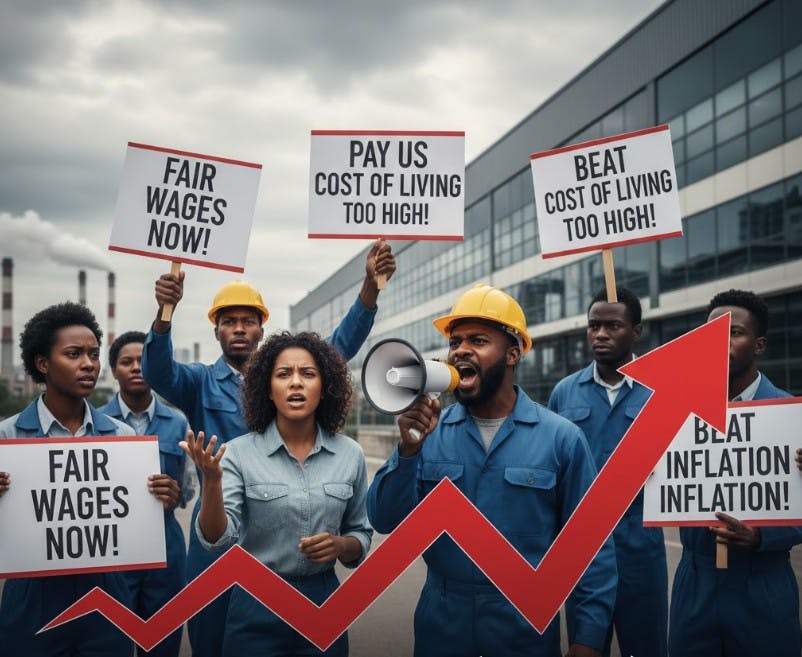
Labour Cost Escalation:
Workers demand wage increases to keep pace with rising living costs, creating a wage-price spiral where higher wages fuel further inflation, which drives demands for even higher wages.
Planning Uncertainty:
When businesses can’t confidently predict costs six months ahead, they become more conservative, delaying expansion, hiring, or equipment purchases. This cautious approach can slow economic growth precisely when momentum is needed most.

Small businesses suffer disproportionately. Unlike large corporations with deeper pockets, small enterprises have less cushion to absorb cost increases and lack the leverage to demand better prices from suppliers.
What Businesses Can Do: Navigating Inflationary Environments
Dynamic Pricing Strategies:
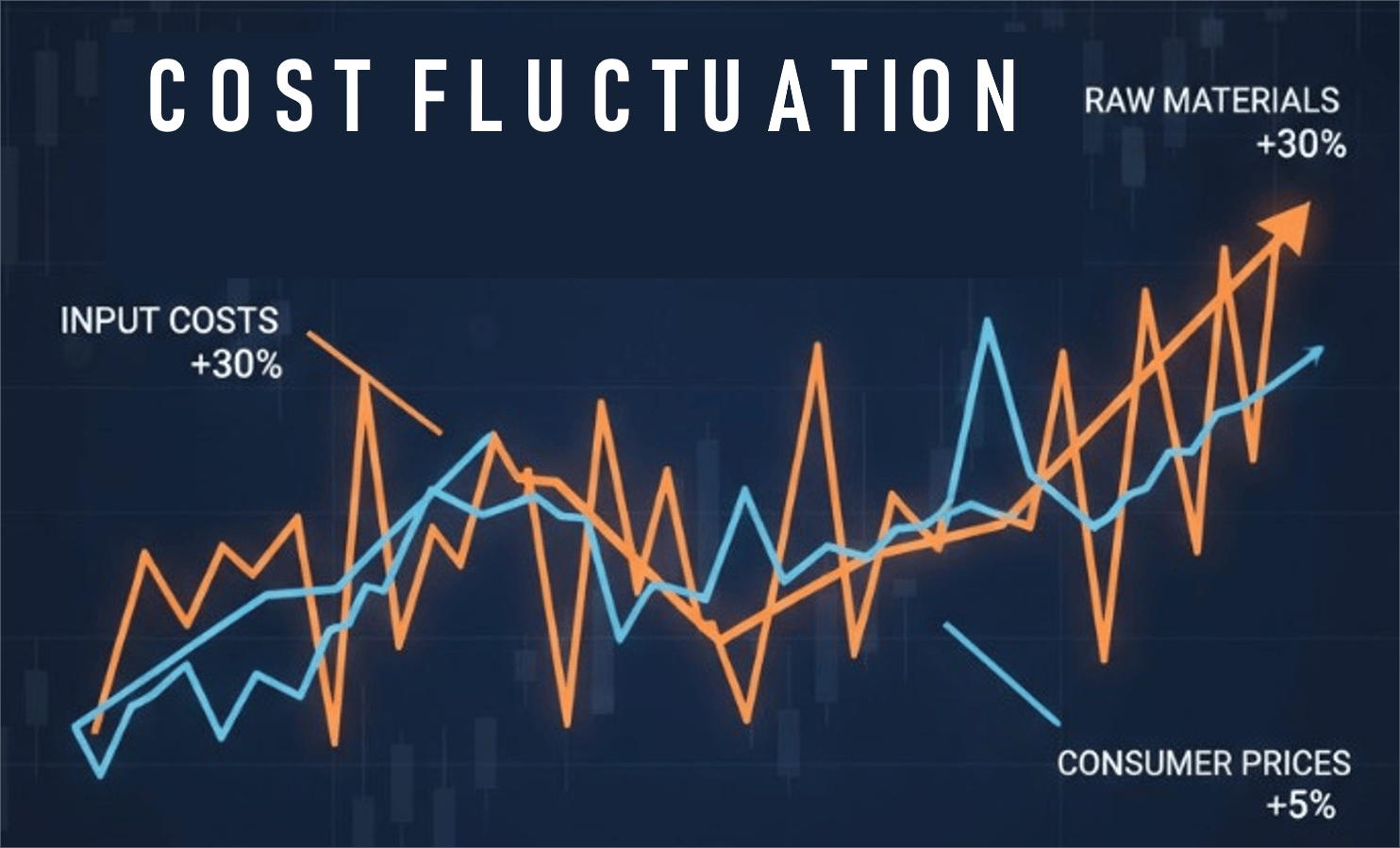
Implement flexible pricing models that can adjust to cost fluctuations while remaining competitive. Consider value-based pricing that emphasizes quality over volume.
Supply Chain Diversification:
Reduce dependency on single suppliers or regions. Build relationships with multiple vendors to maintain negotiating power and ensure continuity.

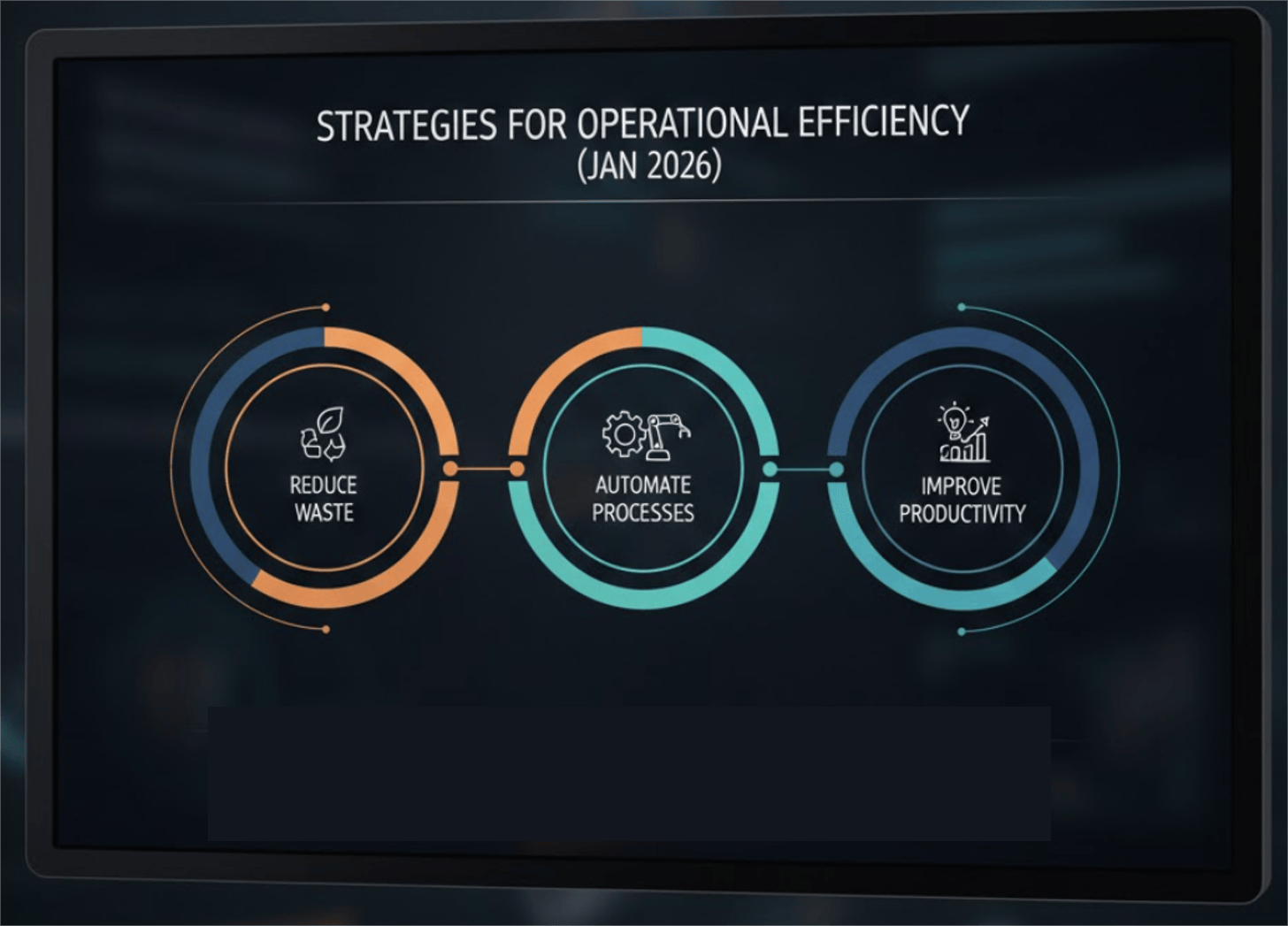
Operational Efficiency:
Identify areas to reduce waste, automate processes, and improve productivity. Every percentage point of efficiency gained helps offset rising costs.
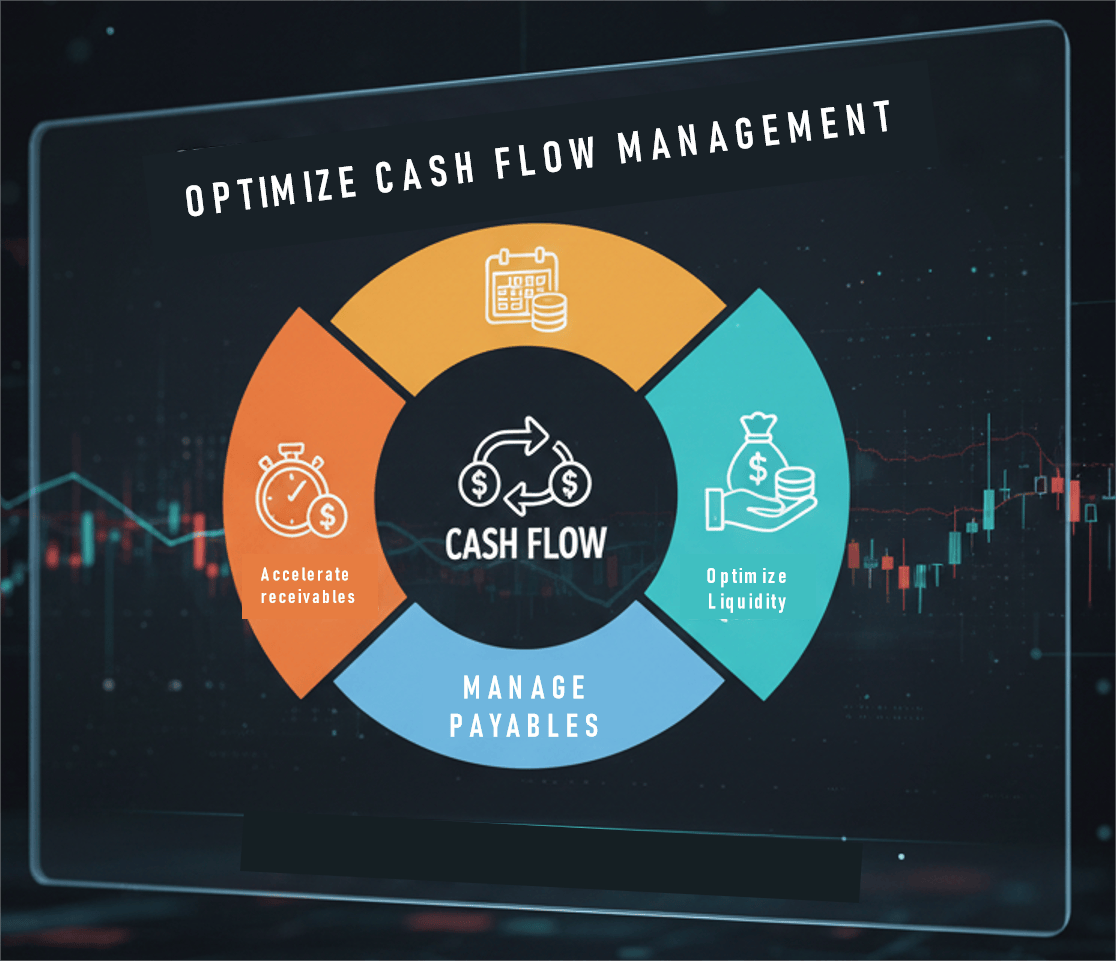
Cash Flow Management:
Prioritize maintaining healthy cash reserves. Accelerate receivables, negotiate extended payables, and carefully manage inventory levels to free up working capital.
Strategic Cost Analysis:
Distinguish between essential and discretionary expenses. Focus investments on areas that drive revenue and customer retention while deferring non-critical spending.
Customer Communication:
Be transparent about price increases when necessary. Customers appreciate honesty about market conditions and are more likely to remain loyal when they understand the reasons behind changes.

Hedge Against Volatility:
Consider financial instruments or contracts that can protect against commodity price fluctuations, currency risks, or interest rate changes.

The ArthaVerse Advantage
Navigating volatile economic environments requires more than generic advice: it demands expert, context-specific guidance tailored to your industry and business model. This is where ArthaVerse creates value for businesses facing uncertainty.
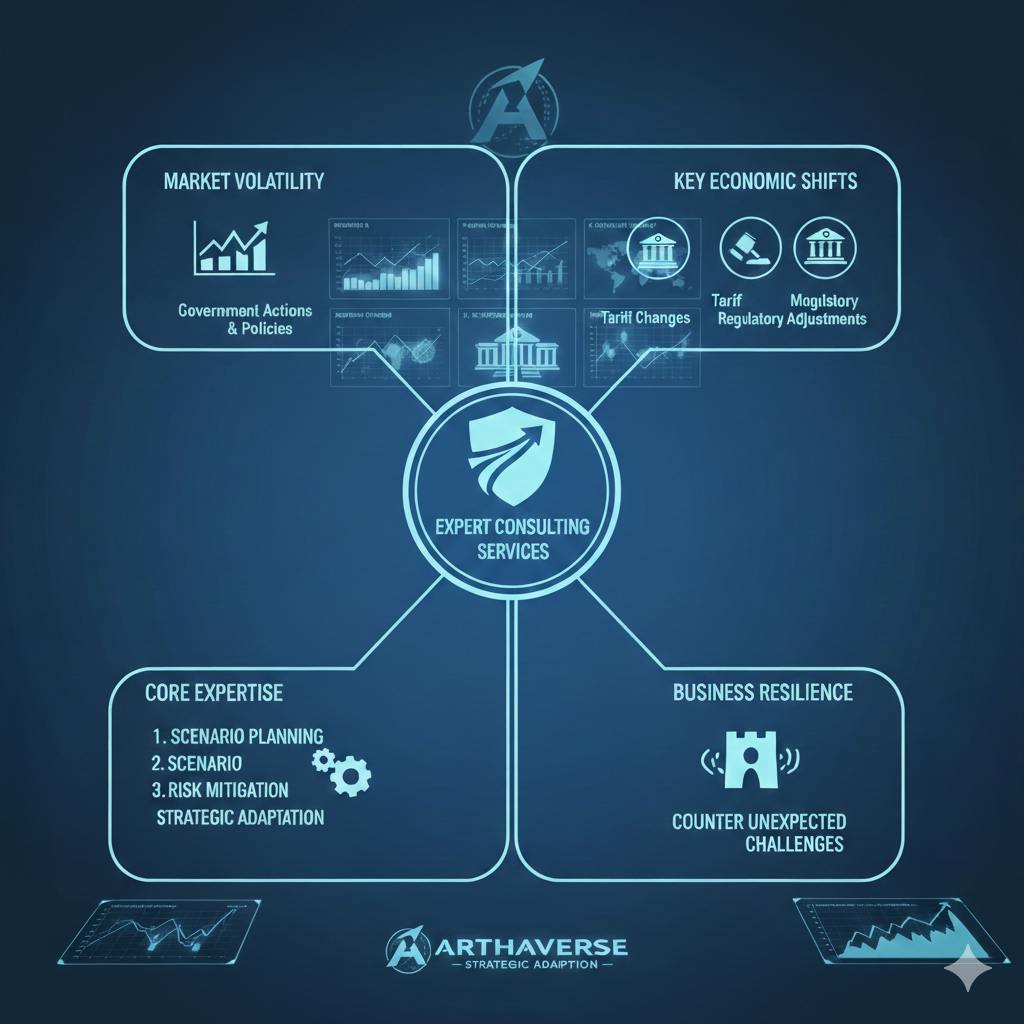
ArthaVerse engages in expert consulting services that help businesses counter unpredictable and unexpected environments, including market volatility brought about by government actions and policies. Whether it’s tariff changes, monetary policy shifts, or regulatory adjustments, ArthaVerse’s consultants bring deep expertise in scenario planning, risk mitigation, and strategic adaptation.
In an era where presidential proclamations may diverge from economic realities, businesses need trusted advisors who can cut through the noise, interpret data objectively, and provide actionable strategies for resilience and growth.
Conclusion
President Trump’s Davos declaration reflects a common political impulse: to claim credit for positive trends while declaring victory prematurely. But inflation, like most economic phenomena, resists simple narratives. The American economy is experiencing cooling inflation, not defeated inflation – a crucial distinction that determines both policy responses and real-world outcomes.
For businesses, understanding this nuance matters enormously. The inflation battle may be turning in favour of stability but declaring it as a battle that’s won risks complacency when vigilance remains essential. Economic success is built on persistent effort, clear-eyed assessment, and the wisdom to seek expert guidance when navigating uncertain waters – not premature celebration.
⚠️ Disclaimer:
The views expressed in this article are solely those of the author and do not necessarily represent the views or positions of ArthaVerse as an organization.

