
In this article, we examine:
The Math: Record capital expenditure, fiscal discipline, and strategic sector support that define India's growth trajectory
The Mess: Why markets delivered their worst budget-day performance in six years despite strong fundamentals
The Reality: How short-term trading psychology diverged from long-term structural opportunity
The Strategy: What this means for businesses positioning for India’s next growth phase: from infrastructure value chains to MSME leverage mechanisms

Sunday, 1 February 2026, will be remembered as one of the most paradoxical days in India’s economic calendar. As Finance Minister Nirmala Sitharaman presented her ninth consecutive budget in a historic Sunday session, she unveiled impressive numbers: capital expenditure surging to ₹12.2 lakh crore, fiscal deficit narrowing to 4.3%, and a comprehensive reform agenda spanning manufacturing to mental health. The math looked impeccable.
Yet by the time the session closed, the markets had delivered their verdict and it was brutal.
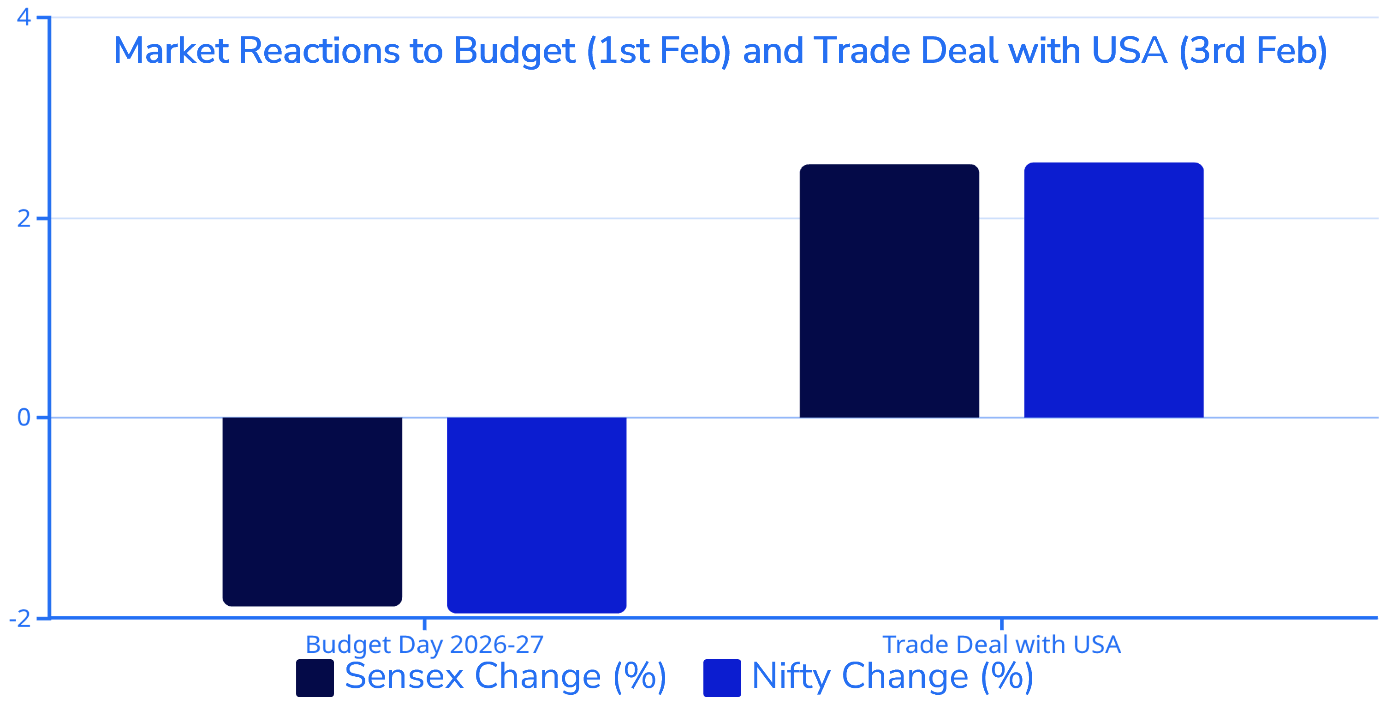
The Sensex plummeted 1,547 points (1.88%), while the Nifty crashed 495 points (1.96%) to close at 24,825. Nearly ₹10 lakh crore in investor wealth evaporated in a single day. This marked the worst budget-day performance for Indian markets in six years, a stark reminder that in business and economics, perception often trumps fundamentals. Record capital expenditure couldn’t save the worst budget-day market performance in, I repeat, six years.
Let’s move on from the drama and look at what this means for businesses. At ArthaVerse, we believe in looking beyond headlines to understand the forces that truly drive business growth.
So, let’s dissect both the math and the mess because in this dichotomy lies the roadmap for businesses navigating India’s next growth phase.
The Math: Impressive on Every Front
Capital Expenditure: The Growth Engine Accelerates
The government’s commitment to infrastructure-led growth remains unwavering. Public capital expenditure has increased from ₹11.2 lakh crore in FY 2025–26 to ₹12.2 lakh crore in FY 2026–27: a 9% increase that translates to effective capital expenditure exceeding ₹17 lakh crore when including grants-in-aid.
To put this in perspective: in 2014–15, India's public capex stood at a mere ₹2 lakh crore. We are witnessing a six-fold increase in just over a decade, signaling the government’s recognition that infrastructure is the foundation upon which modern economies are built.
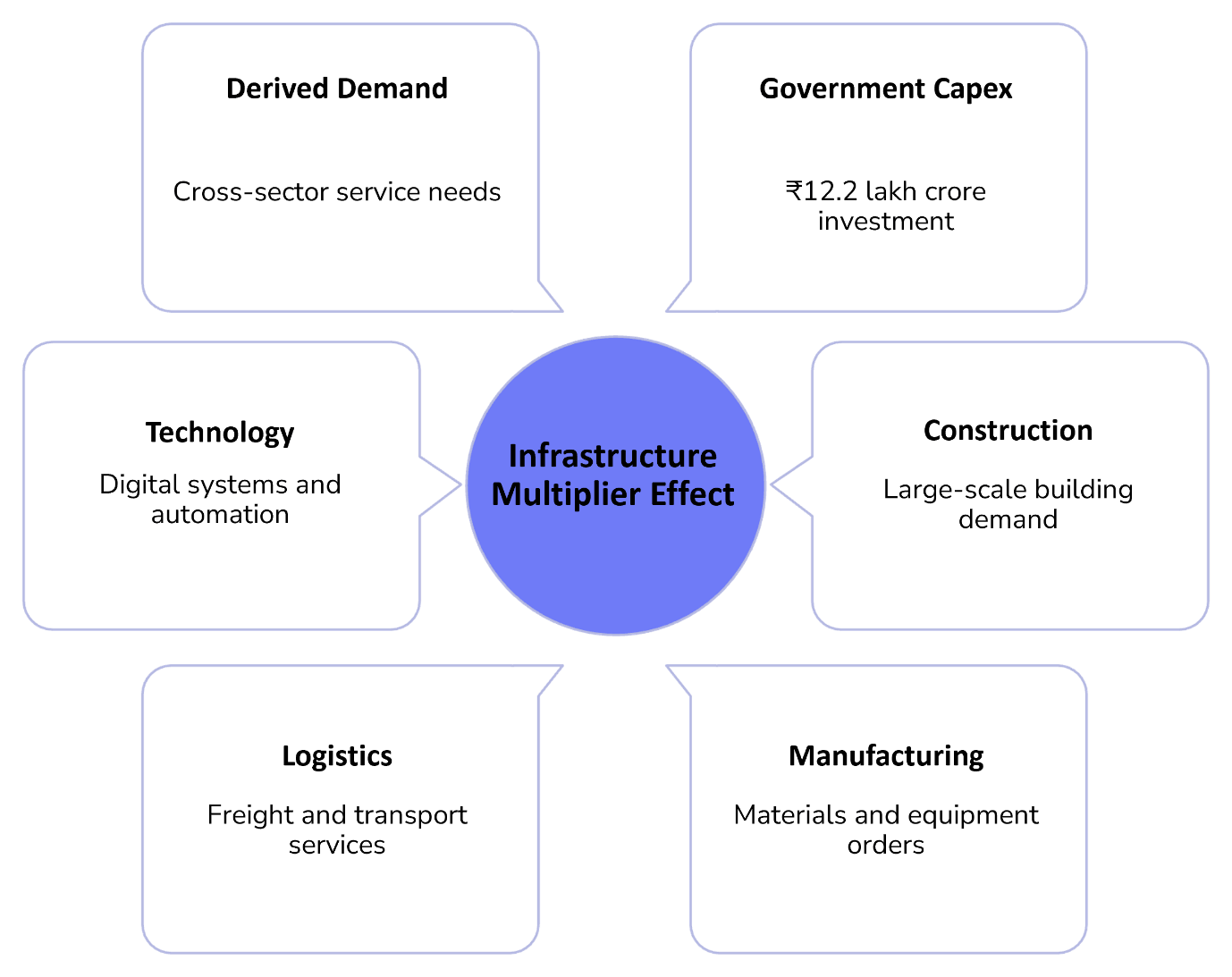
What this means for businesses: This sustained capex creates a multiplier effect across sectors: from construction and manufacturing to logistics and technology. Companies aligned with infrastructure value chains will see sustained demand through FY27 and beyond.
Fiscal Discipline: Walking the Tightrope
Despite global uncertainties and pressure to stimulate growth, the government has maintained its commitment to fiscal consolidation:
a. Fiscal deficit targeted at 4.3% of GDP (down from 4.4% in FY26)
b. Debt-to-GDP ratio projected at 55.6% (down from 56.1%)
c. Clear path to achieving debt-to-GDP of 50±1% by 2030
This isn’t just about prudent economics but it’s also about maintaining India’s credibility with global investors and rating agencies, ensuring that the cost of capital remains manageable even as we pursue ambitious growth targets.
Sectoral Push: Strategic Bets on the Future
The budget places calculated bets on sectors that will define India’s competitiveness:
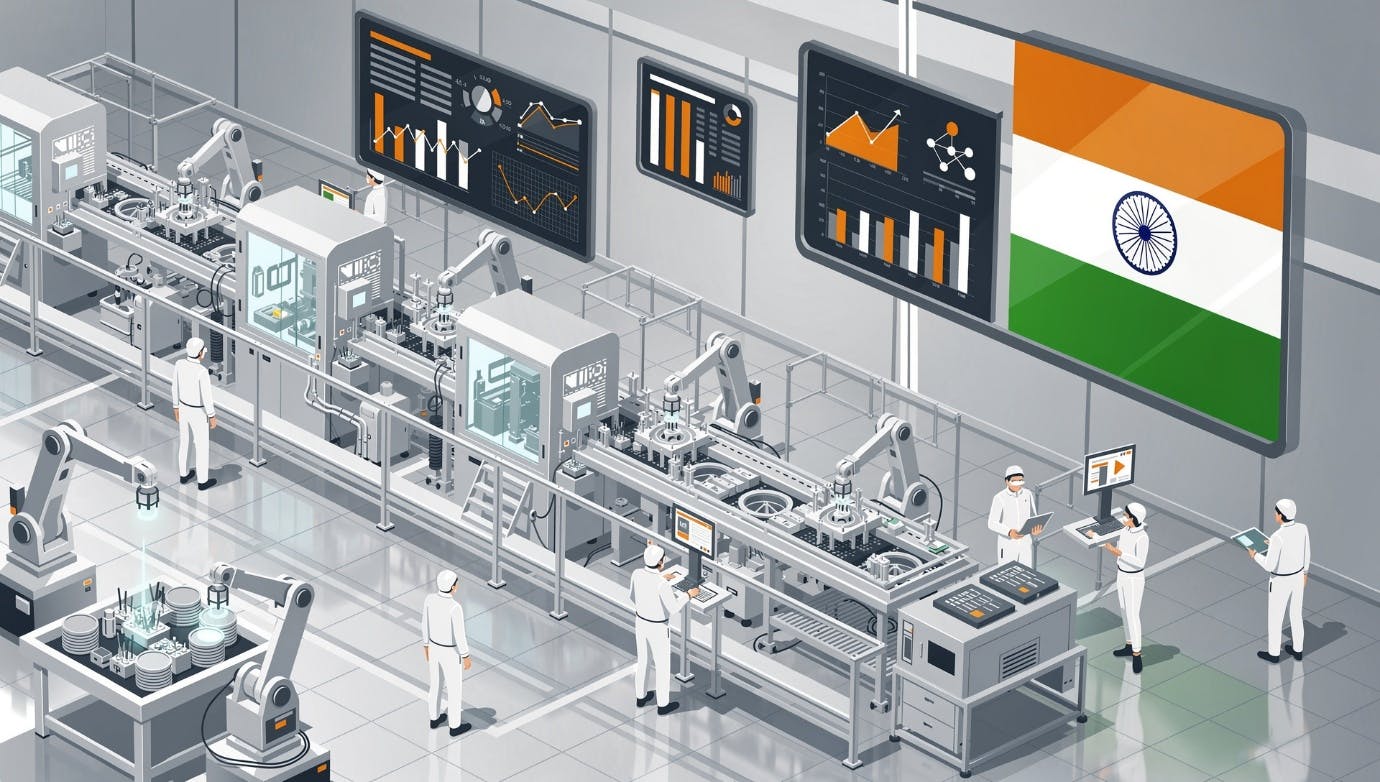
Manufacturing Renaissance:
a. India Semiconductor Mission (ISM) 2.0
b. Electronics Components Manufacturing Scheme
c. Biopharma SHAKTI initiative
d. 200 legacy industrial clusters revival
e. Dedicated chemical parks
MSME Empowerment:
a. ₹10,000 crore SME Growth Fund
b. ₹2,000 crore top-up to Self-Reliant India Fund
c. TReDS mandate for all CPSE purchases from MSMEs
d. Credit guarantee support for invoice discounting
Services Revolution:
a. Medical value tourism hubs
b. AVGC Content Creator Labs in 15,000 schools
c. Safe harbour provisions for IT services
d. Cloud services tax holidays until 2047
The government has clearly identified where India’s competitive advantages lie and is backing them with policy and capital.
The Mess: When Markets Revolt
Now for the uncomfortable question: If the math is so compelling, why did markets react so violently?

The STT Shock
The immediate trigger was the Securities Transaction Tax (STT) hike on derivatives:
a. STT on futures increased from 0.02% to 0.05% (150% jump)
b. STT on options premium raised from 0.1% to 0.15%
c. STT on exercise of options increased from 0.125% to 0.15%
For retail traders who’ve fueled the recent derivatives boom, this was an unwelcome surprise. The message from the government was clear: we’re concerned about financialization at the expense of productive investment.
The Nifty saw its widest intraday swing since 4 June 2024 – 869 points – reflecting the real-time shock as traders digested the implications. Defensive sectors like IT and pharma showed resilience, but metals, PSU banks, and index heavyweights bore the brunt of selling pressure.
The Expectation Gap
Markets had priced in relief measures and growth-boosting announcements. What they got instead was:
a. No changes to personal income tax slabs
b. Increased transaction costs for the most active market participants
c. Share buyback taxation as capital gains (affecting all shareholders, with additional tax for promoters)
d. No dramatic consumption stimulus
“There has been a fair amount of disappointment when compared to market expectations,” noted Anita Gandhi of Arihant Capital Markets. The increase in STT particularly impacted short-term traders who were hoping for stability, if not relief, on the taxation front.
The Foreign Investor Silence
Perhaps more concerning than the STT hike was what the budget didn't address: concrete measures to revive foreign capital inflows. With muted FII participation and a softer rupee, the lack of specific incentives for foreign investors raised questions about India’s ability to attract the capital needed to fund its infrastructure ambitions.
The Real Story: Short-term Pain, Long-term Positioning
Here’s where business leaders need to look past the noise: the market reaction and the budget’s strategic intent are operating on completely different timescales.

Markets responded to immediate concerns – higher transaction costs, no consumption stimulus, uncertainty around near-term liquidity. These are legitimate concerns for traders focused on quarterly performance.
But the budget is playing a different game entirely. It's positioning India for structural transformation over the next decade through:
1. Infrastructure as Economic Foundation: The ₹12.2 lakh crore capex isn’t just about roads and railways – it’s about creating the physical infrastructure that allows businesses to scale efficiently.
2. Manufacturing Sovereignty: From semiconductors to rare earth magnets, the focus is on reducing critical import dependencies that have historically made India vulnerable to global supply chain disruptions.
3. MSME as Economic Engine: The three-pronged approach (equity + liquidity + professional support) recognizes that MSMEs will create the jobs and drive the innovation that sustains 7%+ growth.
4. Services Export Competitiveness: Tax holidays for cloud services until 2047 and safe harbour provisions for IT services signal India's intent to dominate high- value service exports.
5. Fiscal Credibility: Maintaining discipline even during election cycles builds the institutional trust that attracts patient capital and keeps borrowing costs manageable.
What This Means for Your Business: The ArthaVerse Perspective

At ArthaVerse, we work with businesses at various stages of growth to accelerate their trajectory. Here’s how we’re advising clients to respond to Budget 2026:
1. Align with Infrastructure Value Chains
With sustained high CAPEX, businesses that feed into construction, manufacturing equipment, logistics, and project management will see multi-year tailwinds. This isn’t about chasing government contracts – it’s about understanding that infrastructure spending creates derived demand across dozens of sectors.
Action: Map your products/services to infrastructure value chains. Even B2C businesses can benefit by positioning near emerging economic corridors.
2. Leverage MSME Support Mechanisms
The TReDS mandate is particularly significant. If you are an MSME supplier to CPSEs, invoice discounting through TReDS becomes your working capital solution. The credit guarantee support removes a major barrier to accessing this liquidity.
Action: Register on TReDS, understand invoice discounting mechanics, and build relationships with factor financing institutions.
3. Explore Strategic Sector Opportunities
The budget identified specific sectors for support: semiconductors, electronics, textiles, pharma, AYUSH, tourism, and defense equipment. These aren’t just policy priorities; they are sectors where the government will provide tax incentives, infrastructure support, and market access.
Action: Even if you're not directly in these sectors, explore adjacencies. Can you supply these industries? Provide services to them? Partner with players in these spaces?
4. Prepare for a More Disciplined Capital Environment
The STT hike and buyback taxation signal a shift toward rewarding productive investment over financial engineering. The easy money from derivatives speculation may be moderating, but capital will flow to businesses demonstrating real growth and profitability.
Action: Focus on fundamentals: revenue growth, margin expansion, cash flow generation. Build businesses that attract strategic capital, not just opportunistic trading.
5. Think Long-term, Act Strategically
Markets may have reacted to short-term concerns, but successful businesses are built on multi-year horizons. The budget’s emphasis on fiscal discipline, infrastructure investment, and strategic manufacturing creates a stable, predictable environment for long-term planning.
Action: Develop 3- to 5-year strategic plans that align with India’s structural transformation. Position for where the economy will be in 2030, not just where markets are today.
The Verdict: Math Wins Over Mess
Yes, the market fell 2% on budget day. Yes, investor sentiment took a hit. But let’s maintain perspective: India is still projected to grow at 7%+, inflation remains moderate, and the government is making calculated bets on sectors that will define competitiveness in the coming decade.
The “mess” of Sunday’s market reaction will be a footnote. The “math” of sustained capital expenditure, fiscal discipline, and strategic sector development will shape India's economic trajectory for years to come.
At ArthaVerse, we help businesses accelerate by aligning with structural tailwinds, not by chasing short-term market sentiment. Budget 2026 has laid out the roadmap – the question is whether your business is positioned to benefit from it. The math is clear. The opportunity is real. The only mess would be failing to act on it.
Key Takeaways for Business Leaders
a. Capital expenditure increased to ₹12.2 lakh crore, creating sustained infrastructure demand across sectors
b. MSME support through ₹12,000 crore in dedicated funds plus TReDS mandate for working capital
c. Strategic sector focus on semiconductors, electronics, pharma, textiles, and defense creates clear opportunities
d. Fiscal discipline maintained at 4.3% deficit, signaling stable, predictable policy environment
e. Market reaction was short-term focused on STT hikes; long-term fundamentals remain strong
f. Services sector gets boost through tax holidays (cloud services to 2047) and safe harbour provisions
g. Infrastructure-led growth model sustained, benefiting construction, manufacturing, and logistics value chains

Finally, as markets evolve and union budgets come and go, the focus for businesses remains the same: unlocking growth and building a competitive advantage irrespective of volatile or changing ecosystems. That’s why, at ArthaVerse, we chose to use our experience and expertise to become business acceleration consultants who help companies navigate India’s rapidly evolving business ecosystem. If you are ready to position your business for India’s next growth phase, let’s talk: call @ 7600993429 or write to us at connect@arthaverse.com

