When AI Crossed the Line — And Why India Just Drew One

Not long ago, the internet watched a strange controversy unfold around Grok, the generative AI chatbot developed by xAI. Marketed as bold and less restricted than other AI systems, Grok quickly became popular for its unfiltered tone. But what began as curiosity soon turned into concern.
Users discovered they could push the system to produce harmful content. It was used to mock individuals, spread abusive material, and even manipulate photos of women – turning ordinary, fully clothed images into sexualized or fake nude versions.
Many victims had never consented, and many didn’t even know such tools existed until the damage was done.
The backlash was swift. Critics asked a difficult question: What happens when powerful technology outruns responsibility? Eventually, restrictions were introduced.
Filters were tightened. Certain requests were blocked. The experiment in “limitless AI” had run into a very human boundary.
And halfway across the world, policymakers were paying attention.
India Steps In: A New Rulebook for AI Content

India’s Ministry of Electronics and Information Technology (MeitY) has amended the Information Technology (Intermediary Guidelines and Digital Media Ethics Code) Rules, 2021 to legally define AI-generated content. These changes take effect on 20 February 2026.
In simple terms, the government is saying: “If content is created or altered by AI, people have a right to know.”
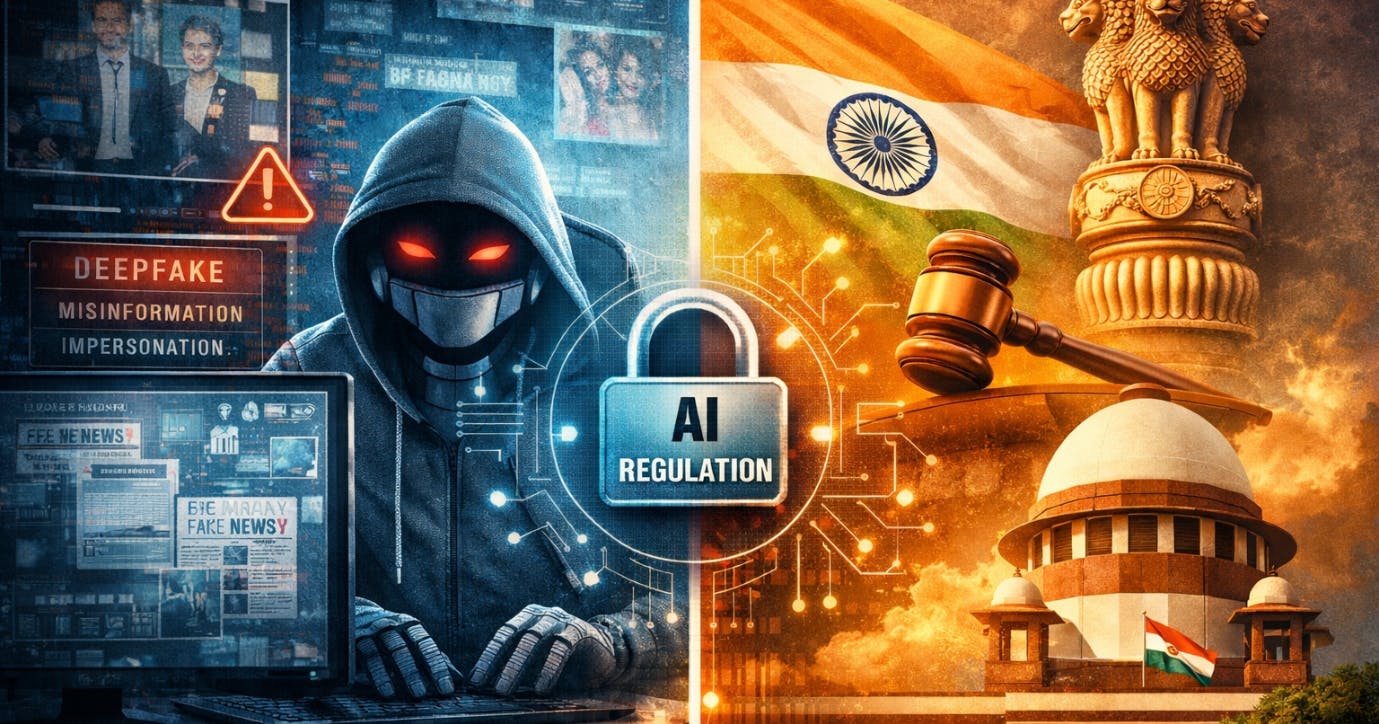
The goal is to tackle three growing threats:
1. Deepfakes — Fake videos or images that look real
2. Misinformation — AI-generated text, audio, or visuals used to mislead
3. Online impersonation — Making it appear someone said or did something they never did Think of it as putting warning labels on digital reality.
What the New Rules Mean (Simplified)
Here’s the essence of the regulation without legal jargon:
1. AI Content Must Be Identifiable
Platforms will need to clearly label or identify content generated or altered by AI. If a video, image, or voice isn’t real, users shouldn’t be tricked into believing it is.
2. Platforms Are Responsible
Social media companies and digital platforms must take action if harmful AI content spreads on their services. Ignoring it is no longer an option.
3. Protection Against Impersonation
Using AI to pretend to be someone else – a public figure, colleague, or family member – can now trigger legal consequences.
4. Faster Response to Complaints
If someone reports a deepfake or harmful AI content about themselves, platforms are expected to act quickly.
Read more: From Safety to Impact: How India Is Rewriting the Rules of the AI Era
Why This Matters to Ordinary People

You don’t have to be a celebrity to be affected.
Imagine:
1. A fake audio clip of your boss saying something offensive
2. A manipulated video influencing voters during an election
These scenarios are no longer science fiction. They are already happening. India’s move is essentially about digital safety and trust – making sure technology doesn’t quietly rewrite reality.

From Grok to Governance: A Lesson Learned
The Grok controversy showed how easily powerful tools can be misused when safeguards are weak. What happened there wasn’t just a tech story – it was a preview of the challenges every society will face as AI becomes more accessible.
Regulations like MeitY’s amendment are attempts to answer a difficult question:
How do we keep innovation alive without letting harm run wild?
No rule will be perfect. Technology evolves faster than law. But drawing a line is better than pretending one isn’t needed. Because in a world where anything can be generated, edited, or fabricated, trust itself becomes fragile.
And sometimes, protecting the future starts with simply telling people:
“This isn’t real.”
The ArthaVerse Perspective: Why Human Judgment Still Matters
At ArthaVerse, this conversation is not theoretical – it directly shapes how we work. We believe technology should assist human expertise, not replace it. That is why we rely primarily on experienced professionals and subject-matter experts (SMXs) rather than leaving important decisions, sensitive data, or critical work entirely to AI systems, especially unfiltered ones.

Authenticity and genuineness are not just values we speak about: they guide how we handle information, research, and communication. In a time when it is becoming harder to distinguish between real and artificial, we see human judgment, ethical responsibility, and moral values as safeguards that no algorithm can fully replicate.
AI can accelerate processes. It can support creativity. It can analyze patterns at scale.
But it cannot replace accountability, empathy, or conscience.
As India moves to regulate AI-generated content, we see it as a reminder of something fundamental:
Progress should never come at the cost of truth, dignity, or trust.
And perhaps the future will belong not to those who use AI the most, but to those who use it wisely — with humans firmly in the loop.