
Work – Life Integration: Why It Matters More Than Ever in Today’s Work Culture

Every few months, influential voices reignite the debate around extreme work hours – whether it’s a 72-hour workweek in India or the globally discussed “996” model. These conversations claim to push for national productivity and professional excellence.
But they often overlook one simple truth: life does not follow a fixed schedule.
At ArthaVerse, we’ve been thinking deeply about this – not just about the traditional idea of work – life balance, but something far more realistic and humane: work–life integration.

And this perspective doesn’t come from theory. It comes from real people, real workplaces, and real moments that don’t fit into neat boxes.
Work – Life Balance vs Work – Life Integration: What’s the Difference?
The old notion of “balance” depends on strict compartmentalization – work here, life there.
But anyone living in the real world knows this is rarely possible.
Life doesn’t wait for office hours:
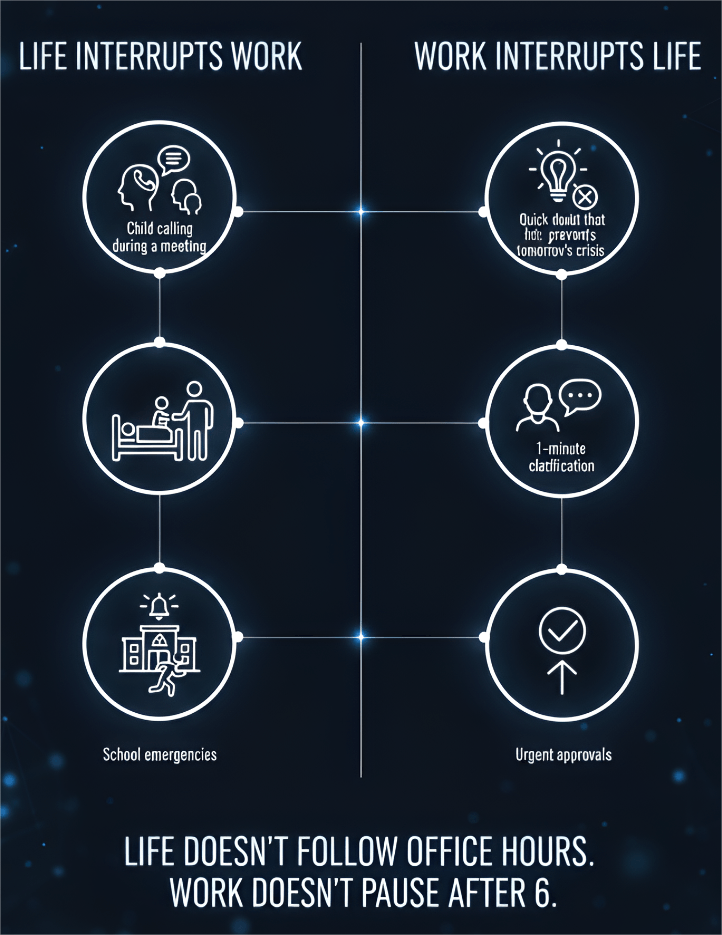
a. Your child may call during a meeting because something feels urgent to them.
b. A parent may feel unwell at 11 a.m., not after 6 p.m.
c. School issues, emergencies, unexpected situations – none of them follow corporate calendars.
Work doesn’t pause after 6 p.m. either:
Sometimes a teammate needs a one-minute clarification. Sometimes a quick answer can prevent tomorrow’s fire. Strict borders break under real pressures. Integration accepts the natural flow of life without guilt or rigidity.
What Work – Life Integration Really Means
Work–life integration does not mean being available 24/7. It does not mean turning your home into an office. It simply means responding wisely to what genuinely matters.
It’s about saying:
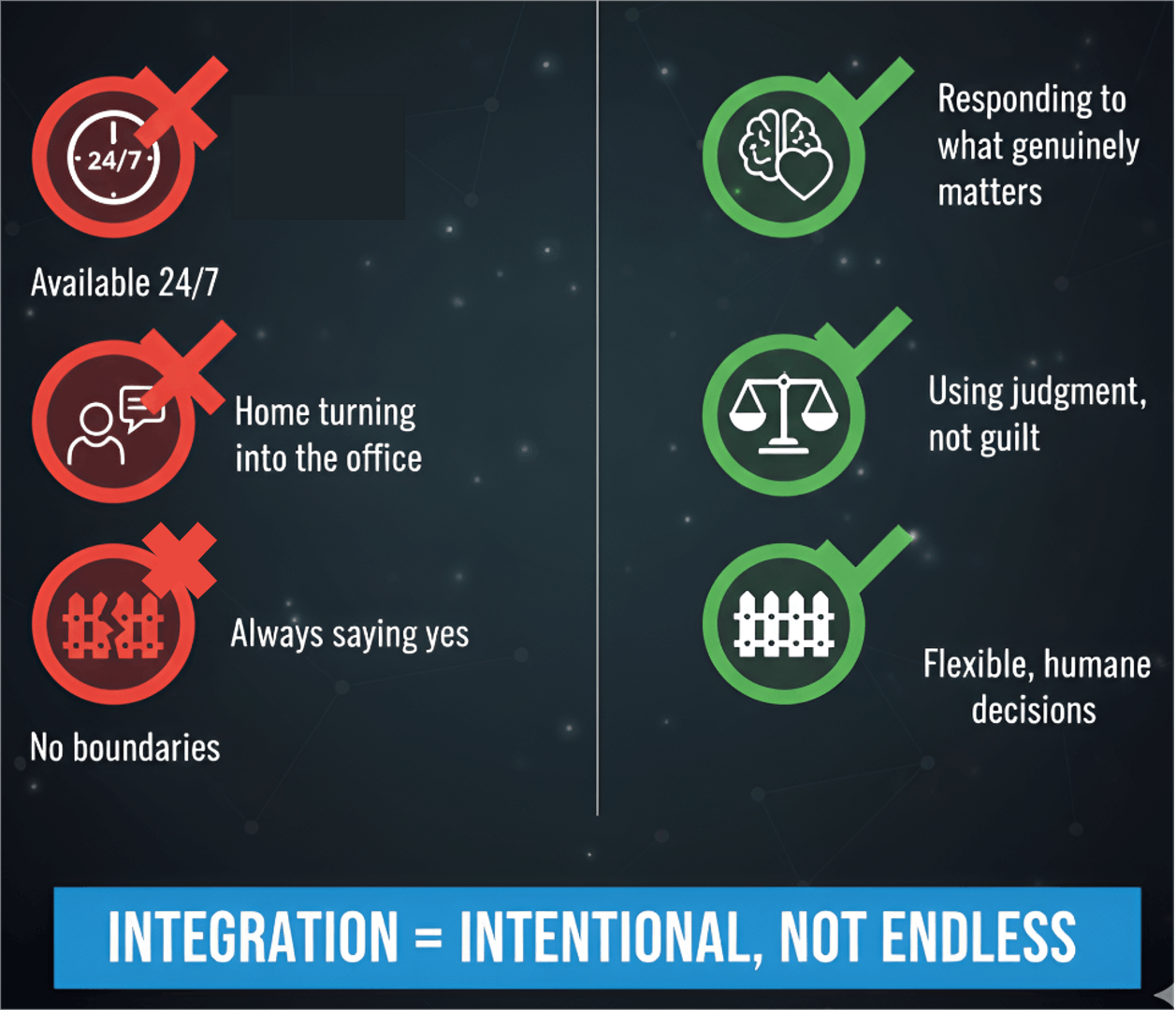
a. “Yes, I’ll take this two-minute call from home even though I’m at my desk.”
b. “Yes, I’ll respond to this urgent message from work even though I’m on my sofa.”
c. “No, this can wait until tomorrow.”
d. “No, I don’t need to sacrifice my evening for something that isn’t important.”
Integration is a humane, flexible mindset. It acknowledges that work and life are interconnected – not opponents fighting for your attention. And most importantly, it works only when everyone understands a silent rule:
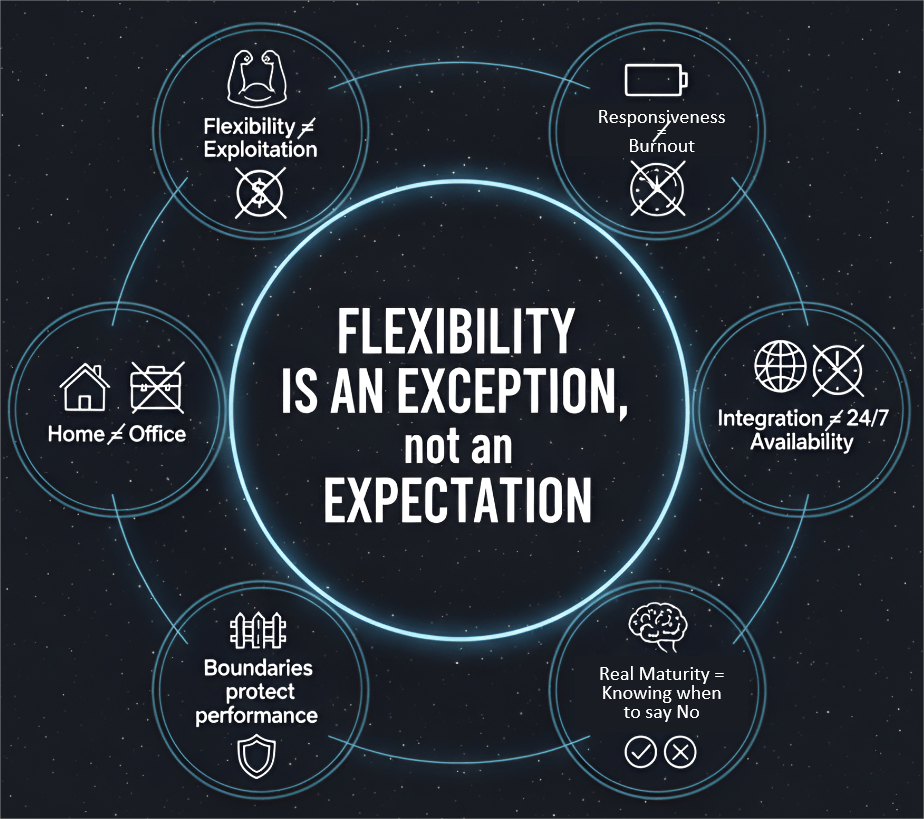
These should be exceptions, not expectations.
Flexibility should never become exploitation, and responsiveness should never become burnout.
A Real Story That Proves Integration Works
One leader who lives this philosophy is George J. Mattackal, former President of the Asia Pacific Global Delivery Centers of Excellence at CGI.
A single parent raising nine children – yes, nine – he has lived work–life integration in the most demanding way. Even today (as of November 2025), three of his children are still in school.
He has often shared how he would take a call from home during work or manage a work situation from home – not to blur boundaries, but to maintain healthy ones.
His approach was never:
a. “Work more.”
It was always:
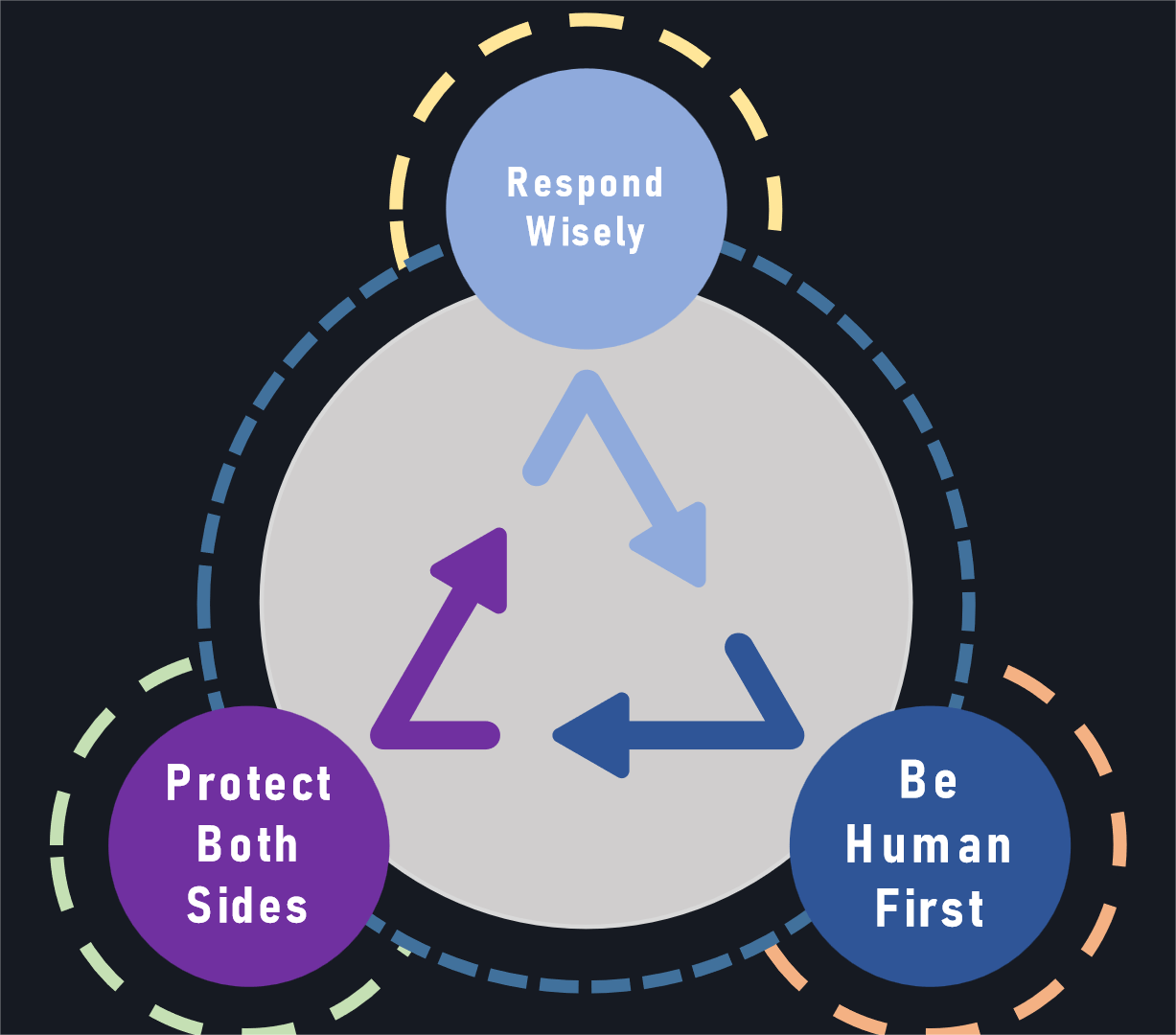
a. “Respond wisely.”
b. “Protect both sides.”
c. “Be human first.”
That perspective has stayed with us at ArthaVerse.
Why Extreme Work Cultures Don’t Work Anymore
Glorifying 72-hour workweeks sends the wrong message: that exhaustion means dedication.
But India doesn’t need overworked professionals.
It needs focused, emotionally strong, thoughtful contributors.
Work–life integration supports exactly this.
It recognises that:
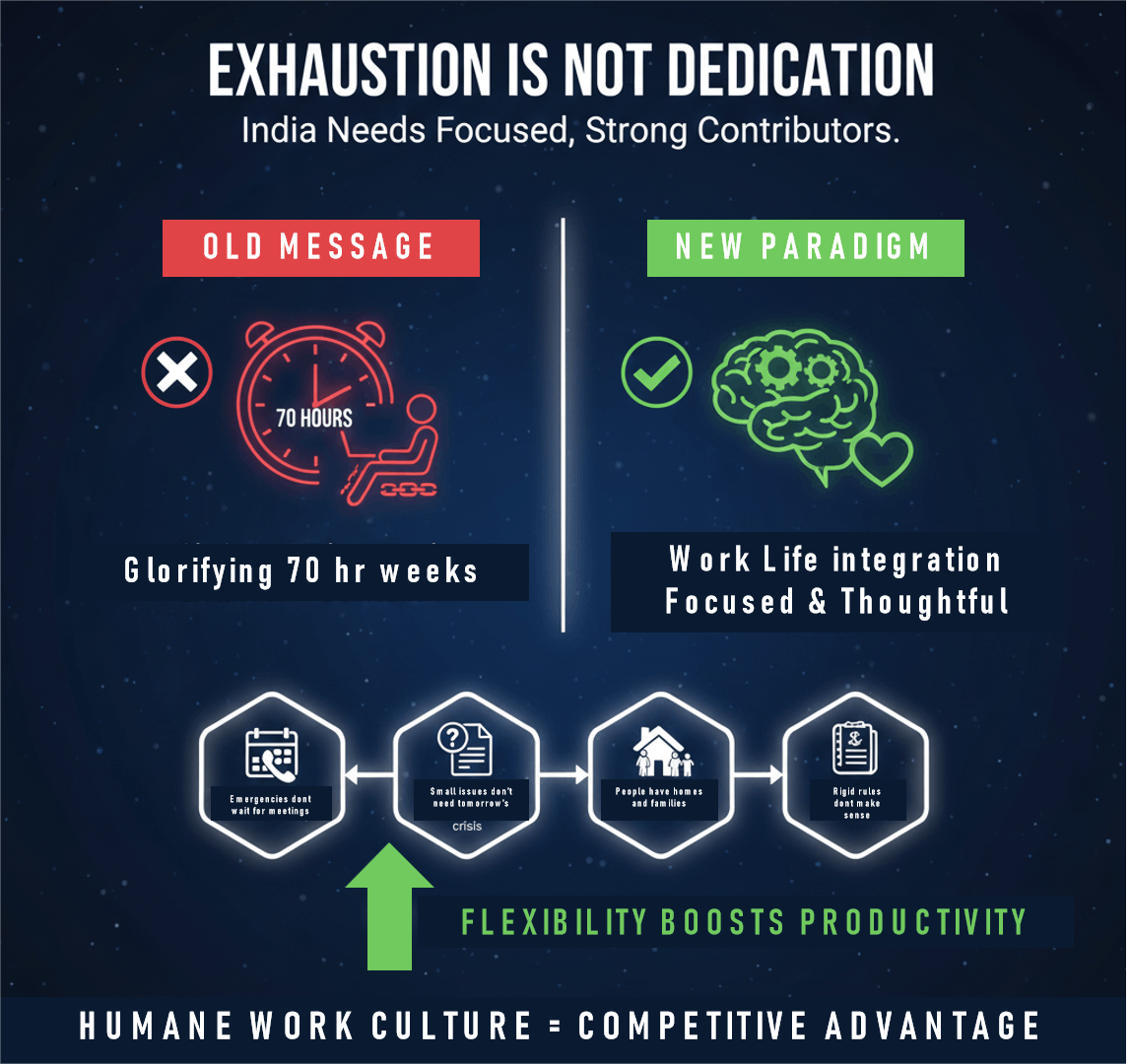
a. Emergencies don’t wait for meeting slots.
b. Small issues don’t need tomorrow’s crisis-management session.
c. People have homes, families, and responsibilities.
d. Rigid rules don’t always make sense.
d. Flexibility boosts productivity more sustainably than long hours.
A more integrated, humane work culture is not a weakness – it’s a competitive advantage.
Moving Toward a Healthier Way of Working
If there’s one message we want readers to take away, it’s this: You don’t have to choose between being a good professional and a good parent, spouse, friend, or caregiver. You can be both. Not by dividing life into airtight compartments, but by integrating it with intention and maturity.
As workplaces evolve, this is the shift we need:
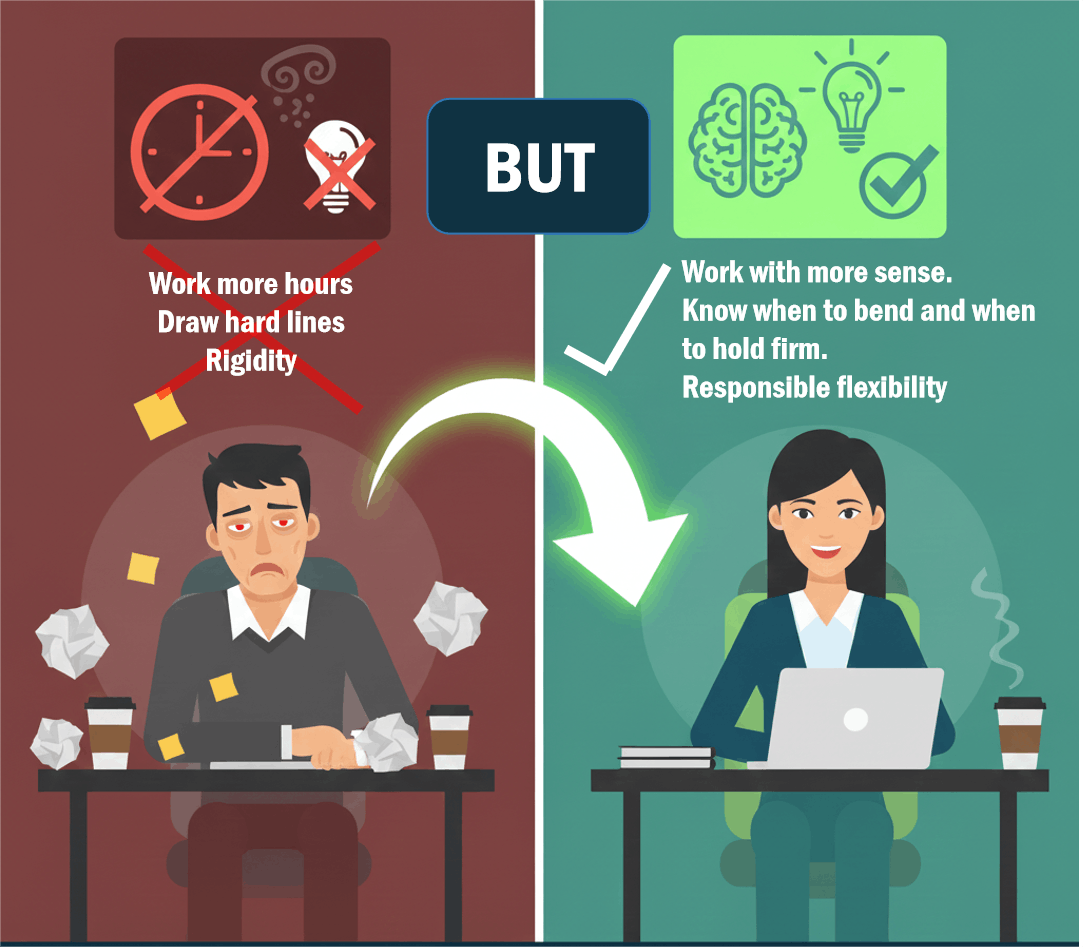
a. Not “Work more hours,” but “Work with more sense.”
b. Not “Draw hard lines,” but know when to bend and when to hold firm.”
c. Not rigidity, but responsible flexibility.
At ArthaVerse, these are the conversations we want to promote – conversations about healthier, wiser, more human ways of working.
Because true progress doesn't come from squeezing hours out of people. It comes from understanding them.
What small shift can you make today to work in a way that feels healthier – for your life and your business?

