
Key Takeaway
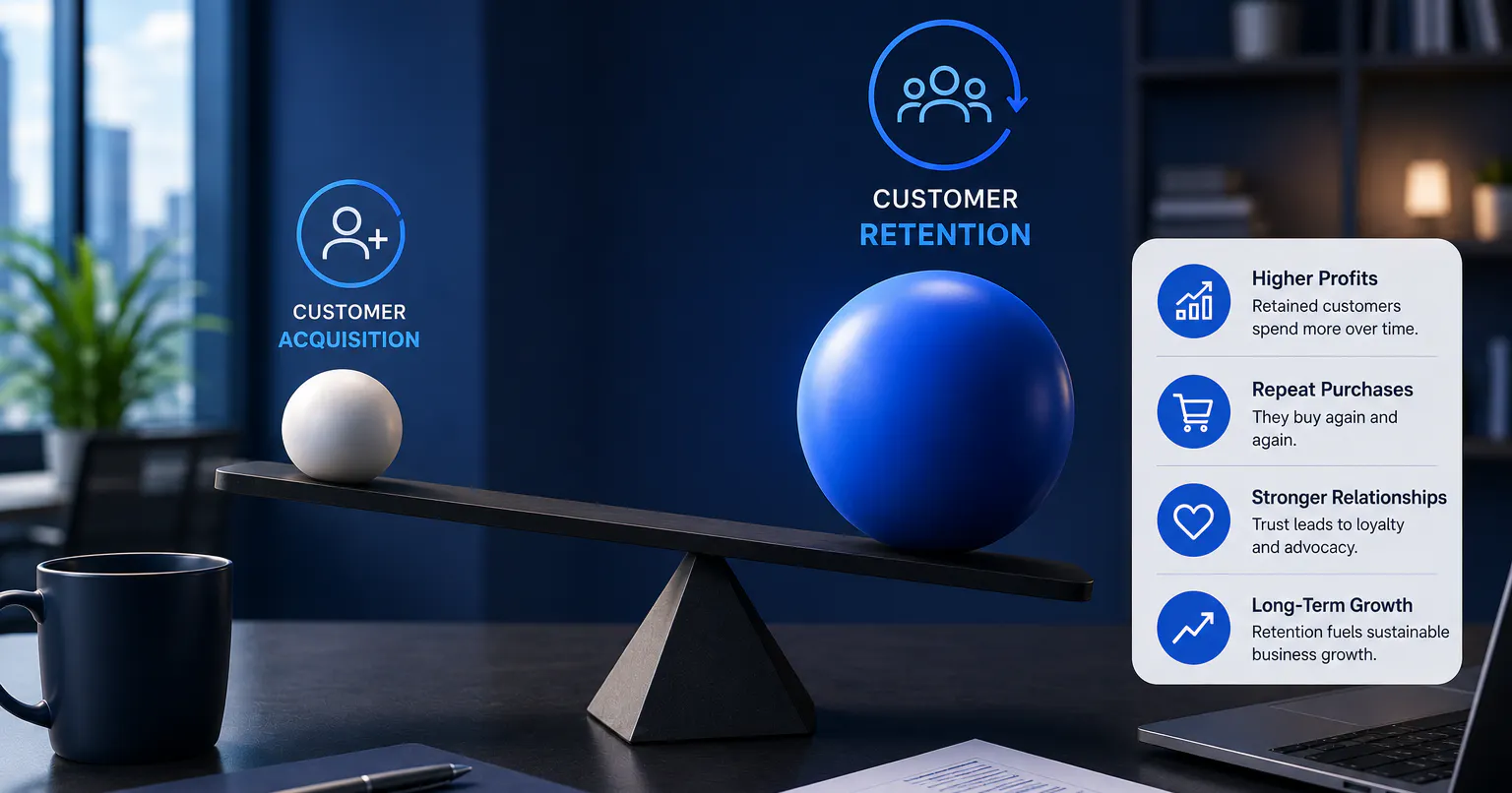
- Customer retention is more profitable than customer acquisition because existing customers are easier to convert, spend more over time, and cost significantly less to retain.
- Focusing on customer loyalty increases long term business growth by improving customer lifetime value (CLV), generating repeat purchases, referrals, and predictable revenue.
- Using AI, CRM, personalized experiences, and WhatsApp loyalty programs helps businesses reduce churn, strengthen customer relationships, and maximize retention in 2026.
Every business in the market is focused on acquiring new customers. While attracting new buyers is essential for growth, many businesses overlook the customers they already have. In reality, increasing customer retention is often far more profitable than constantly investing in customer acquisition.
According to Bain & Company (as cited by Paylode), a 5% increase in customer retention can boost profits by 25% to 95%. Existing customers are also far easier to convert, with a 60% to 70% chance of making a sale compared to just 5% to 20% for new prospects, according to Marketing Metrics (summarized by Paylode). In addition, loyal customers spend 67% more than new customers, based on a study by Manta and BIA/Kelsey.
In this guide, you'll learn why customer retention delivers greater long-term profitability than customer acquisition, the key metrics to measure retention success, and the strategies businesses can use to build lasting customer relationships.
Why Customer Retention Is More Important Than Customer Acquisition?
1. Lowers Customer Acquisition Costs
Winning new customers requires ongoing investment in advertising, lead generation, sales outreach, and promotional campaigns. Retaining existing customers reduces the need for constant acquisition, allowing businesses to maximize returns from previous marketing investments. As customer acquisition costs continue to rise across industries, improving retention has become one of the most cost-effective ways to increase profitability.
2. Increases Customer Lifetime Value (CLV)
Long-term customers generate more revenue throughout their relationship with a business. They purchase more frequently, explore additional products or services, and are more receptive to upselling and cross-selling opportunities. Research also shows that repeat customers spend 67% more than new customers by their third year, making customer retention a key driver of long-term customer lifetime value.
3. Creates Stable and Predictable Revenue
A loyal customer base provides recurring business that is easier to forecast than relying solely on new customer acquisition. Consistent repeat purchases improve cash flow, simplify financial planning, and reduce revenue fluctuations, allowing businesses to make more confident decisions around inventory, hiring, and future investments.
4. Improves Customer Loyalty and Competitive Advantage
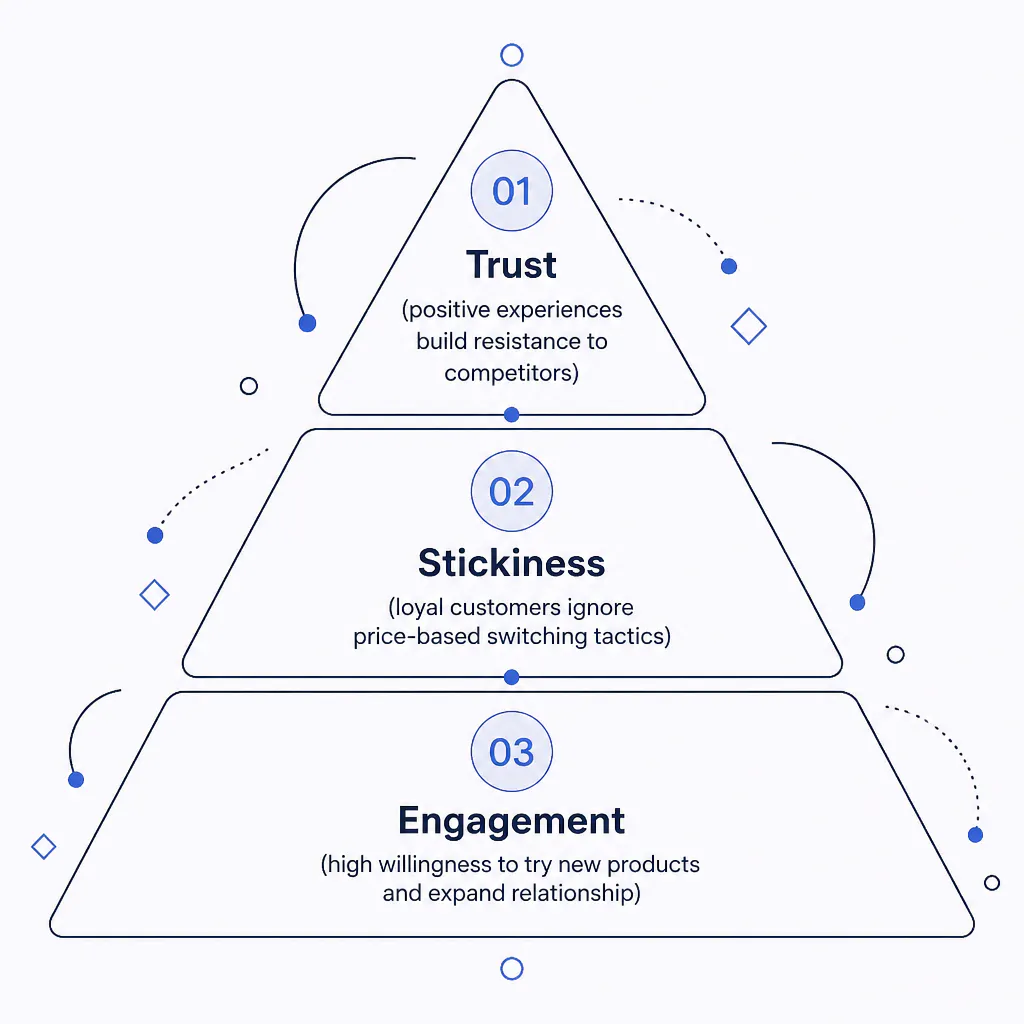
Customers who consistently receive positive experiences develop stronger trust in a brand over time. This loyalty makes them less likely to switch to competitors based solely on price or promotions. Strong customer relationships also encourage higher engagement and greater willingness to purchase newly launched products or services.
5. Generates More Referrals and Organic Growth
Satisfied customers often become brand advocates by sharing recommendations with colleagues, friends, and family. According to Nielsen, 92% of consumers trust recommendations from people they know more than traditional advertising, making referrals one of the most effective and cost-efficient ways to acquire new customers while reducing marketing spend.
6. Provides Better Customer Insights
Every interaction with a returning customer generates valuable behavioral data. Businesses can use purchase history, browsing behavior, engagement patterns, and feedback to improve audience segmentation, personalize marketing campaigns, refine products, and identify new growth opportunities with greater accuracy.
7. Increases Profit Margins
Retention improves profitability from multiple directions. Businesses spend less acquiring replacement customers while generating higher revenue from repeat purchases, referrals, and larger average order values. According to Bain & Company, increasing customer retention by just 5% can boost profits by 25% to 95%, demonstrating the significant financial impact of keeping customers engaged over the long term.
Customer Retention vs Customer Acquisition: Key Differences
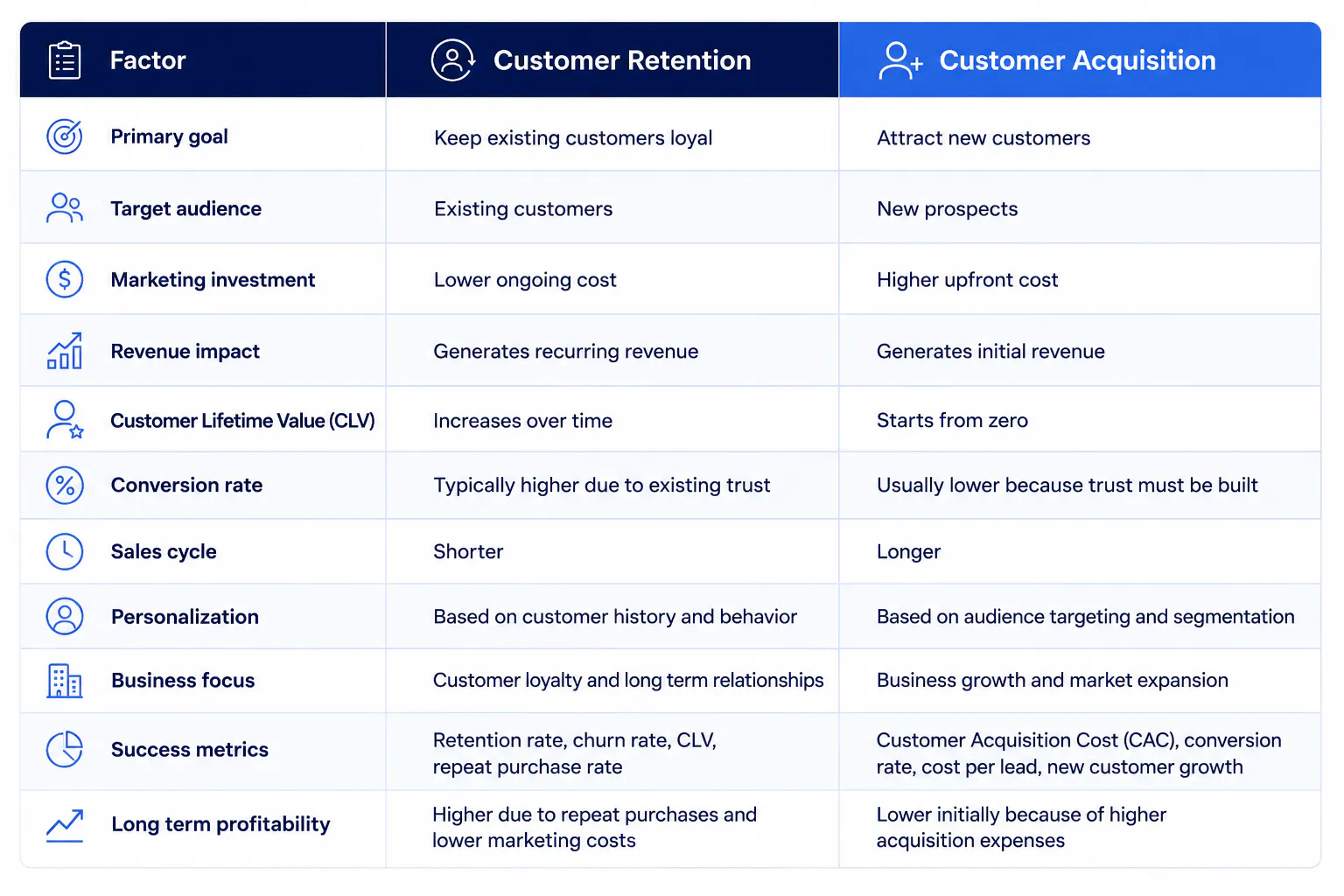
Customer retention and customer acquisition are both essential for business growth, but they serve different purposes. Customer acquisition focuses on bringing new buyers into the business, while customer retention aims to keep existing customers engaged and encourage repeat purchases.
Understanding how these strategies differ helps businesses allocate marketing budgets more effectively, improve profitability, and build sustainable long-term growth. The table below highlights the key differences between customer retention and customer acquisition.
Top Strategies to Boost Customer Retention in 2026
1. Deliver AI Powered Personalized Customer Experiences
Customers expect every interaction to feel relevant. Use first party data and AI to personalize product recommendations, offers, content, and communication across every touchpoint. Personalized experiences improve engagement, strengthen loyalty, and increase repeat purchases.
Best practices:
- Personalize recommendations
- Segment customers based on behavior
- Trigger campaigns based on customer actions
- Customize offers using purchase history
2. Proactively Collect and Act on Customer Feedback
Customer feedback helps businesses understand changing customer expectations before they become reasons for churn. Regularly collecting feedback through surveys, reviews, WhatsApp, and support interactions allows businesses to identify pain points, improve products and services, and strengthen customer relationships.
Best practices:
- Send post purchase feedback requests
- Measure customer satisfaction regularly
- Monitor online reviews and ratings
- Resolve complaints quickly
- Use customer insights to improve products and service
3. Launch a WhatsApp Based Loyalty Program
Modern loyalty programs should live where customers already communicate. Instead of relying on apps or email, businesses can use WhatsApp to automatically reward repeat purchases, notify customers about loyalty points, and deliver exclusive member benefits.
Best practices:
- Notify customers about loyalty points
- Send exclusive member offers
- Reward repeat purchases automatically
- Run referral and reward campaigns
- Share personalized discount vouchers
4. Identify At Risk Customers Before They Churn
Customer retention is most effective when businesses act before customers leave. By monitoring purchase frequency, engagement levels, and customer behavior, businesses can identify signs of declining activity and launch timely retention campaigns.
Best practices:
- Track customer health scores
- Monitor inactivity
- Launch automated win-back campaigns
- Trigger personalized retention offers
- Measure customer satisfaction regularly

5. Create a Connected Omnichannel Customer Journey
Customers interact with brands through websites, social media, email, WhatsApp, mobile apps, and offline channels. Connecting every touchpoint through a CRM creates a consistent experience, allowing businesses to deliver seamless communication and personalized engagement throughout the customer lifecycle.
Best practices:
- Centralize customer data
- Synchronize every communication channel
- Maintain consistent messaging
- Automate cross-channel campaigns
- Track the complete customer journey
Conclusion
Customer retention is no longer just a customer service strategy. It helps businesses grow steadily and increase profits over time. While customer acquisition brings in new buyers, retaining existing customers helps businesses earn repeat purchases, build loyalty, increase customer lifetime value, and reduce marketing costs.
Businesses that invest in personalized experiences, customer feedback, loyalty programs, proactive engagement, and connected customer journeys can build long term relationships that generate consistent revenue. By focusing on keeping existing customers engaged while continuing to attract new ones, businesses can create a balanced growth strategy that improves profitability and strengthens their competitive advantage.
People Ask Questions
Is retention better than acquisition?
Customer retention generally delivers a higher return on investment (ROI) than customer acquisition. Acquiring new customers often involves significant spending on advertising, sales, and promotions, making many customer relationships unprofitable at first. Retaining existing customers allows businesses to recover those acquisition costs through repeat purchases, higher customer lifetime value, and long term profitability. While acquisition fuels growth, retention maximizes the value of every customer acquired.
What is the 80-20 rule in customer retention?
The 80-20 rule, also known as the Pareto Principle, suggests that around 80% of a company's revenue often comes from 20% of its customers. Identifying and retaining these high value customers helps businesses maximize profitability and strengthen long term growth.
How does customer retention impact profitability?
Customer retention improves profitability by increasing repeat purchases, raising customer lifetime value, reducing acquisition costs, generating referrals, and creating more predictable revenue. According to Bain & Company, increasing customer retention by 5% can increase profits by 25% to 95%.
How much cheaper is retention than acquisition?
Retaining an existing customer is generally 5 to 25 times less expensive than acquiring a new one, according to research by Harvard Business Review and Bain & Company. Existing customers already trust the brand, making them easier to convert and less expensive to market to.