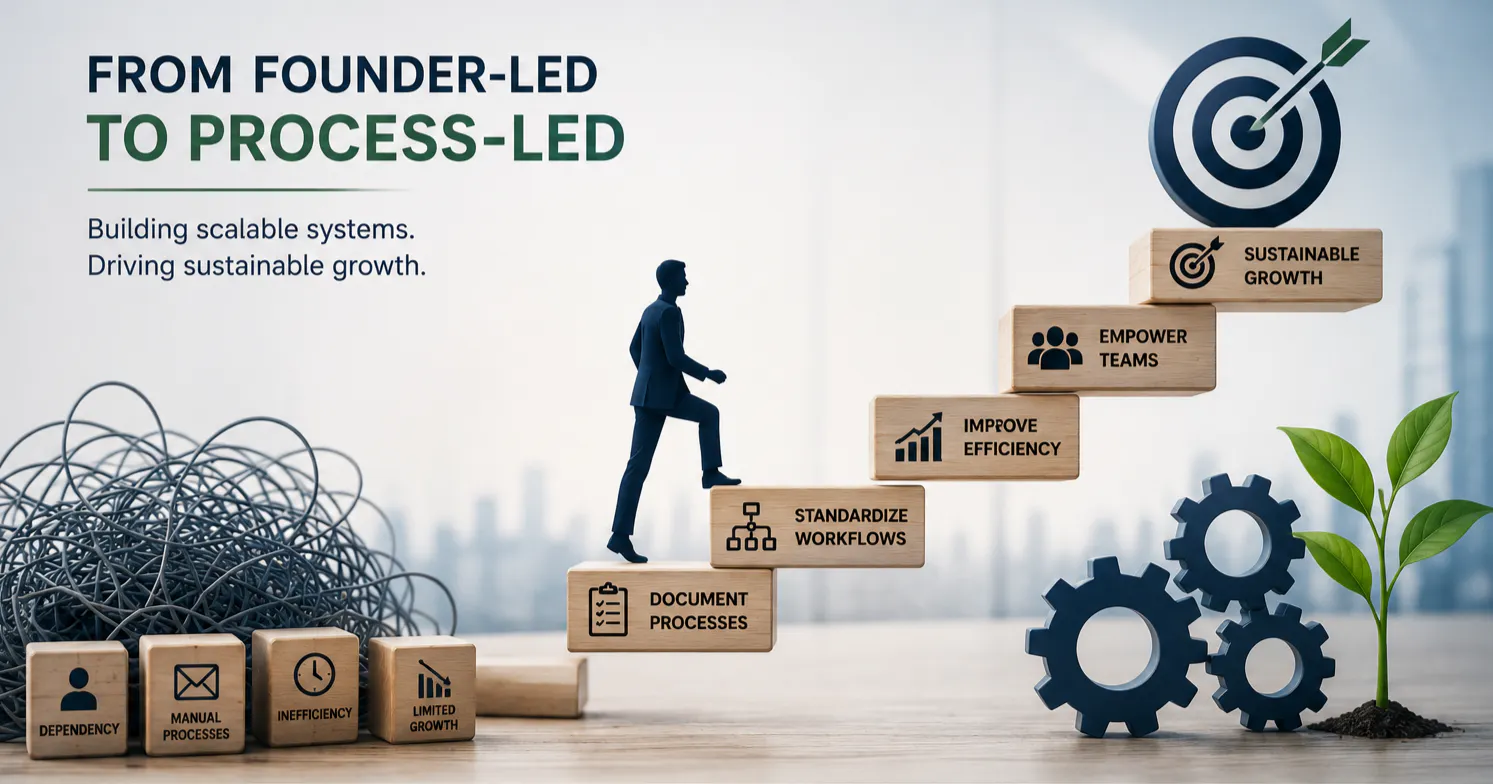

Why Founder-Led Businesses Struggle to Scale
Many businesses begin with a founder wearing multiple hats and making decisions quickly through direct involvement in nearly every aspect of the organization. In the early stages, this level of hands-on leadership can be a significant advantage. It creates speed, agility, and strong personal investment in the success of the business.
However, as organisations grow, the same operating style that once fueled success success can begin to create limitations and paralyze scalability.
Growth increases complexity. Teams become larger, customers become more diverse, and the volume of decisions and operational activities expands rapidly. What once worked through informal communication and individual knowledge can become difficult to sustain.
At this stage, many businesses encounter similar challenges:
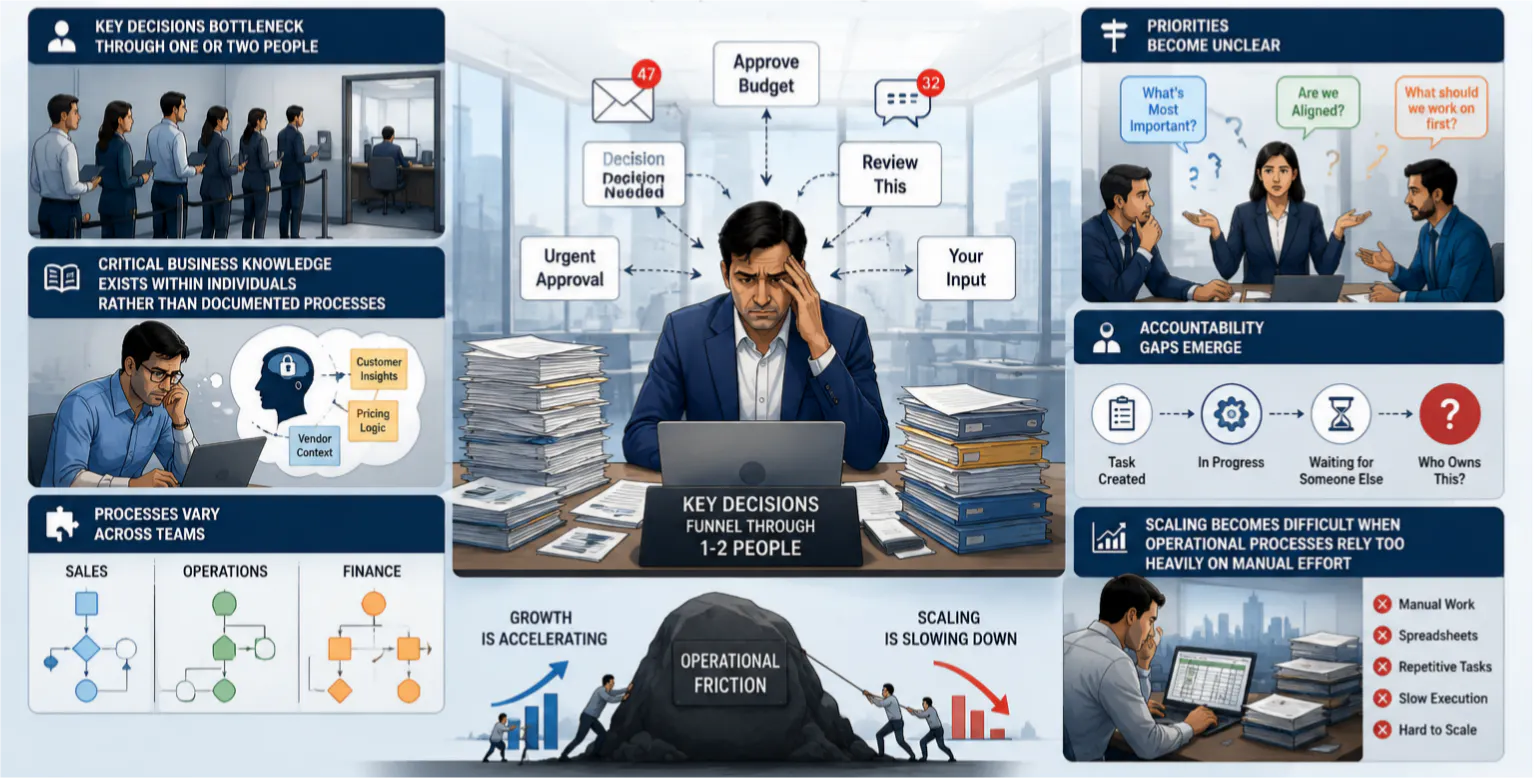
One of the most important transitions a growing organization can make is moving from a founder-led operating model to a more process-led organization.
This does not mean removing entrepreneurial thinking or creating unnecessary bureaucracy. In fact, effective operational structure should enable growth and agility – not slow it down.
The Benefits of a Process-Led Organization
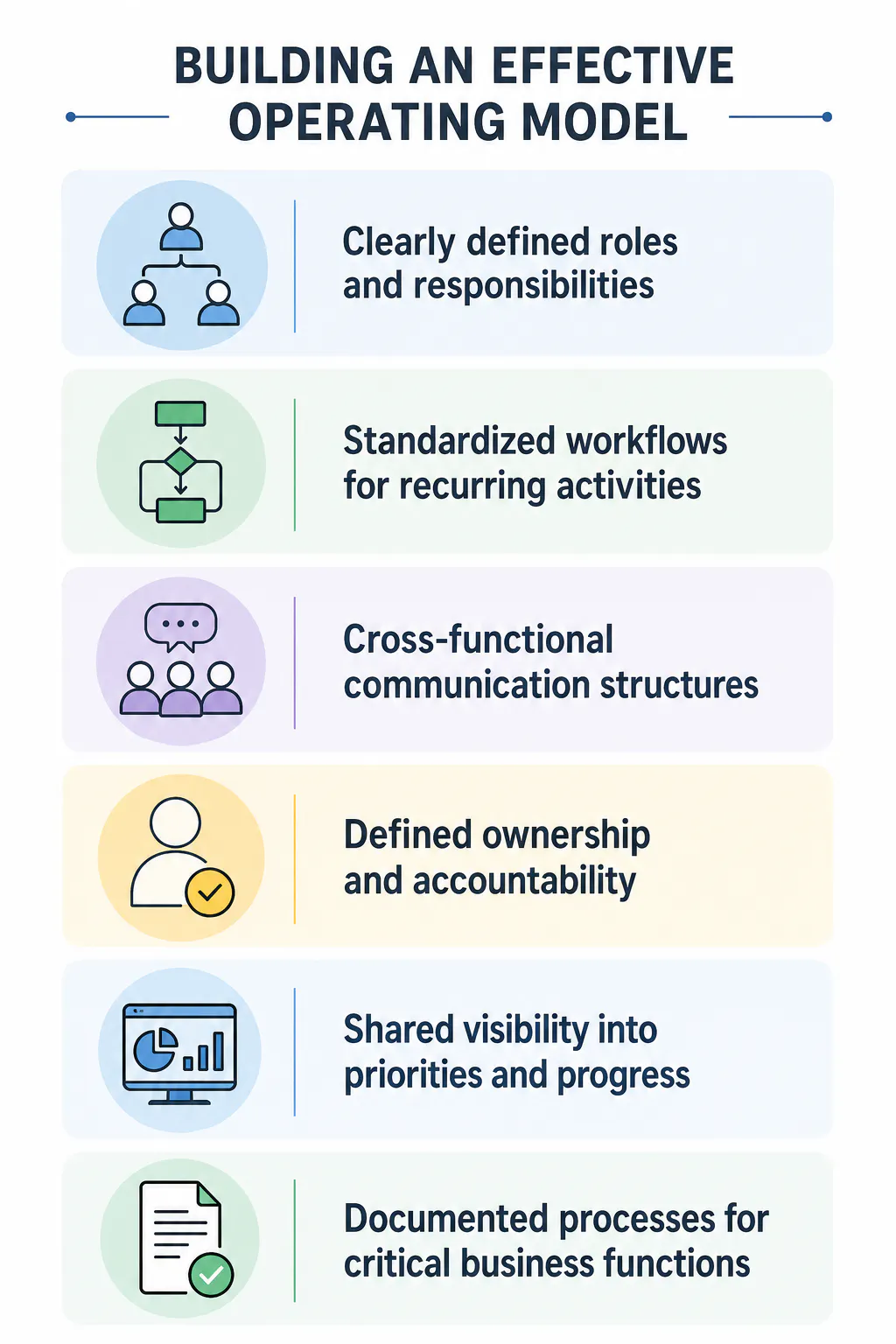
A process-led organization creates consistency around how work is executed, communicated, and managed across the business.
Why Process Improves Innovation and Operational Efficiency
One of the biggest misconceptions about process is that it limits innovation. In reality, the absence of process often creates operational noise that prevents teams from focusing on higher-value work.
When organizations lack structure, employees spend unnecessary time:
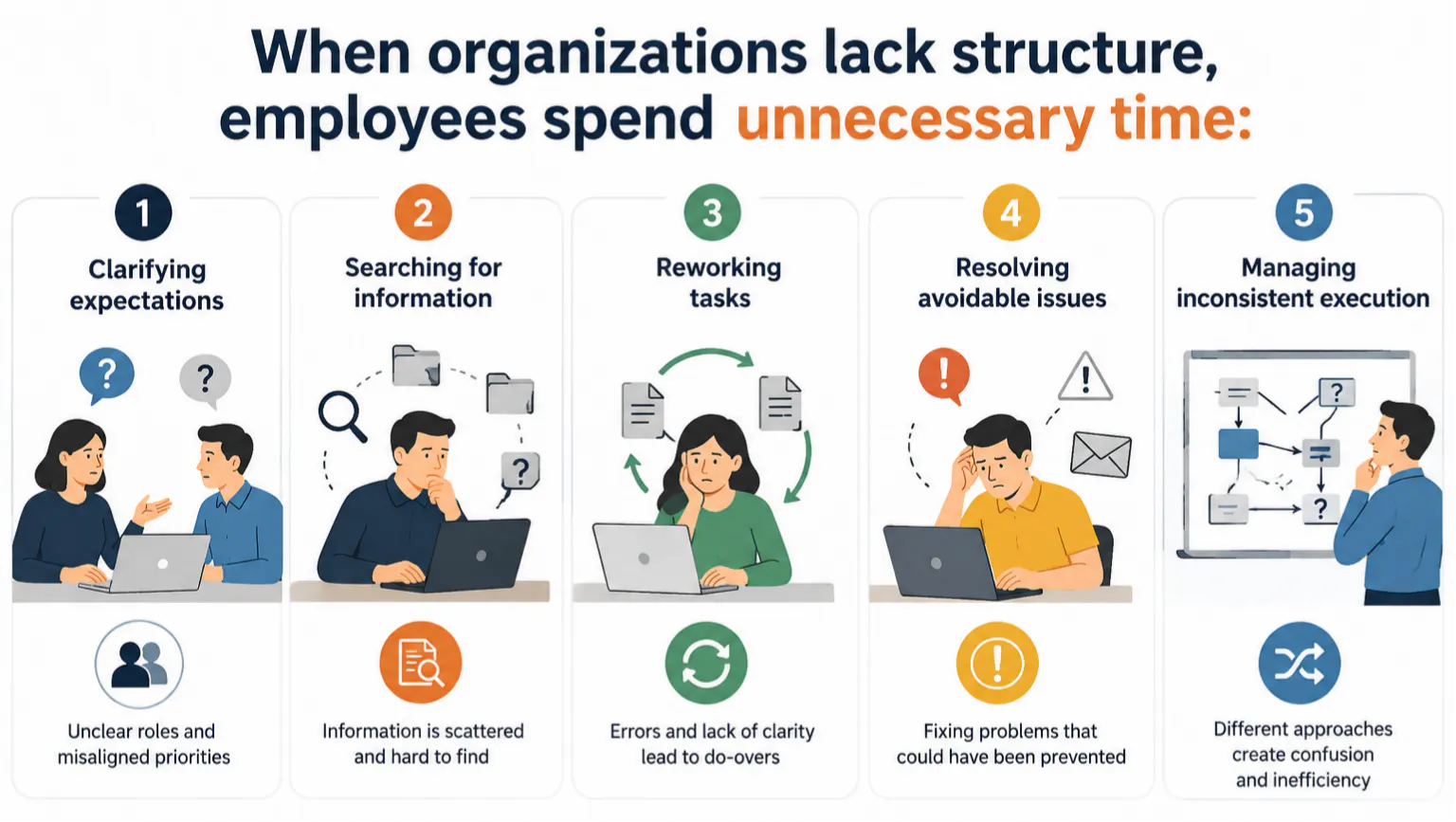
Operational clarity allows teams to spend more time driving the business forward rather than reacting to preventable problems and operational gaps.
Reducing Operational Risk Through Documentation and Knowledge Management
Another important consideration is sustainability. Businesses that rely too heavily on a small number of individuals for operational continuity create significant continuity and scalability risk. If key knowledge exists only within individuals rather than within documented organizational processes, sustainable growth becomes difficult to maintain. When employees leave, organizations risk losing critical operational knowledge along with them.
Scalable organizations create systems, workflows, documentation, and communication structures that allow teams to operate effectively beyond individual dependencies.
Technology Supports Process–It Does Not Replace It
Technology can support this evolution, but technology alone is rarely the answer. Without clear processes and operational alignment, new systems often introduce additional complexity instead of improving execution. No matter how much technology is introduced, unclear workflows and inconsistent processes will continue to create operational chaos.
Three Steps to Begin Building a Scalable Business
Here are a few best practices to begin your review of where you are and where you want to be:
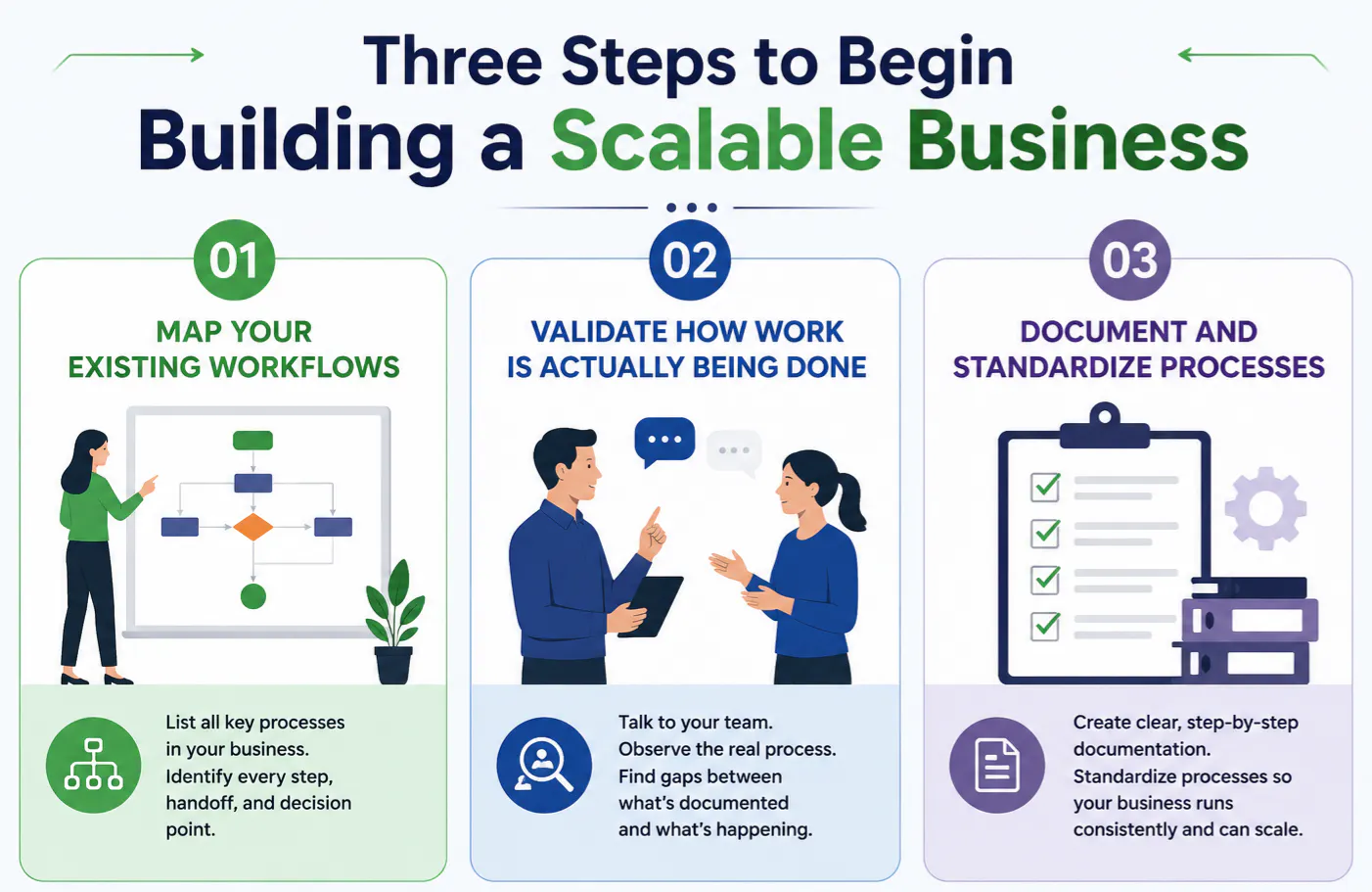
1. Map Your Existing Workflows
Meet with each functional area of the business and sketch out how work flows from beginning to end. At a high level, whiteboard every interaction, decision point, and handoff throughout the process. Identify areas where work remains highly manual and where automation or process improvements may create operational efficiencies.
2. Validate How Work Is Actually Being Done
Once those workflows are drafted, revisit them with every department or team involved to ensure you are documenting how processes are actually being executed today — not how you assume they are being executed. Organizations are often surprised to discover that processes are not always being executed the way leadership believes they are.
This is how opportunities are spotted.
3. Document and Standardize Processes
Once you agree on the process, document it. This creates transparency and repeatability, which become foundational benchmarks for scaling.
Identifying Opportunities for Process Improvement
I have spent countless hours working alongside functional teams and have often been surprised by the number of manual processes employees continue to follow simply because ‘that is how it has always been done.’ Many organizations uncover significant opportunities for efficiency, automation, and process improvement once they take the time to closely evaluate how work is actually being performed. This allows leaders to step back, identify improvement opportunities, and begin making small operational changes over time that can create significant long-term impact.
Creating a Strong Foundation for Sustainable Growth
Moving from founder-led to process-led is not about losing the culture or energy that built the business. It is about creating a stronger operational foundation that allows the organization to continue growing sustainably over time.
The ArthaVerse Perspective
Many SMEs reach a point where growth begins to slow because too many decisions, approvals, and customer interactions depend on the founder.
ArthaVerse helps businesses:
✓ Standardize workflows
✓ Implement lead management systems
✓ Automate repetitive tasks
✓ Improve team accountability
✓ Build scalable customer acquisition processes
✓ Access expert guidance for business transformation
About the Author
Yvonne Greer is an Enterprise Transformation Leader with expertise in strategic execution, operating model design, enterprise systems modernization, and organizational change. Skilled in aligning cross-functional teams, driving adoption, and translating complex business priorities into scalable, measurable outcomes.

