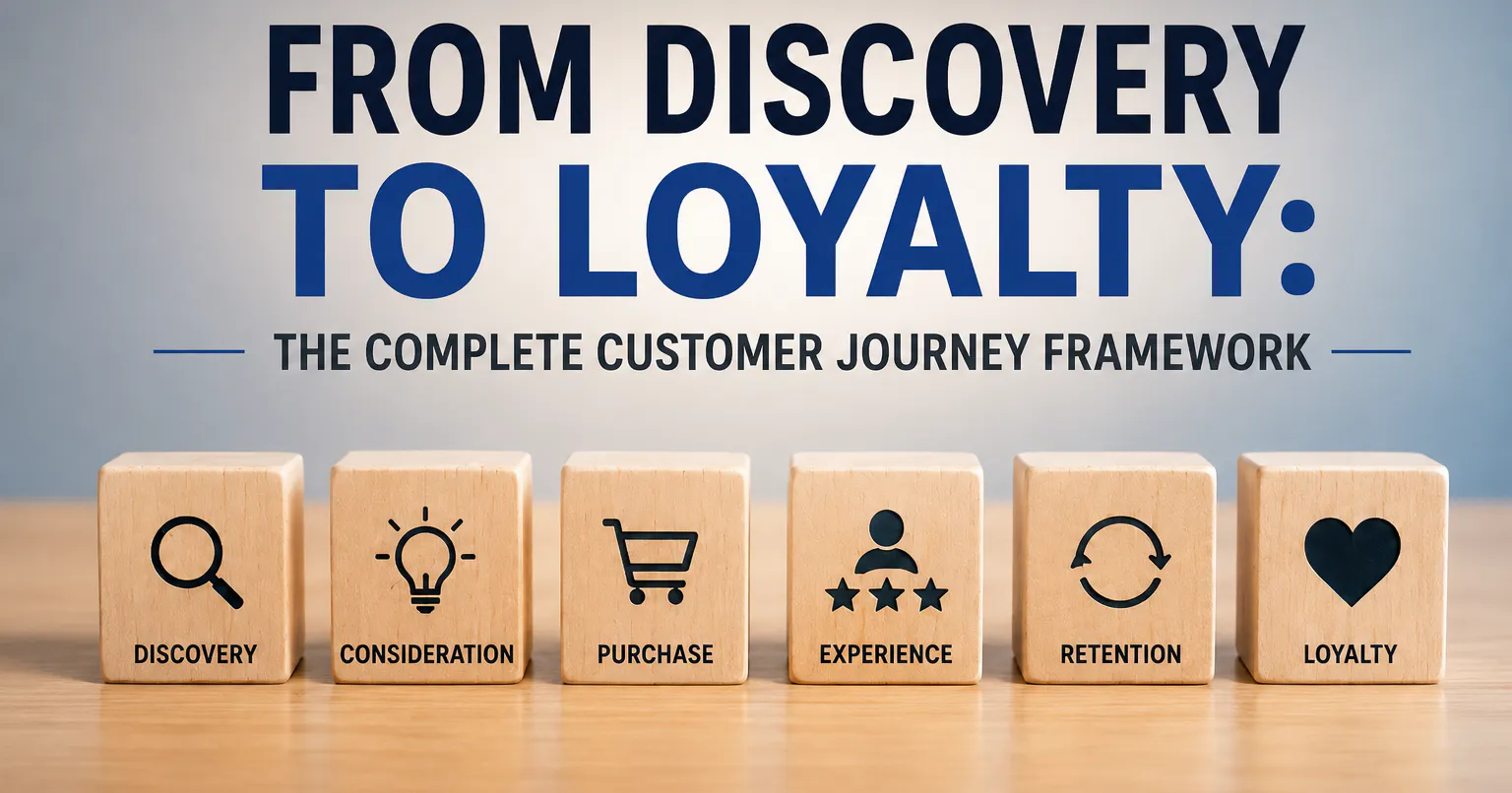

Key Takeaways
- Customer loyalty programs increase retention by rewarding repeat purchases, strengthening customer relationships, and encouraging long term engagement.
- Personalization, WhatsApp loyalty, post purchase engagement, and customer feedback help businesses create meaningful experiences that keep customers coming back.
- Successful loyalty programs focus on long term relationships rather than discounts, increasing customer lifetime value (CLV), referrals, and sustainable business growth.
Customer expectations are rising, budgets are tightening, and customer acquisition costs continue to climb. If you're leading marketing strategy today, you're under constant pressure to deliver sustainable growth without continuously increasing your marketing spend. While acquiring new customers remains important, improving customer retention has become one of the most profitable ways to grow a business.
Retaining existing customers reduces acquisition costs, increases customer lifetime value, and creates more predictable revenue over time. In fact, 82% of companies agree that retaining customers is more cost-effective than acquiring new ones. Strong customer retention doesn't happen by chance. It requires a well-designed loyalty strategy that keeps customers engaged long after their first purchase.
In this guide, you'll learn how to build an effective customer loyalty system, explore different types of loyalty programs, and discover practical strategies that encourage repeat purchases, strengthen customer relationships, and improve long-term retention.
What Is a Customer Loyalty Program?
A customer loyalty program is a structured marketing strategy that rewards customers for making repeat purchases or engaging with a brand. By offering incentives such as points, discounts, exclusive benefits, or rewards, loyalty programs encourage customers to return, increase customer retention, and build long-term relationships with the business.
Why Customer Retention Matters More Than Ever?
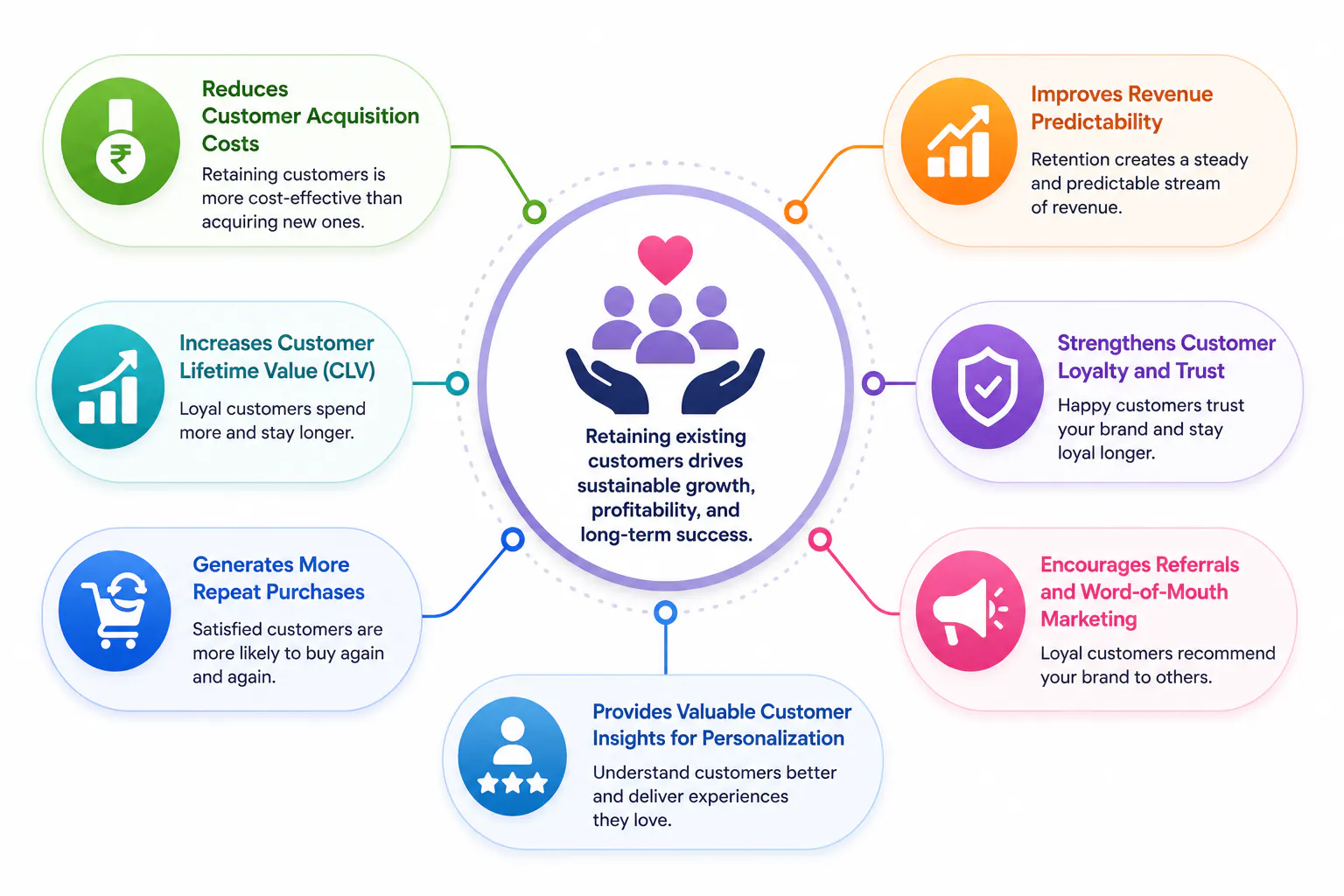
Customer retention has become a key driver of sustainable business growth. As customer acquisition costs continue to increase, retaining existing customers helps businesses maximize profitability, strengthen customer relationships, and create long-term revenue.
- Reduces customer acquisition costs
- Increases customer lifetime value (CLV)
- Generates more repeat purchases
- Improves revenue predictability
- Strengthens customer loyalty and trust
- Encourages referrals and word-of-mouth marketing
- Provides valuable customer insights for personalization
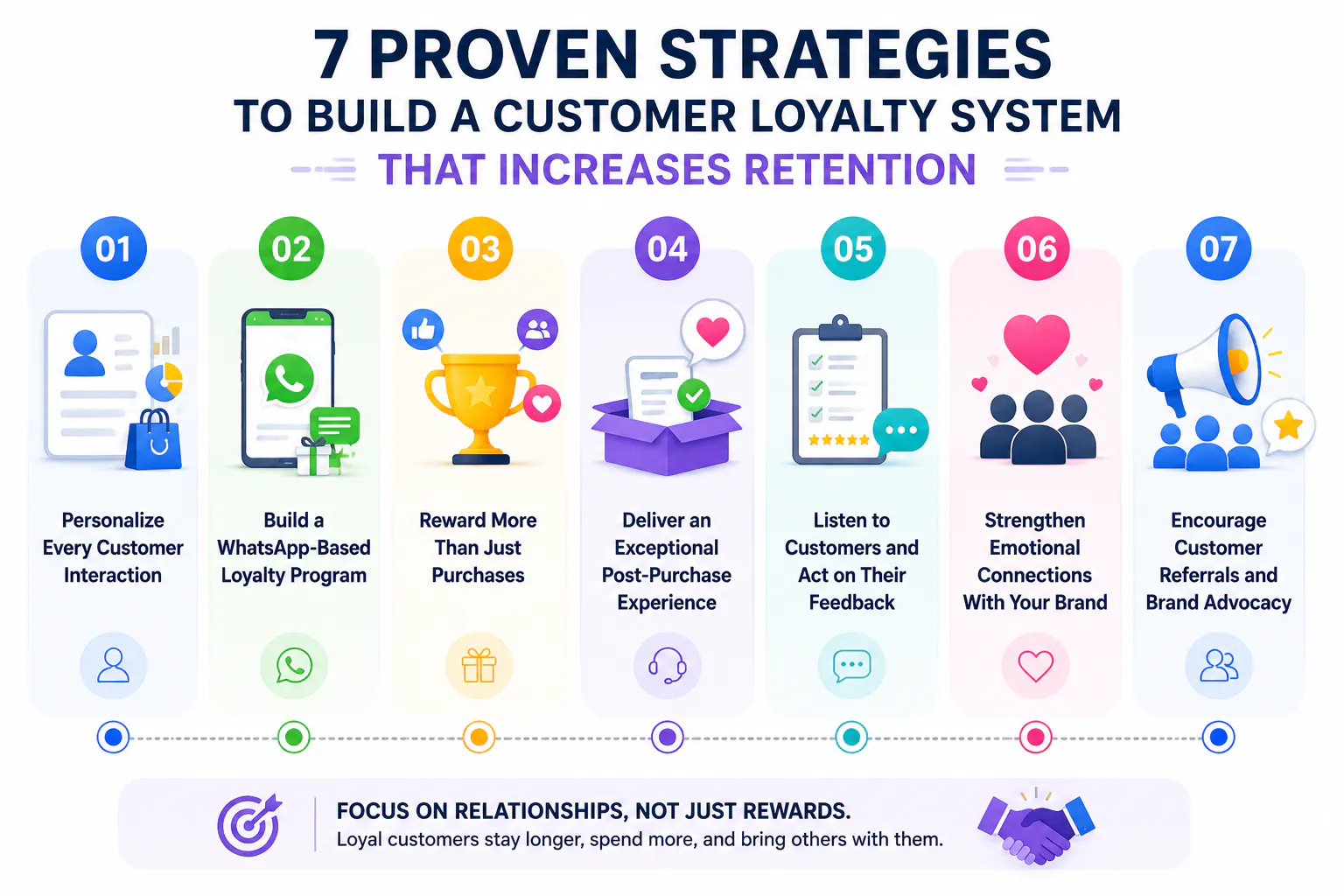
Seven Proven Strategies to Build a Customer Loyalty System That Increases Retention
A successful loyalty system goes beyond offering discounts or collecting points. It creates meaningful customer experiences, strengthens relationships, and gives customers compelling reasons to keep choosing your brand. Here are seven proven strategies that help improve customer retention in 2026.
1. Personalize Every Customer Interaction
Modern customers expect brands to understand their preferences and deliver relevant experiences. Use first-party data such as purchase history, browsing behavior, and engagement patterns to personalize product recommendations, emails, offers, and loyalty rewards.
According to McKinsey & Company research shows that businesses delivering personalized experiences generate up to 40% more revenue than competitors that do not prioritize personalization. Personalization also improves customer satisfaction and increases repeat purchases.
Best practices
- Segment customers based on behavior and interests.
- Recommend products using previous purchases.
- Send personalized offers on birthdays or milestones.
- Customize loyalty rewards for different customer groups.
2. Build a WhatsApp-Based Loyalty Program
Email open rates continue to decline, while customers increasingly prefer messaging apps for brand communication. A WhatsApp-based loyalty program allows businesses to engage customers instantly with personalized rewards, exclusive offers, order updates, and loyalty reminders.
Unlike traditional loyalty cards, WhatsApp creates a direct communication channel that encourages faster responses and repeat purchases.
Best practices
- Notify customers when reward points are earned.
- Send exclusive member-only promotions.
- Deliver early access to product launches.
- Automate loyalty reminders and reward redemption.
3. Reward More Than Just Purchases
Loyalty should not depend only on how much customers spend. Encourage deeper engagement by rewarding actions that strengthen your brand community.
Customers can earn rewards for writing reviews, referring friends, sharing content, completing profiles, attending events, or engaging with your brand across multiple channels.
Reward customers for
- Product reviews
- Referrals
- Social media engagement
- Survey participation
- Profile completion
- Community participation
4. Deliver an Exceptional Post-Purchase Experience
The customer journey does not end after checkout. The post-purchase experience often determines whether someone buys again or switches to a competitor.
Provide proactive communication, educational content, support resources, reorder reminders, and personalized follow-ups throughout the ownership journey.
According to multiple customer experience studies, customers are far more likely to remain loyal after consistently positive service experiences than after receiving occasional discounts.
Examples include
- Product setup guides
- Usage tips
- Replenishment reminders
- Satisfaction surveys
- Proactive customer support
- Personalized product recommendations
5. Listen to Customers and Act on Their Feedback
Customer feedback is one of the most valuable retention tools available. Businesses that regularly collect, analyze, and act on customer feedback demonstrate they genuinely value customer opinions.
More importantly, customers become more loyal when they see their suggestions translated into product improvements or better service.
Ways to collect feedback
- Net Promoter Score (NPS) surveys
- Post purchase surveys
- WhatsApp conversations
- Customer interviews
- Website feedback widgets
- Product reviews
Always communicate improvements by telling customers exactly what changes were made based on their feedback.
6. Strengthen Emotional Connections With Your Brand
Price alone rarely creates long term loyalty. Customers remain loyal because they trust your brand, relate to your values, and consistently enjoy positive experiences.
Build emotional loyalty through authentic storytelling, community engagement, consistent branding, and shared values that resonate with your audience.
According to Edelman's Trust Barometer, brand trust remains one of the strongest drivers of long term customer loyalty and advocacy.
Ways to build emotional loyalty
- Share authentic customer success stories.
- Support meaningful social initiatives.
- Create memorable brand experiences.
- Build active customer communities.
- Maintain consistent messaging across every touchpoint.
7. Encourage Customer Referrals and Brand Advocacy
Satisfied customers are your most effective marketing channel. Referral programs turn loyal customers into advocates who introduce your business to friends, family, and colleagues.
Research from Nielsen's Global Trust in Advertising report shows that 92% of consumers trust recommendations from people they know more than traditional advertising, making referrals one of the highest converting acquisition channels.
Create referral programs that reward both the existing customer and the new customer.
Referral program ideas
- Give both customers store credit.
- Offer bonus loyalty points.
- Unlock exclusive rewards after multiple referrals.
- Create VIP referral tiers.
- Celebrate top brand advocates.
Referral programs not only reduce acquisition costs but also attract higher-quality customers who are more likely to remain loyal over time.
How Leading Brands Build Customer Loyalty
Successful loyalty programs are built around customer experience, convenience, and long-term relationships rather than discounts alone. Here are two brands that have successfully increased customer retention through different approaches.
Starbucks: Turning Everyday Purchases Into Habit
Challenge
Starbucks wanted to encourage customers to visit more frequently while reducing reliance on one-time promotions and discounts.
Strategy
Starbucks developed Starbucks Rewards, a mobile-first loyalty program that combines rewards, payments, and personalization into one seamless experience.
The program allows customers to:
- Earn Stars with every purchase.
- Redeem rewards for free drinks and food.
- Receive personalized offers based on buying habits.
- Order and pay ahead through the mobile app.
- Access exclusive member promotions and early product launches.
By integrating loyalty directly into its mobile experience, Starbucks made repeat purchases effortless while collecting valuable first-party customer data.
Results
- More than 34 million active Starbucks Rewards members in the US.
- Loyalty members account for over 55% of US company-operated sales.
- Higher purchase frequency and stronger customer lifetime value.
Conclusion
Customer loyalty is built through consistent, personalized experiences that make customers want to return. By combining meaningful rewards, proactive engagement, customer feedback, and ongoing communication, businesses can strengthen relationships and encourage repeat purchases.
As competition continues to grow, organizations that focus on long term customer relationships rather than short term promotions will increase customer lifetime value, reduce acquisition costs, and build a stronger foundation for sustainable growth.