
Key Takeaways
- AI agents engage website visitors instantly, replacing static contact forms with real time conversations that improve lead capture and customer experience.
- Unlike traditional chatbots, AI agents understand customer intent, qualify leads, answer complex questions, schedule meetings, and automate business workflows.
- Businesses that adopt AI agents can increase conversion rates, reduce response times, and create an AI first customer journey that drives more qualified leads and sales.
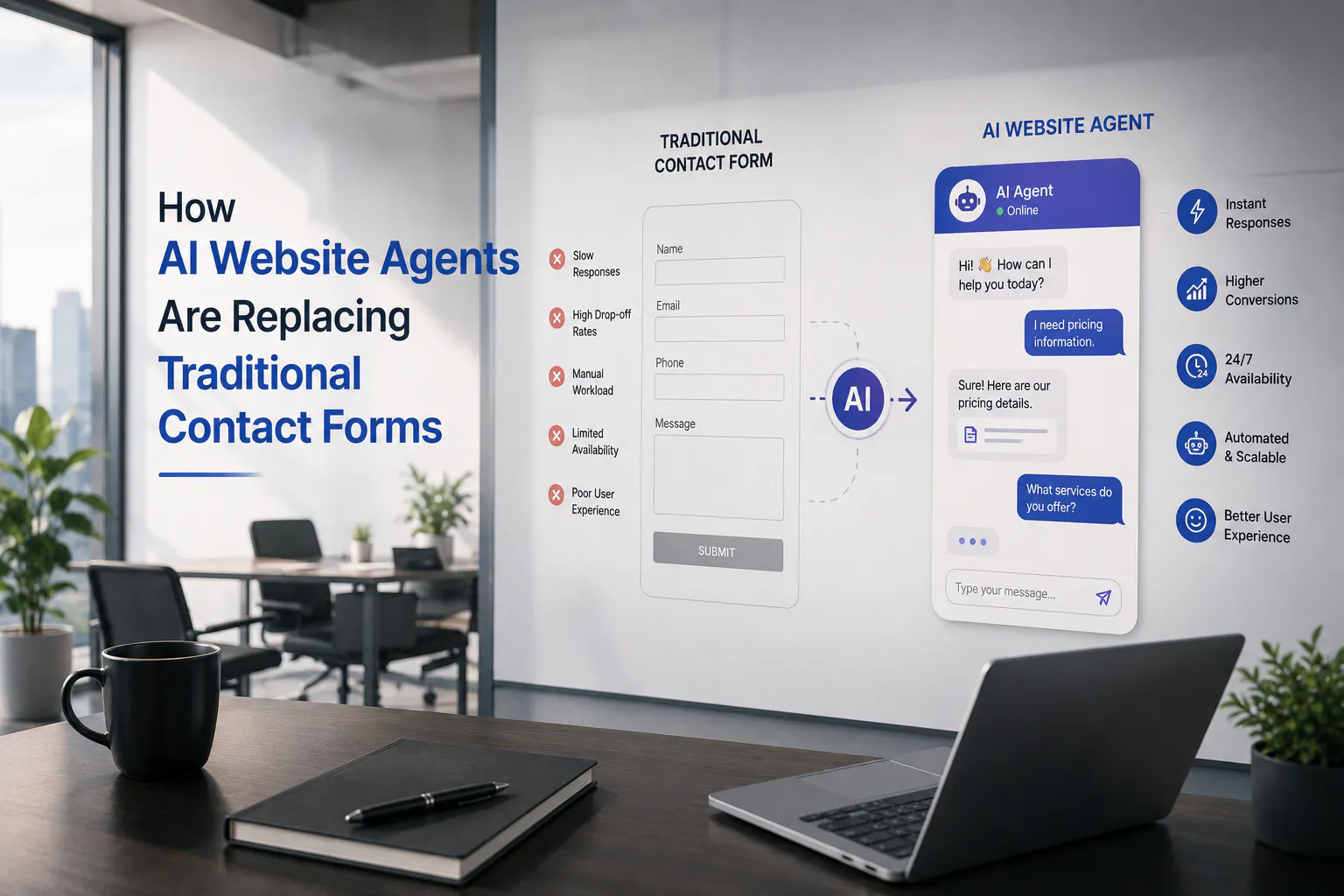
The traditional contact form is dying. Today's customers expect instant answers, personalized interactions, and real-time support instead of filling out forms and waiting for a reply. Businesses that continue relying on static lead capture are losing potential customers before conversations even begin.
The data highlights this shift. Static contact forms typically convert at less than 3%, while AI-powered conversational lead capture achieves conversion rates of 10% to 25%, according to GetAIForm. A 2026 LinkedIn benchmark also found that conversational AI delivers three to five times higher conversion rates than traditional contact forms.
In this guide, you'll learn how AI agents are replacing traditional contact forms and chat journeys, why they convert more leads, and how businesses can build an AI-first customer experience in 2026.
What Are AI Agents?
AI agents are intelligent software systems that can understand customer intent, make decisions, and complete tasks without constant human involvement.
Unlike traditional chatbots that follow predefined rules, AI agents use large language models, business knowledge, and real-time data to hold natural conversations, answer complex questions, qualify leads, recommend products, schedule meetings, and perform actions across multiple channels.
For businesses, AI agents act as virtual sales and support representatives that are available around the clock. They engage visitors instantly, capture valuable first-party data, and guide customers through their journey from their first question to conversion.
Read more: The Complete Customer Journey Framework Explained
Example:
Imagine a visitor lands on your website and types:
"I'm looking for payroll outsourcing for my print business. Can you help?"
Instead of asking the visitor to complete a contact form, an AI agent immediately starts the conversation. It explains the available payroll services, asks qualifying questions about the business, recommends the most suitable solution, answers pricing queries, schedules a meeting with the sales team, and automatically records the conversation in the CRM for follow-up.
The customer receives instant assistance without waiting for a response, creating a faster and more seamless experience.
Why Traditional Contact Forms Are Dying?
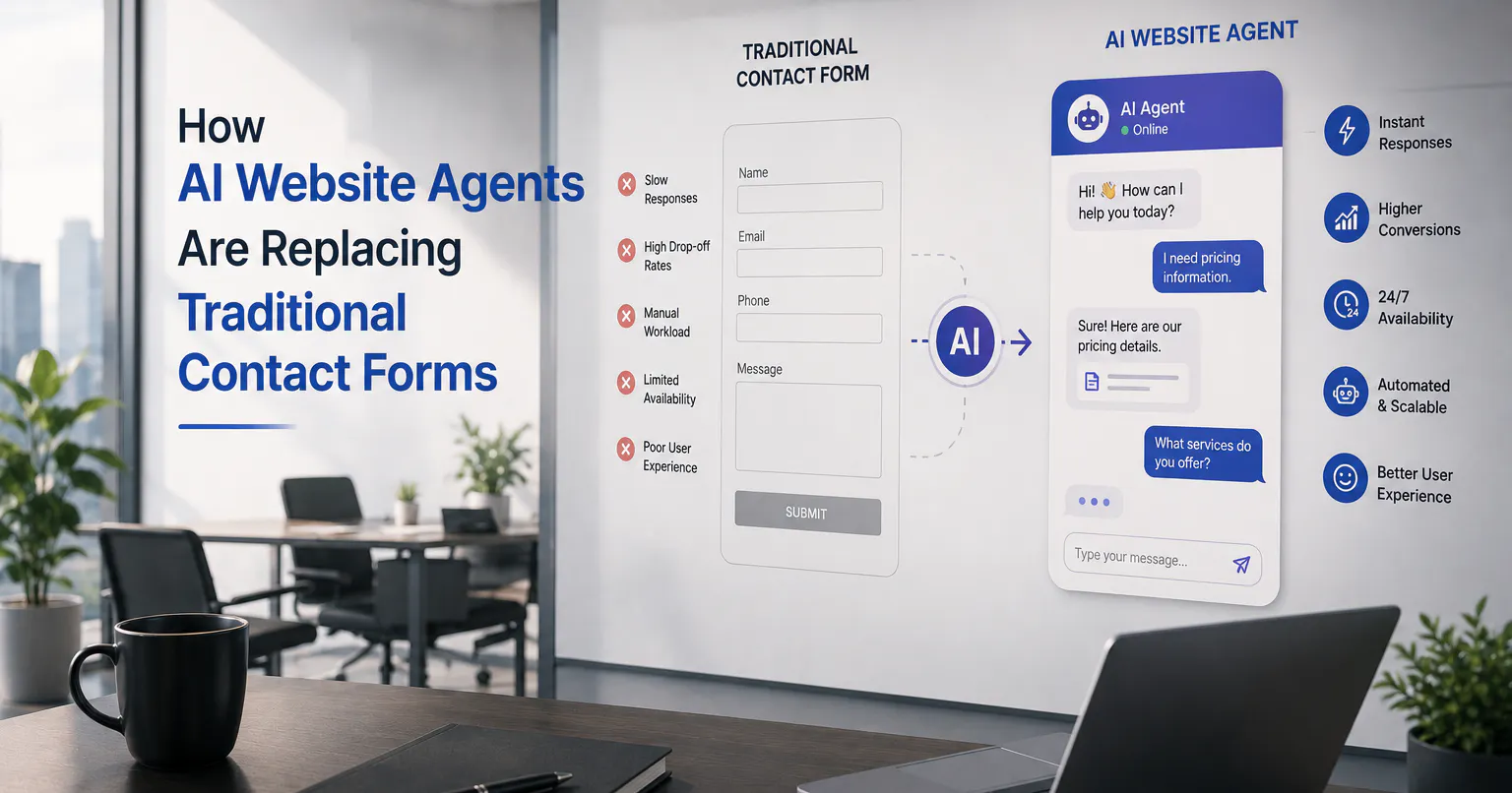
Traditional contact forms are no longer the most effective way to generate and qualify leads. Customer expectations have changed, and static forms often create friction instead of driving conversions.
- Slow response times reduce conversions: Customers expect immediate engagement, but according to revenue.io the average response time for a new lead is 42 hours, giving prospects plenty of time to move to a competitor.
- High form abandonment rates: Research shows that up to 81% of visitors leave a website if they cannot quickly find the information or assistance they need, making static forms ineffective for customers seeking immediate answers.
- Lower conversion rates: Traditional contact forms typically convert at only 1% to 3%, while AI-powered conversational lead capture commonly achieves 10% to 25% conversion rates by engaging visitors in real time.
- No real-time assistance: Static forms collect contact information but cannot answer questions, recommend products, resolve objections, or guide visitors toward the next step.
- Limited lead qualification: Every visitor submits the same form regardless of their needs, leaving sales teams to manually qualify leads instead of receiving rich customer context upfront.
- Poor customer experience: Long forms, delayed follow-ups, and one-way communication create unnecessary friction, leading many potential customers to abandon their journey before converting.
Chatbot vs AI Agents: What's the Difference?
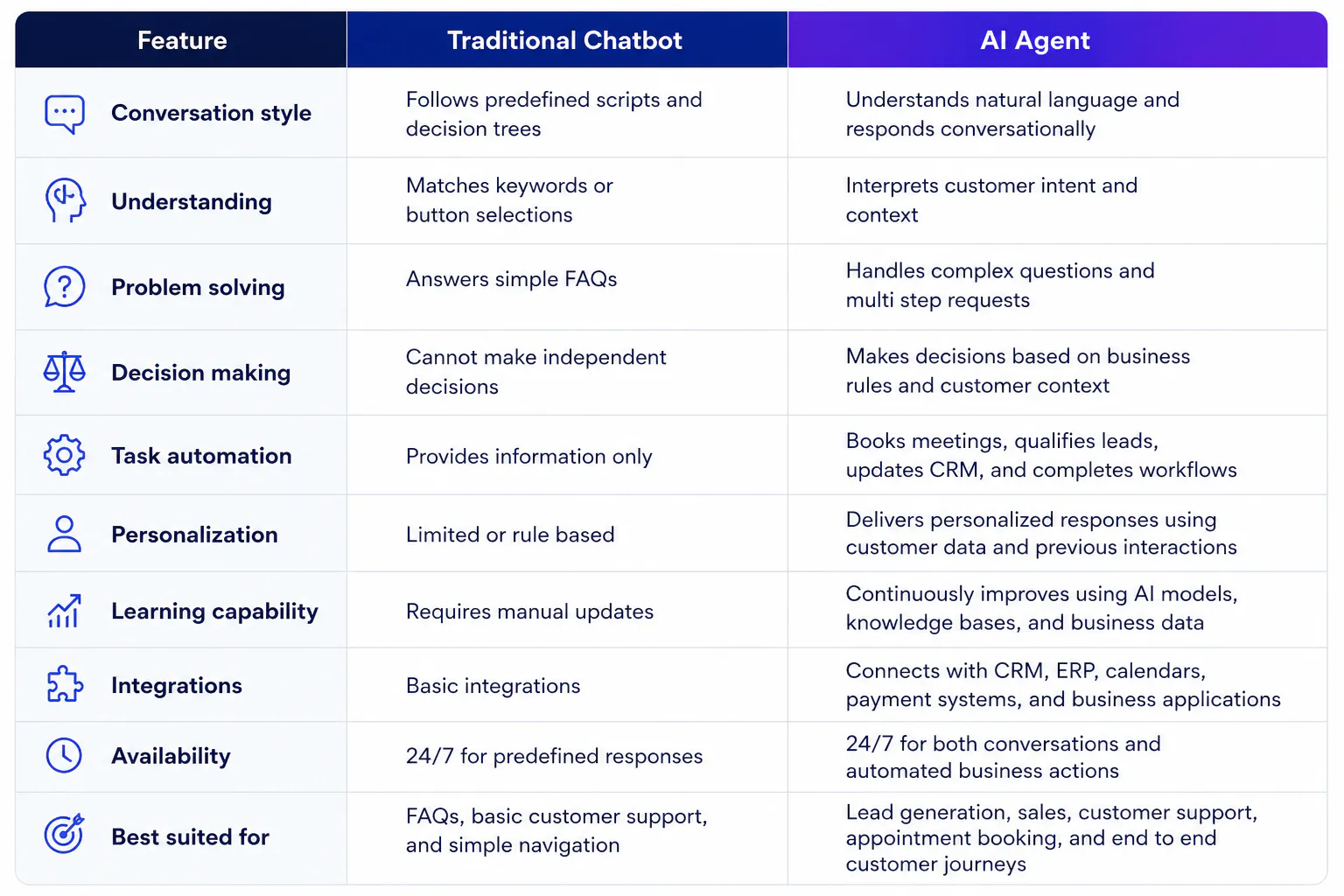
While both chatbots and AI agents automate customer conversations, their capabilities are very different. Traditional chatbots follow predefined rules and scripted responses, whereas AI agents understand intent, reason through requests, and complete tasks without human intervention.
Why Brands Are Choosing AI Agents Over Chatbots and Contact Forms
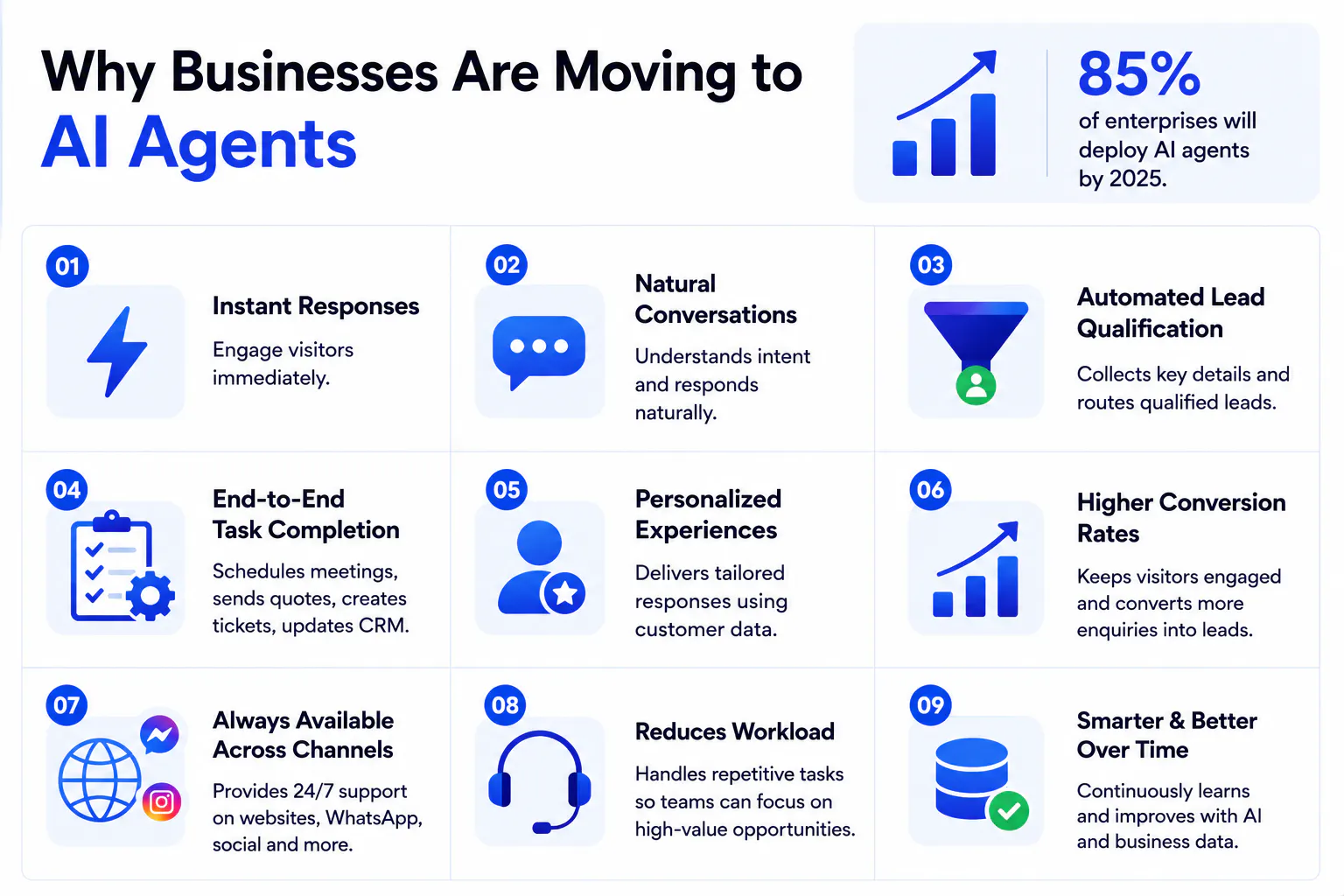
Businesses are moving beyond traditional chatbots and static contact forms because customers expect faster responses, personalized interactions, and seamless experiences. AI agents combine conversational intelligence with automation, allowing brands to engage, qualify, and convert customers in a single conversation. 85% of enterprises are expected to deploy AI agents by 2025, highlighting how quickly conversational AI is becoming a business priority.
- Instant responses instead of delayed follow-ups: AI agents engage visitors immediately, eliminating the waiting time associated with contact forms and reducing the risk of losing leads.
- Natural conversations instead of scripted replies: Unlike rule-based chatbots, AI agents understand customer intent and respond with context-aware, human-like conversations.
- Automated lead qualification: AI agents collect business requirements, budgets, timelines, and other key information before routing qualified leads directly to the appropriate sales representative.
- End-to-end task completion: Beyond answering questions, AI agents can schedule meetings, generate quotations, recommend products, create support tickets, and update CRM records automatically.
- Personalized customer experiences: By using CRM data, browsing history, and previous interactions, AI agents deliver tailored recommendations and responses for every visitor.
- Higher conversion rates: Conversational AI keeps visitors engaged throughout their journey, helping businesses convert more enquiries into qualified leads than traditional contact forms or basic chatbots.
- Continuous availability across channels: AI agents provide consistent support on websites, WhatsApp, Facebook Messenger, Instagram, and other digital channels, allowing customers to continue conversations wherever they prefer.
- Reduced workload for sales and support teams: By handling repetitive enquiries and routine tasks, AI agents allow employees to focus on complex conversations and high value opportunities.
How ArthaGPT Helps Businesses Replace Traditional Contact Forms
Traditional contact forms often let potential customers leave before a conversation begins. ArthaGPT, ArthaVerse's AI agent, engages visitors instantly, answers their questions, qualifies genuine enquiries, and follows up automatically. This helps businesses capture more leads, improve response times, and stay available for every opportunity, even when their team is offline.
How ArthaGPT helps your business:
- Engages every website visitor in real time
- Captures and qualifies genuine enquiries automatically
- Answers product and service questions instantly
- Schedules meetings and collects lead information
- Follows up with prospects automatically
- Reduces missed opportunities from delayed responses
- Keeps your business available for opportunities 24×7