
Key Takeaways
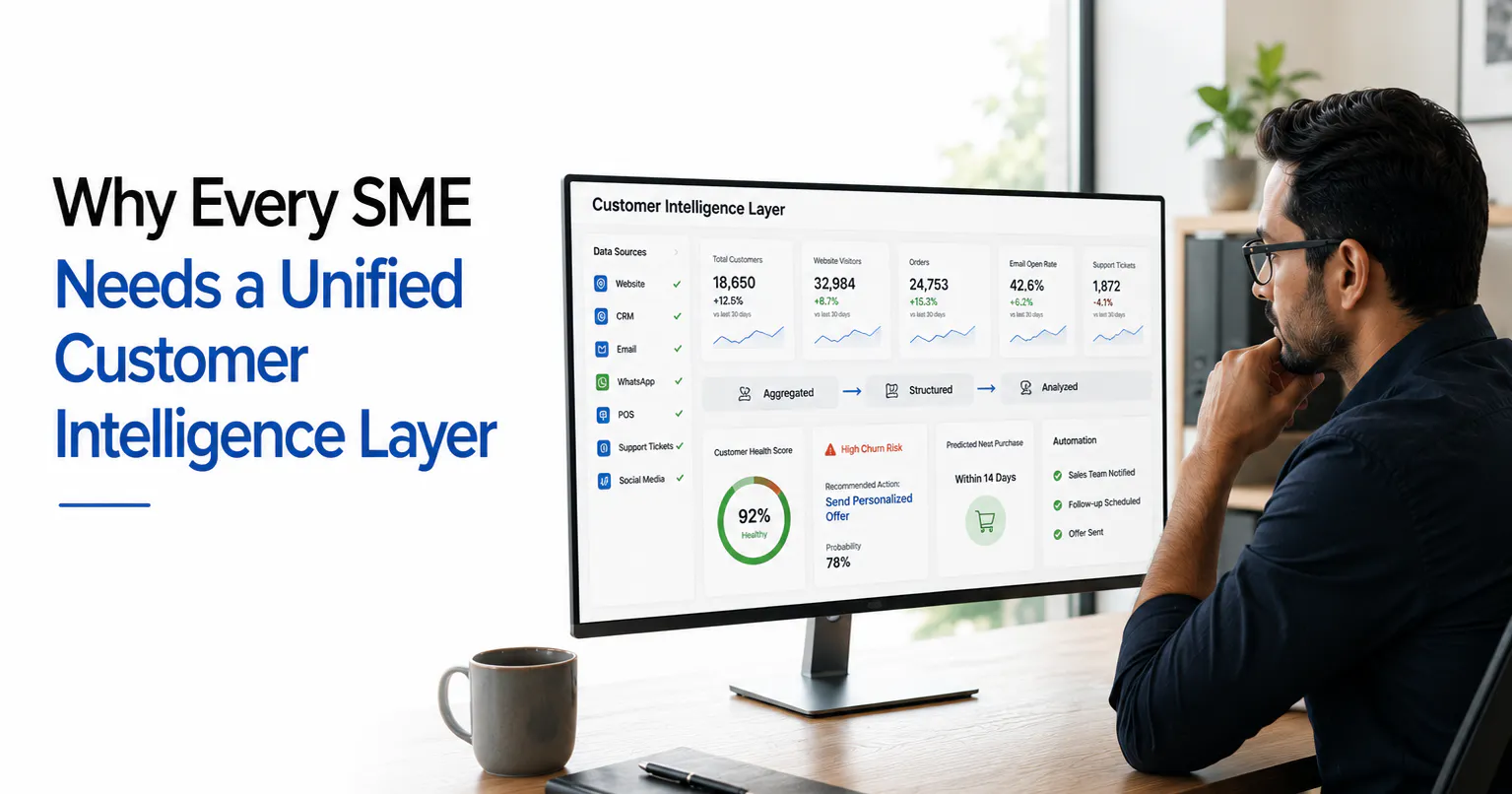
- A Unified Customer Intelligence Layer connects customer data from CRM, websites, social media, WhatsApp, email, AI agents, purchases, and support channels into one complete customer view.
- Centralized customer intelligence helps SMEs eliminate data silos, personalize customer experiences, identify churn risks, improve marketing and sales decisions, and strengthen customer engagement.
- Clean, connected, and secure data is essential for turning customer interactions into actionable insights that support smarter decisions and long-term business growth.
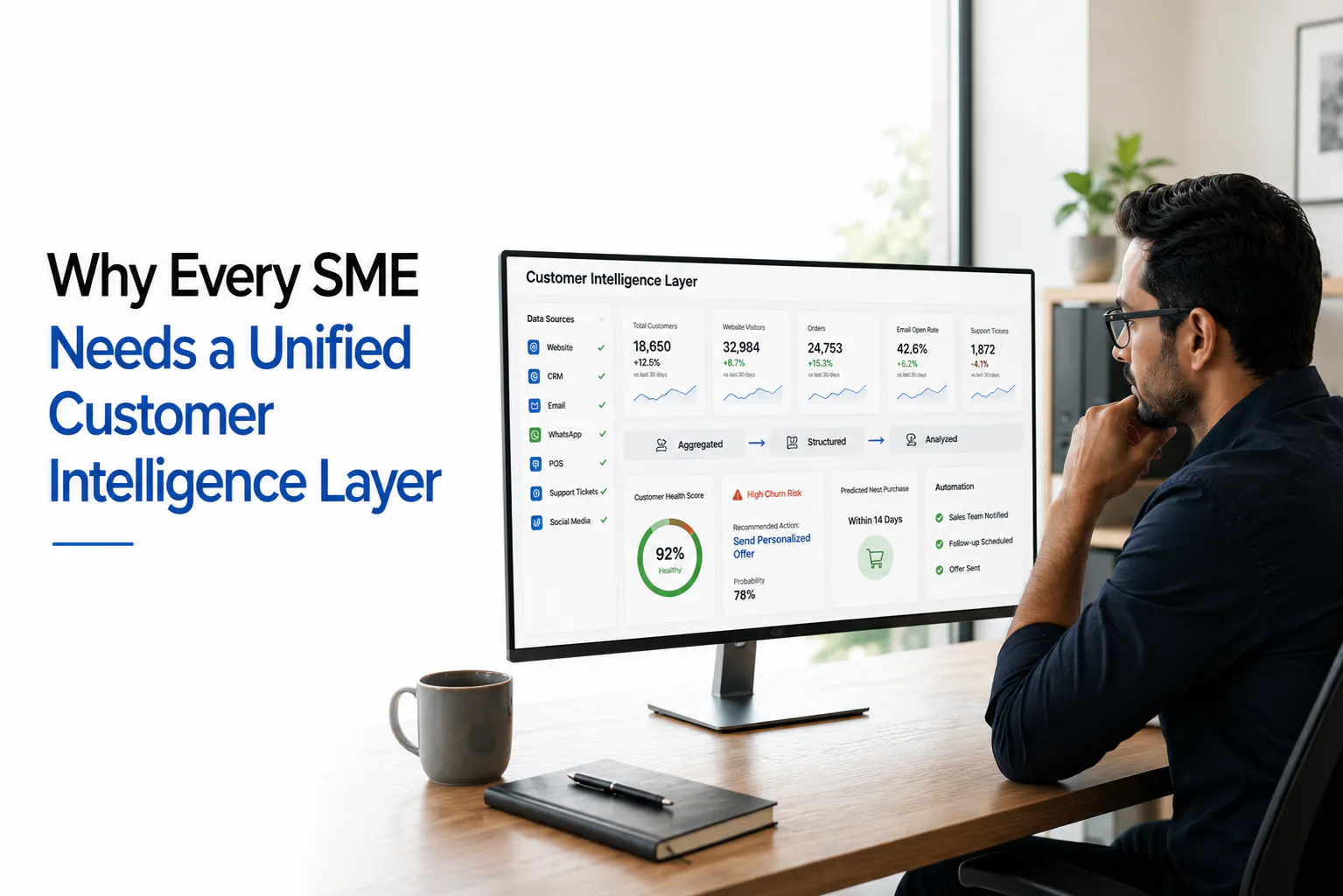
Every customer interaction generates valuable data, from website visits and enquiries to purchases, WhatsApp conversations, and marketing campaigns. However, for many SMEs, this information is spread across multiple platforms, making it difficult to understand customer behaviour and make informed business decisions.
According to IDC, more than half of enterprise leaders say most unstructured data remains siloed, while 2 in 5 report that most of the data their organization stores is used only once and never accessed again. As customer expectations continue to grow, businesses can no longer rely on disconnected systems.
Having a single, connected view of customer data has become essential for delivering personalized experiences, improving operational efficiency, and making smarter marketing and sales decisions. In this guide, we'll explore why every SME needs a Unified Customer Intelligence Layer and how it can support long-term business growth.
What Is a Unified Customer Intelligence Layer?
A Unified Customer Intelligence Layer is a centralized system that collects, connects, and analyzes customer data from multiple touchpoints to create a single, complete view of every customer. Instead of storing information across separate platforms, it brings together data from websites, CRM systems, social media, email campaigns, WhatsApp, AI agents, and purchase history into one unified profile.
This enables businesses to better understand customer behaviour, personalize interactions, improve marketing and sales decisions, and deliver a consistent customer experience across every stage of the customer journey.
What Is the Difference Between Customer Intelligence and Business Intelligence?
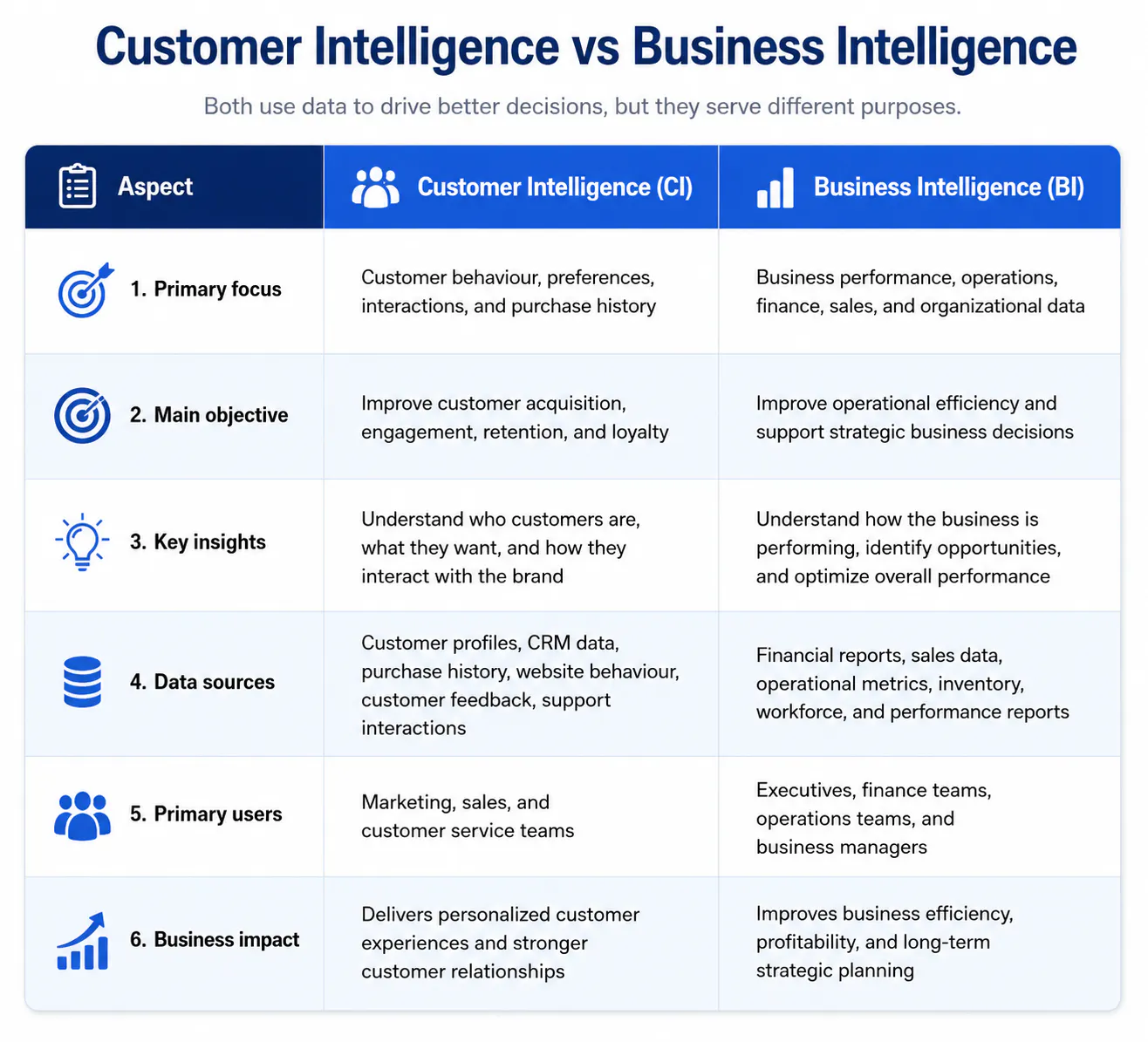
Although both use data to support business decisions, they serve different purposes:
- Customer Intelligence focuses on customer behaviour, preferences, interactions, and purchase history to improve customer acquisition, engagement, retention, and loyalty.
- Business Intelligence focuses on business performance by analyzing operational, financial, sales, and organizational data to improve efficiency and support strategic decision-making.
- Customer Intelligence helps businesses understand who their customers are, what they want, and how they interact with the brand.
- Business Intelligence helps businesses understand how the company is performing, where opportunities exist, and what actions improve overall business results.
- Customer Intelligence is primarily used by marketing, sales, and customer service teams, while Business Intelligence supports executives, finance teams, operations, and business managers.
What Are the Types of Customer Intelligence Data?
A Unified Customer Intelligence Layer combines different types of customer information to build a complete view of every customer. Each type provides unique insights that help businesses make better marketing, sales, and customer service decisions.
- Customer profile information: Includes details such as name, age, location, industry, company size, and other basic information that helps identify and segment customers.
- Purchase history: Records previous purchases, order frequency, average spending, preferred products, and buying patterns to understand customer value.
- Behavior and interaction history: Tracks how customers browse your website, interact with emails, engage on social media, use AI agents, or communicate through WhatsApp and other channels.
- Customer preferences: Identifies interests, product preferences, communication channels, and buying motivations to deliver more personalized experiences.
- Engagement and communication records: Captures enquiries, customer support conversations, campaign responses, reviews, and feedback to measure engagement and satisfaction.
- Loyalty and retention insights: Monitors repeat purchases, referral activity, reward program participation, and customer lifetime value to identify opportunities for long term retention.
Read more: From Clicks to Conversations
How to Collect Customer Intelligence Data: Step by Step?
Customers interact with your business through multiple channels, including your website, CRM, social media, WhatsApp, AI agents, email, and customer support. Collecting Customer Intelligence means bringing these interactions together to create a complete view of every customer. Here's how to do it.
Step 1: Centralize Data with a CRM
Start with a CRM system that collects and stores customer information in one place. A CRM acts as the foundation of your Customer Intelligence Layer by tracking enquiries, purchases, conversations, and customer interactions across multiple channels.
Step 2: Connect Every Customer Touchpoint
Integrate your website, social media platforms, email marketing, WhatsApp, AI agents, customer support, and other business systems with your CRM to capture customer interactions automatically.
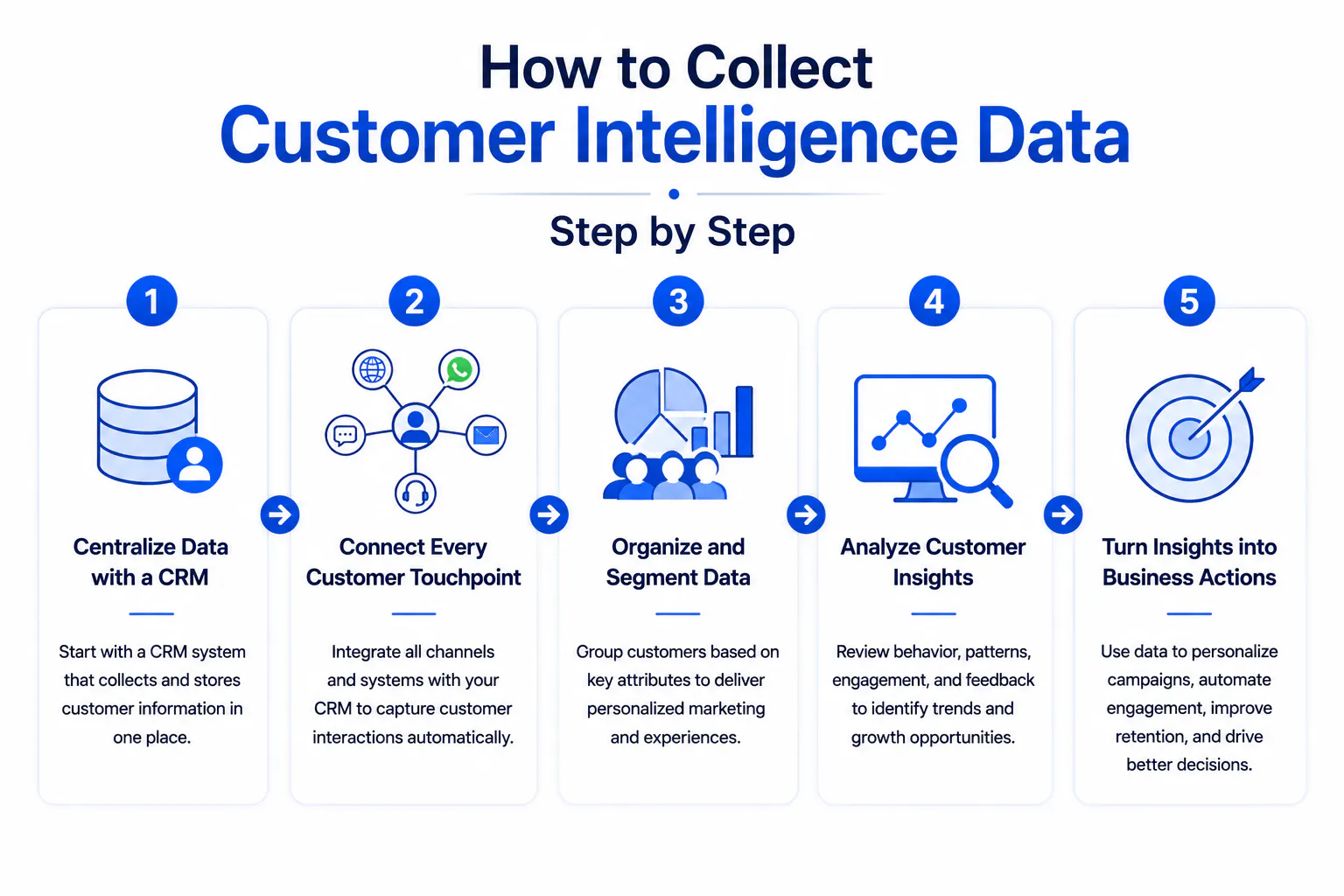
Step 3: Organize and Segment Customer Data
Group customers based on demographics, purchase history, behaviour, interests, or engagement levels. Segmentation makes it easier to deliver personalized marketing and customer experiences.
Step 4: Analyze Customer Insights
Review customer behaviour, buying patterns, engagement history, and feedback to identify trends, predict customer needs, and uncover opportunities to improve marketing and sales performance.
Step 5: Turn Insights into Business Actions
Use your customer intelligence to personalize campaigns, qualify leads, automate customer engagement, improve retention, and make better business decisions based on real customer data.
Read more: Why Businesses Are Replacing Contact Forms with AI Agents?
Why Do SMEs Need a Unified Customer Intelligence Layer?
A Unified Customer Intelligence Layer helps SMEs connect customer data from every touchpoint, making it easier to understand customers, improve engagement, and drive business growth.
- Eliminate data silos: Consolidate customer data from your CRM, website, social media, emails, WhatsApp, transactions, and support channels into one centralized platform.
- Deliver personalized customer experiences: Use a complete customer profile to provide relevant recommendations, targeted marketing campaigns, and personalized communication.
- Reduce customer churn: Monitor customer behaviour, engagement, and satisfaction to identify at risk customers early and strengthen long term relationships.
- Power AI driven customer engagement: Provide AI agents and automation tools with accurate, centralized customer data to deliver faster, smarter, and more contextual interactions.
- Make smarter business decisions: Access real time customer insights that help improve marketing performance, sales strategies, customer service, and overall business growth.
What Are the Best Practices for Building a Customer Intelligence Layer?
Building an effective Customer Intelligence Layer requires more than collecting data. Follow these best practices to maximize its value:
- Centralize customer data: Store customer information in one platform instead of multiple disconnected systems.
- Integrate every customer touchpoint: Connect your CRM, website, social media, WhatsApp, AI agents, email marketing, and customer support tools.
- Maintain clean and accurate data: Remove duplicate records, update customer information regularly, and standardize data across systems.
- Use AI and automation: Analyze customer behaviour, identify trends, and automate personalized engagement using AI powered tools.
- Protect customer data: Follow data privacy regulations and implement strong security measures to safeguard customer information.
- Continuously measure performance: Monitor customer engagement, conversion rates, retention, and lifetime value to optimize your customer intelligence strategy.
How Does ArthaVerse Help SMEs Build a Unified Customer Intelligence Layer?
ArthaVerse helps SMEs connect customer data, marketing, sales, and engagement into one integrated ecosystem, making it easier to understand customers and deliver personalized experiences.
- CRM and Lead Management: Centralizes customer information, tracks every interaction, and provides complete visibility into the sales pipeline.
- ArthaGPT: Captures customer enquiries, qualifies leads, and records valuable customer interactions through AI powered conversations.
- Performance Marketing: Collects campaigns and leads data to help businesses measure marketing performance and improve customer acquisition.
- WhatsApp Based Loyalty Programs: Strengthen customer relationships through WhatsApp-based loyalty programs, personalized communication, automated follow-ups, loyalty campaigns, exclusive offers, reward updates, and repeat engagement initiatives.
- Connected customer insights: Brings customer data from multiple touchpoints into one platform, helping SMEs make smarter marketing, sales, and customer engagement decisions.
Conclusion
Customer data is one of the most valuable assets an SME can have, but disconnected systems make it difficult to turn that data into meaningful insights. A Unified Customer Intelligence Layer brings customer information together, giving businesses a complete view of customer behaviour, preferences, interactions, and purchase history.
By connecting every customer touchpoint, maintaining accurate data, using AI and automation, and turning insights into personalized actions, SMEs can improve customer experiences, make smarter decisions, reduce churn, and build stronger long-term relationships.