
Key Takeaways
- AI agents, chatbots, and intelligent automation are helping businesses identify, qualify, nurture, and engage prospects faster while allowing sales teams to focus on high-value opportunities.
- Understanding what prospects search for, view, and compare helps businesses deliver personalized outreach based on actual interests and buying intent.
- Strong sales and marketing alignment, customer-centric strategies, video content, and personalized experiences can help businesses attract better-qualified leads and improve conversions.
Any business that wants to grow looks for a steady flow of qualified leads. Without a consistent pipeline of potential customers, sustaining revenue and scaling operations becomes increasingly difficult. However, lead generation is no longer just about collecting contact information. Artificial intelligence, changing buyer behavior, and stricter privacy regulations are transforming how businesses attract, engage, and convert prospects.
The future of lead generation focuses on personalization, first party data, automation, AI agents and delivering value at every stage of the buyer journey. This guide explores the trends, technologies, and strategies that will help businesses generate higher quality leads and drive long term growth.
The Future of Lead Generation Is Driven by Buyer Intent Data
Businesses no longer benefit from reaching every potential customer with the same message. Modern lead generation focuses on identifying prospects who are actively researching a solution and engaging them at the right time. Buyer intent data provides insights into the content people consume, the pages they visit, and the products they compare, helping sales and marketing teams prioritize high value opportunities.
First party intent data has become especially valuable because it reflects how visitors interact with a company's own website. Tracking visits to product pages, pricing pages, and solution specific content allows businesses to create highly personalized outreach that matches each prospect's interests and stage in the buying journey.
Read more: The Modern Marketing Stack Every Indian Business Needs in 2026
AI Agents and Chatbots Are Becoming the First Point of Contact
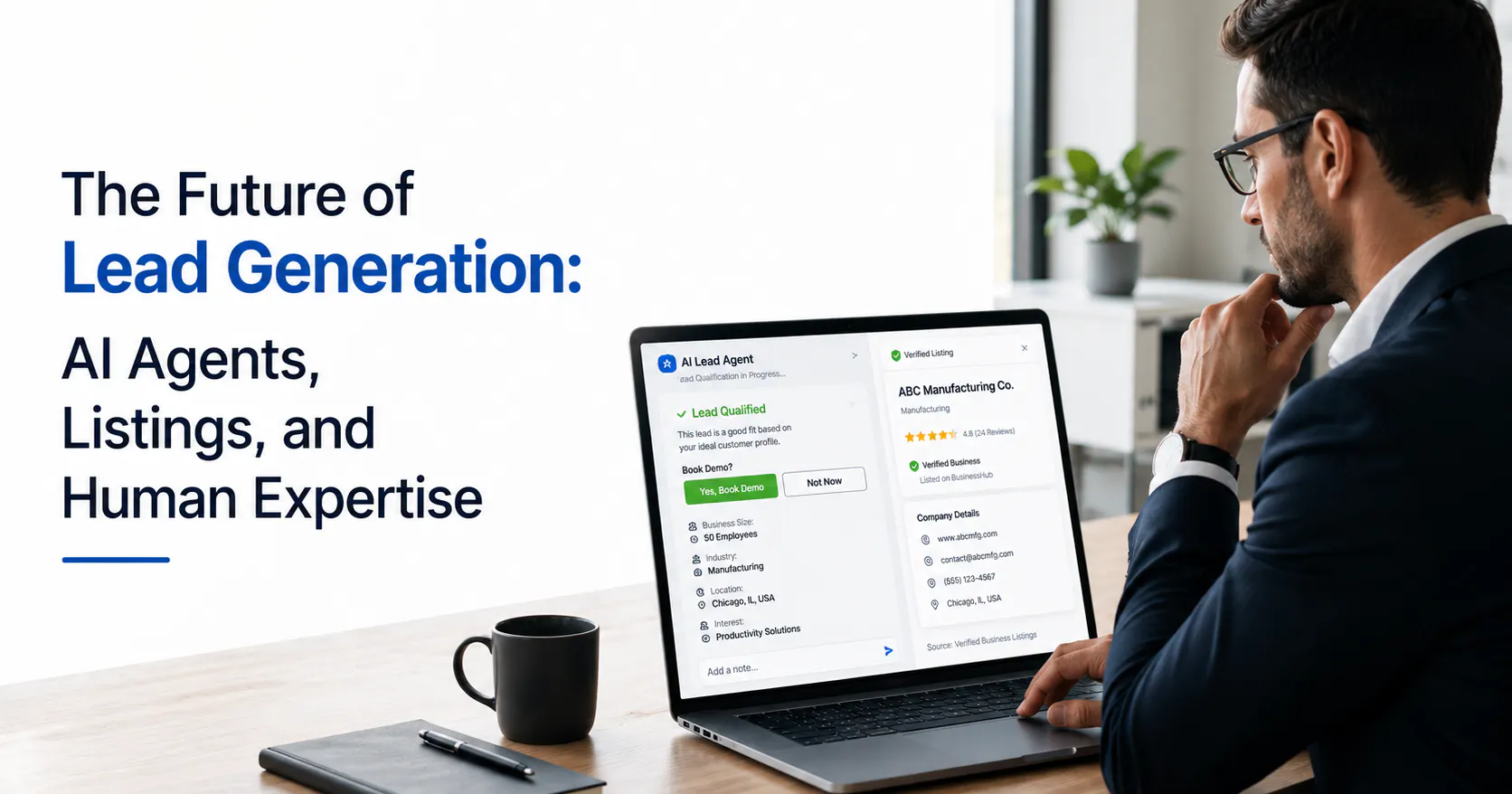
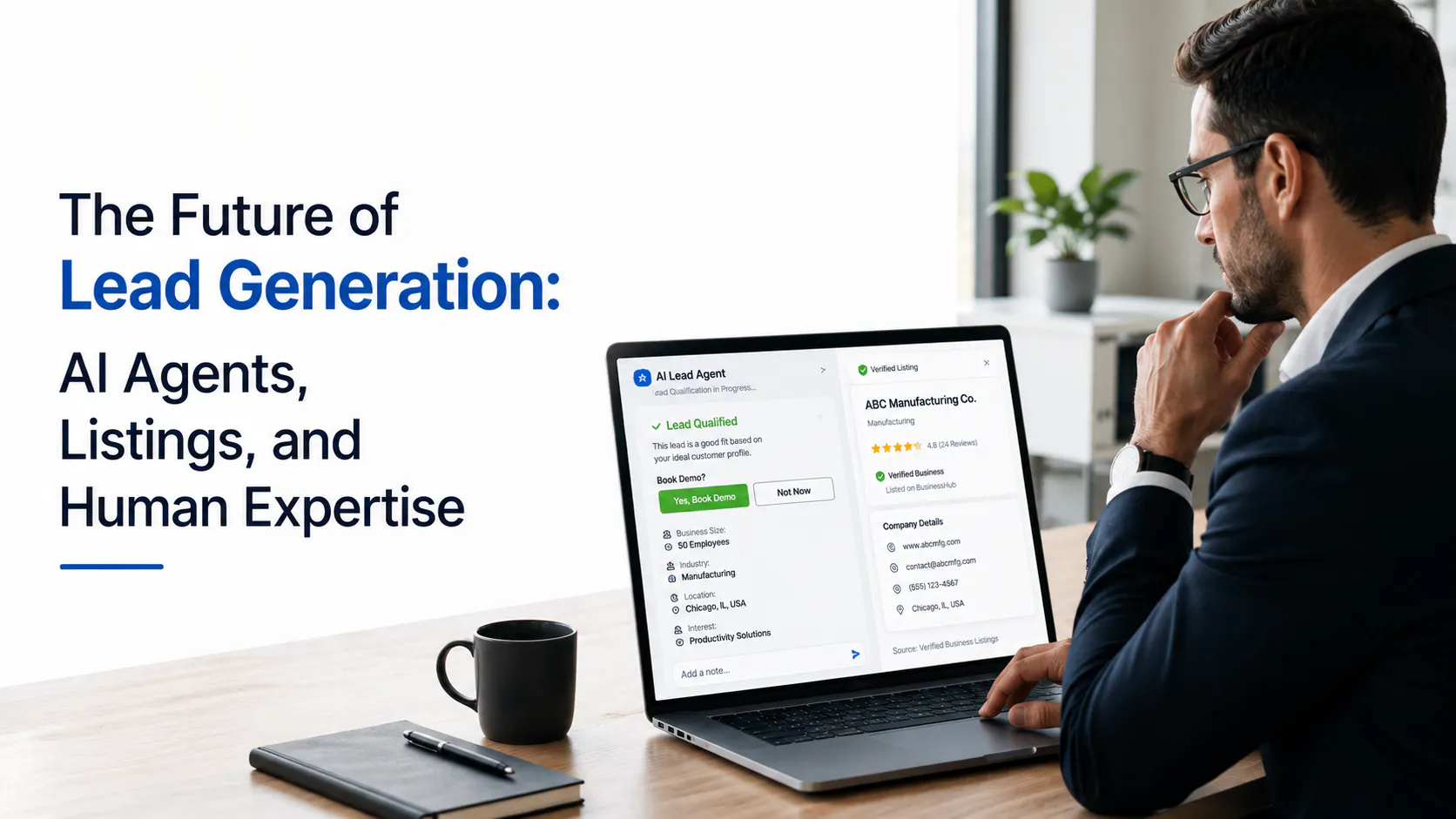
AI agents are transforming lead generation by handling conversations that once required human sales representatives. Unlike traditional chatbots that follow predefined scripts, AI agents understand context, answer complex questions, qualify leads, recommend relevant solutions, and schedule meetings without constant human involvement.
Modern AI chatbots also provide instant support around the clock. They capture visitor information, identify purchase intent, and guide prospects toward the next step in the sales process. As AI continues to evolve, these virtual assistants are becoming an essential part of lead qualification and customer engagement while allowing sales teams to focus on closing high value opportunities.
Read more: Why Businesses Are Replacing Contact Forms with AI Agents?
Better Sales and Marketing Alignment Improves Lead Quality
Lead generation performs better when sales and marketing teams work toward the same business objectives. Shared customer data, common performance metrics, and continuous communication help both teams identify qualified leads more accurately and reduce friction throughout the sales pipeline.
This alignment directly impacts business growth. According to HubSpot's 2024 State of Sales Report, 43% of sales representatives say they need higher quality leads from marketing. Organizations that align both teams around shared goals and revenue focused KPIs generate better qualified leads, improve conversion rates, and increase overall revenue.
Customer Centric Marketing Drives Long Term Growth
Future lead generation prioritizes customer needs over mass outreach. Businesses that understand customer challenges, preferences, and buying behavior deliver more relevant experiences across every touchpoint. This approach increases trust, strengthens customer relationships, and improves lead quality.
Customer centric strategies such as Account Based Marketing focus on targeting high value accounts instead of generating the highest possible number of leads. This shift helps businesses invest resources where they produce the greatest return while delivering personalized experiences throughout the buying journey.
Video Content Continues to Influence Buying Decisions
Video has become one of the most effective formats for attracting and educating potential customers. Product demonstrations, customer success stories, webinars, and personalized sales videos simplify complex topics while building credibility and trust.
Consumer preferences continue to support this trend. According to Wyzowl’s State of Video Marketing, 51% of consumers prefer sharing video content over other types of content, making video an increasingly valuable asset for lead generation and customer engagement.
Automation Enables Faster and Smarter Lead Generation
Marketing automation has evolved from simple email workflows into intelligent systems that manage lead nurturing, customer segmentation, CRM synchronization, and campaign optimization across multiple channels.
Artificial intelligence has also made automation more effective by enabling personalized workflows, predictive lead nurturing, and intelligent campaign optimization. Industry growth reflects this demand. The marketing automation industry generated $5.4 billion in revenue in 2023 and is projected to exceed $83 billion by 2026, highlighting its growing role in modern lead generation strategies.
What Will the Future of Lead Generation Look Like?
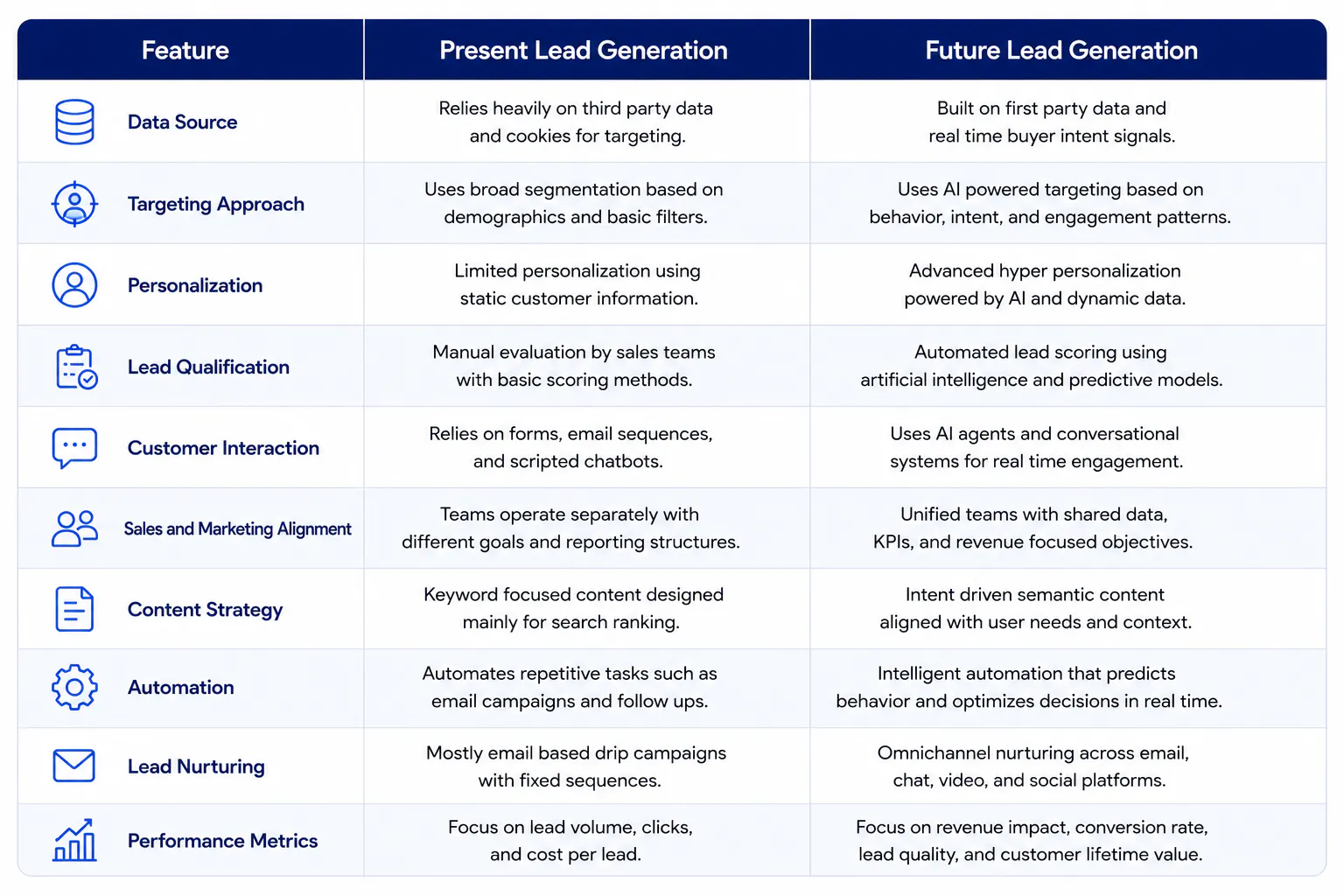
The future of lead generation is shaped by artificial intelligence, real time data, and customer centric strategies that prioritize quality over quantity. The comparison below highlights the key differences between how lead generation works today and how it is evolving.
Conclusion
The future of lead generation is moving away from mass outreach and simple contact collection toward intelligent, personalized, and customer-focused engagement. Businesses that combine buyer intent data, first-party insights, AI agents, automation, video content, and strong sales and marketing alignment can create more meaningful interactions throughout the buyer journey.
As buyer expectations and technology continue to evolve, businesses that focus on delivering the right experience at the right time will be better positioned to generate higher-quality leads, improve conversions, and build sustainable long-term growth.