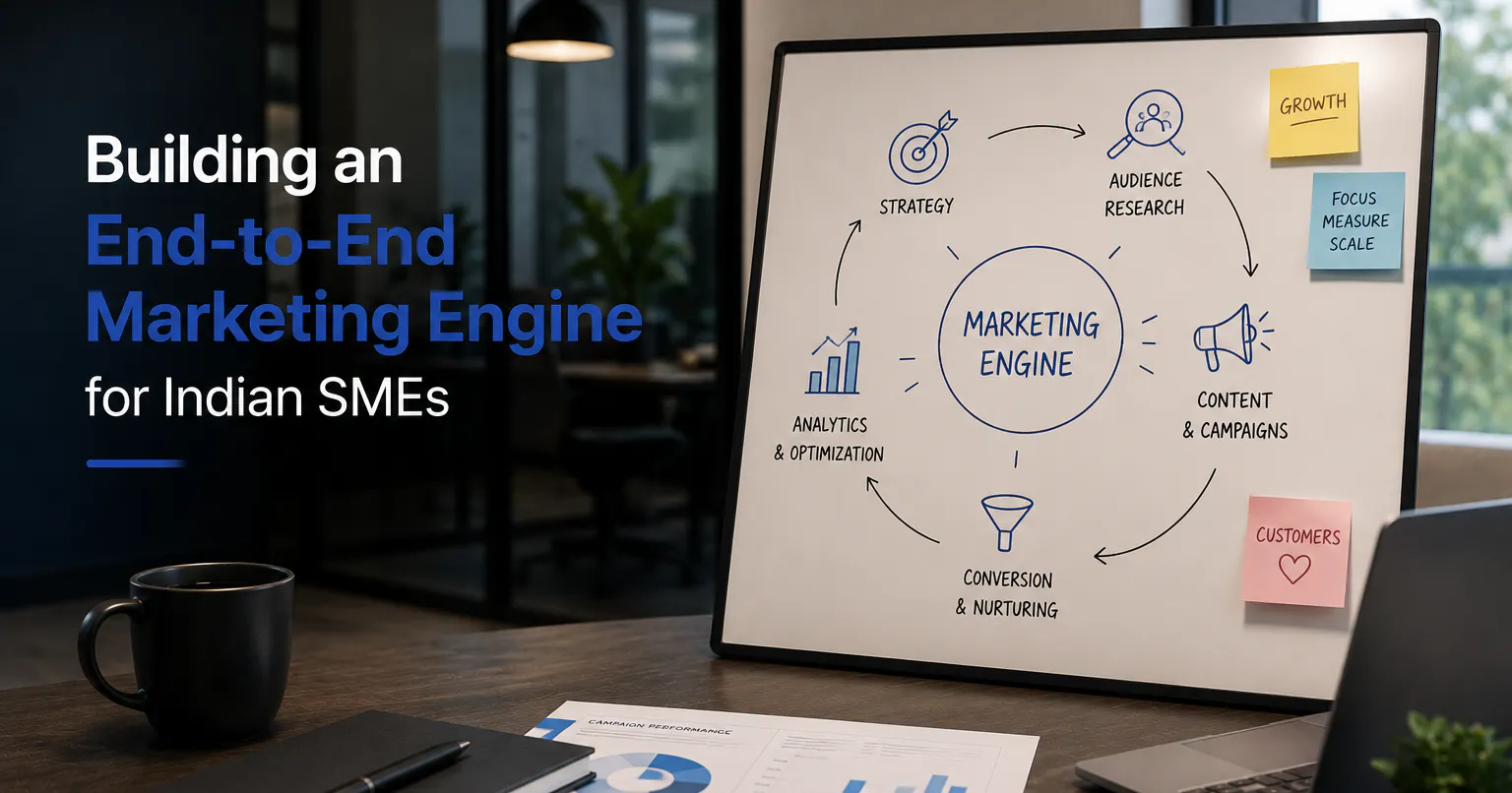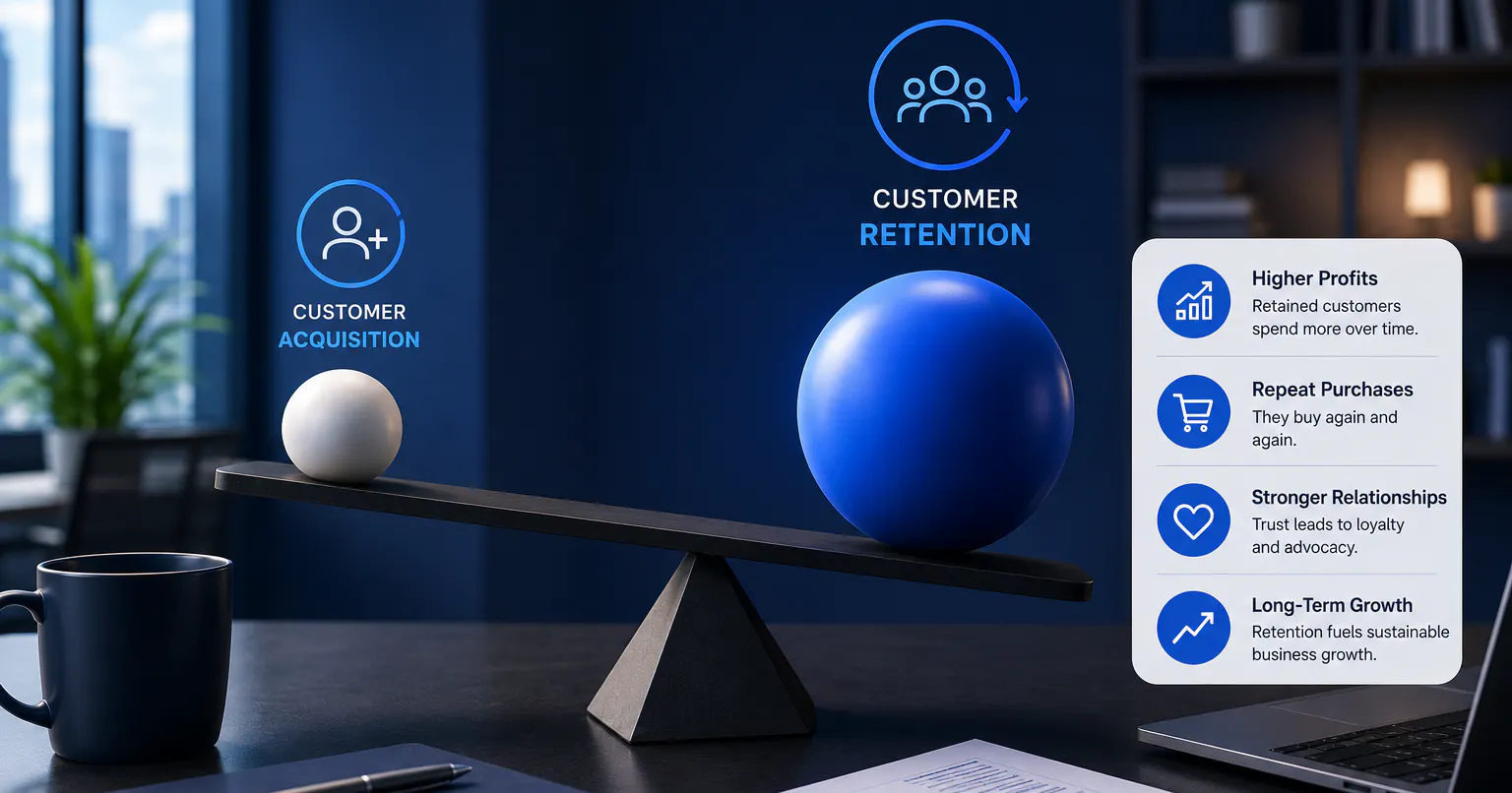

Key Takeaways
- Traditional marketing vendors create silos: Managing separate SEO, advertising, CRM, web development, and marketing vendors can lead to fragmented data, disconnected strategies, and inconsistent customer experiences.
- Growth ecosystems connect the customer journey: An integrated ecosystem brings marketing, sales, CRM, AI, customer engagement, and data together so every function works toward shared business goals.
- Connected systems support sustainable growth: Centralized data, unified reporting, streamlined operations, and coordinated customer engagement help SMEs improve efficiency, measure ROI, and scale with less complexity.
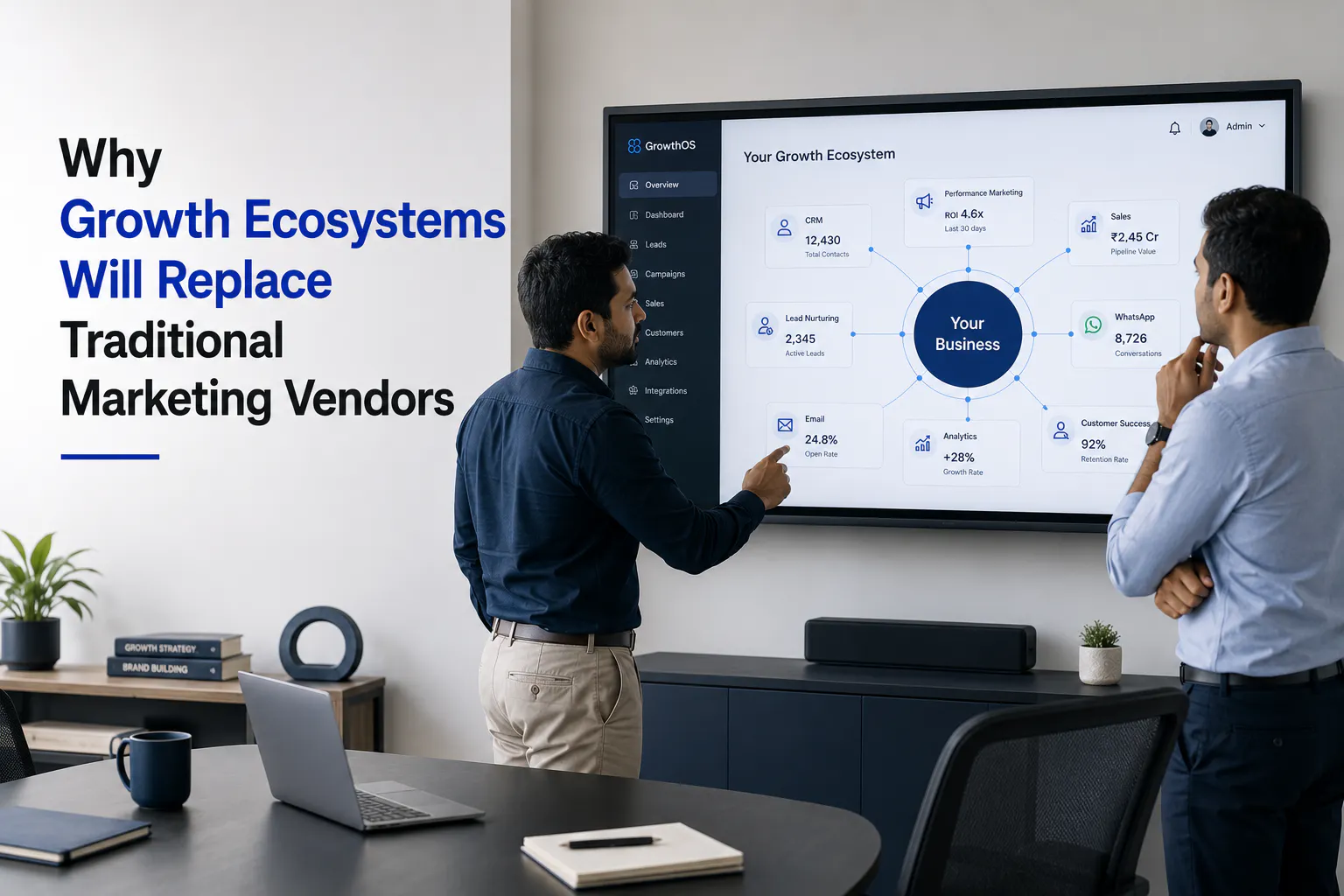
Businesses today rarely rely on a single marketing partner. Instead, they work with SEO agencies, advertising specialists, CRM providers, web developers, and analytics platforms, each managing a different part of the customer journey. While this approach may seem effective, it often creates disconnected strategies, fragmented customer data, and inconsistent results.
At the same time, customer journeys have evolved. Buyers no longer follow a simple path from awareness to purchase. They move between search engines, social media, AI tools, online communities, websites, and messaging platforms before making a decision. As a result, businesses need more than a collection of marketing vendors. They need a connected growth ecosystem where marketing, sales, CRM, AI, and customer engagement work together to drive sustainable growth.
In this blog, you'll learn what a growth ecosystem is, why traditional marketing vendors are becoming less effective, the key components of a modern growth ecosystem, and how businesses can transition to a unified model that delivers measurable long-term growth.
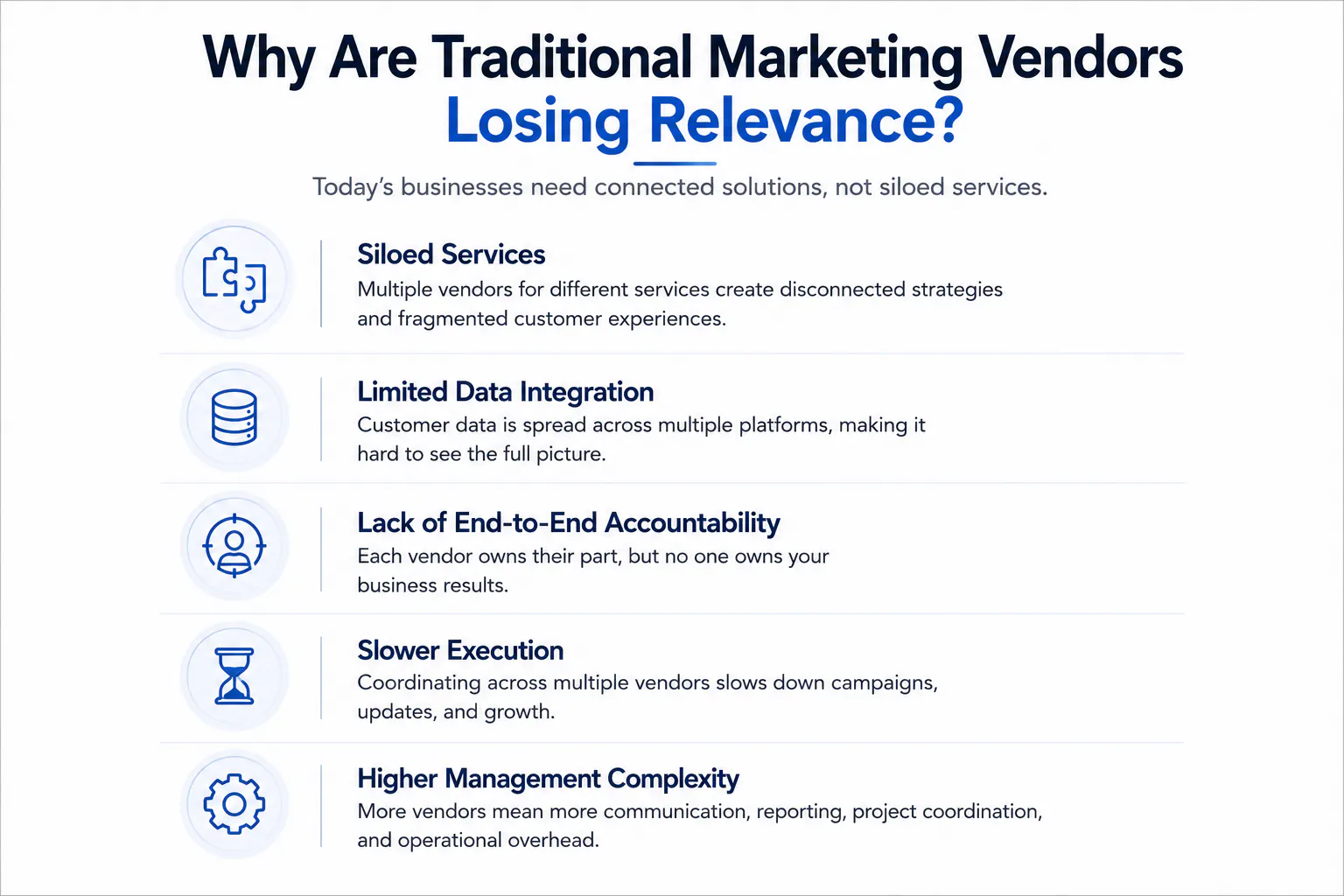
Why Are Traditional Marketing Vendors Losing Relevance?
Traditional marketing vendors typically specialize in one service, such as SEO, paid advertising, social media management, web development, or sales funnel optimization. While these services remain valuable, businesses today need connected solutions that support the entire customer journey rather than isolated marketing activities.
- Siloed services: Businesses often work with separate vendors for SEO, paid advertising, websites, social media, email marketing, CRM, and sales funnels. Since each partner focuses only on its own deliverables, strategies become disconnected, and customer experiences become fragmented.
- Limited data integration: Customer information is spread across marketing, sales, CRM, customer support, analytics, and funnel platforms, making it difficult to build a complete view of customer behaviour.
- Lack of end-to-end accountability: Multiple vendors measure the success of their own campaigns, but no single partner takes ownership of overall business growth, lead conversion, or customer retention.
- Slower execution: Coordinating campaigns, funnel updates, website changes, and marketing initiatives across different vendors delays implementation and reduces business agility.
- Higher management complexity: Managing several agencies increases communication, reporting, project coordination, and operational overhead, making it more difficult for SMEs to scale efficiently.
What Is a Growth Ecosystem?
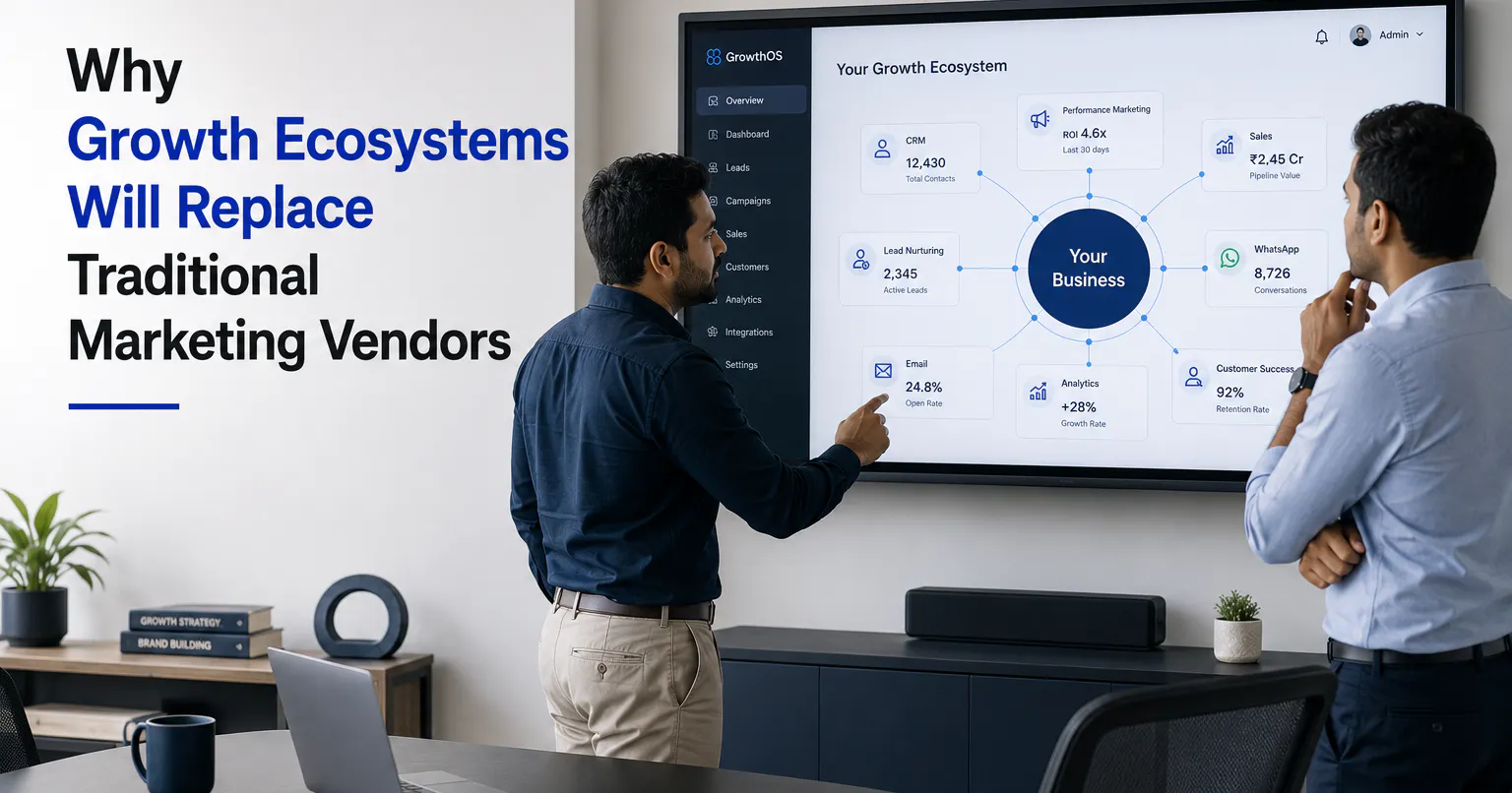
A growth ecosystem is an integrated business model that combines strategy, technology, marketing, sales, customer engagement, and data into one connected system. Instead of relying on separate vendors to manage individual marketing activities, a growth ecosystem ensures every customer touchpoint works together to support business growth.
Unlike traditional marketing models where agencies operate independently, a growth ecosystem creates a unified customer journey. Customer data flows seamlessly between marketing campaigns, CRM platforms, AI agents, customer support, and analytics, allowing businesses to make faster decisions and deliver more personalized experiences.
Read more: The Modern Marketing Stack Every Indian Business Needs in 2026
What Are the Benefits of Replacing Marketing Vendors With a Growth Ecosystem?
Replacing multiple disconnected vendors with a single growth ecosystem helps businesses improve efficiency, streamline operations, and achieve sustainable growth.
- Create a unified customer journey: Connect every customer interaction across marketing, sales, CRM, AI, and customer support to deliver a seamless experience from first contact to long-term loyalty.
- Make faster business decisions: Access centralized customer and performance data in one place, allowing teams to respond quickly to market trends and customer behaviour.
- Measure ROI more accurately: Track marketing, sales, and customer engagement through unified reporting to understand which strategies generate the greatest business impact.
- Improve collaboration across teams: Enable marketing, sales, customer support, and leadership teams to work from the same customer data and shared business goals.
- Scale your business with confidence: Add new marketing channels, technologies, and customer engagement strategies without increasing operational complexity.
- Reduce operational complexity: Eliminate the need to coordinate multiple agencies, duplicate reporting, and manage disconnected tools through one integrated ecosystem.
Read more: From Clicks to Conversations
How ArthaVerse Helps Businesses Build a Growth Ecosystem?
ArthaVerse helps SMEs replace disconnected marketing vendors with one integrated ecosystem that connects customer acquisition, sales, engagement, and technology to support sustainable business growth.
- Performance marketing: Generate qualified leads through SEO, paid advertising, content marketing, and digital campaigns that continuously optimize customer acquisition.
- CRM and lead management: Centralize customer information, streamline sales pipelines, and manage leads from first enquiry to conversion through one connected platform.
- ArthaGPT AI agents: Automate customer conversations, qualify leads, answer enquiries, and provide real-time support across multiple customer touchpoints.
- WhatsApp loyalty programs: Strengthen customer relationships with WhatsApp-based loyalty programs, personalized messaging, automated follow-ups, loyalty campaigns, and repeat engagement initiatives.
Conclusion
Traditional marketing vendors can help businesses execute individual activities, but managing multiple disconnected partners can make it difficult to create a consistent customer journey and take ownership of overall growth. A growth ecosystem brings marketing, sales, CRM, AI, customer engagement, and data together in one connected model.
For SMEs, this approach can reduce operational complexity, improve collaboration, provide clearer insights, and create more consistent customer experiences. By moving from disconnected marketing services to an integrated growth ecosystem, businesses can build a stronger foundation for efficient and sustainable growth.