
Key Takeaways
- WhatsApp can support hotels across the guest journey, from booking enquiries and pre-arrival communication to in-stay service and post-stay engagement.
- Personalised offers, loyalty rewards, and targeted re-engagement can help hotels encourage repeat stays and direct bookings.
- QR-based WhatsApp loyalty programs can help hotels connect guest activity, rewards, and personalised communication without requiring a separate app.
If you are a hotel or hospitality business looking to increase direct bookings, improve guest engagement, and encourage repeat stays, WhatsApp can become a powerful part of your marketing strategy. From the first enquiry to post stay follow ups, it gives hotels a direct way to communicate with guests without relying entirely on email or third party booking platforms.
In this blog, you’ll learn the best WhatsApp marketing strategies for hotels and hospitality businesses, how to use WhatsApp across the guest journey, ways to increase bookings and additional revenue, and practical message templates you can use to engage guests.
Why Are Traditional Hotel Communication Channels Falling Short?
Hotels communicate with guests at every stage of the journey, but traditional channels do not always deliver the speed or engagement hospitality businesses need. Emails can get buried, phone calls require real time availability, and hotel apps add another step for guests who may only stay for a few nights.
The numbers highlight the gap. Travel, hospitality, and leisure emails have an average open rate of 20.2%, with an average click through rate of 1.4%. (Source: Campaign Monitor, Email Marketing for Hotels & Hospitality.)
There is also the cost of depending heavily on online travel agencies. Hotels typically pay 15% to 25% commission on confirmed OTA bookings. (Source: National Council for Hotel Management and Catering Technology, Revenue Management & Artificial Intelligence.)
Read more: How to Increase Customer Loyalty
What Are the Eight Proven Use Cases For WhatsApp Marketing In Hotels And Hospitality?
WhatsApp can support the guest journey well beyond booking confirmations. For hotels, the strongest use cases connect guest communication with service, upselling, retention, and repeat bookings, giving the property more opportunities to engage guests before, during, and after their stay.
1. Booking Enquiries And Direct Reservations
Hotels can use WhatsApp as a direct conversation channel for guests who want to ask about rooms, rates, availability, packages, amenities, or special requests. Instead of sending a guest to a long enquiry form, the hotel can answer questions within the same conversation and move them towards a direct booking.
Tip: Keep the first response focused on helping the guest rather than immediately pushing an offer. Ask for the dates, number of guests, and preferred room type, then recommend the most relevant option.
Template:
“Hi [Guest Name], thanks for contacting [Hotel Name]. We’d be happy to help with your stay. Could you share your check-in date, check-out date, and number of guests?”
Read more: 10 Customer Loyalty Program Examples From Top Indian Retail Brands
2. Pre-Arrival Communication And Upselling
The guest journey starts before check-in. WhatsApp can be used to send useful arrival information while also introducing relevant upgrades and additional services.
A hotel could offer early check-in, room upgrades, airport transfers, breakfast, spa appointments, restaurant reservations, or special arrangements before the guest arrives. The key is to make the message useful rather than turning every pre-arrival message into a sales pitch.
Tip: Offer only one or two relevant add-ons at a time and make acceptance simple.
Template:
“Hi [Guest Name], we’re looking forward to welcoming you to [Hotel Name] on [Date]. Would you like to add [Airport Transfer/Breakfast/Early Check-in] to your stay? Reply YES and our team will arrange it.”
3. In-Stay Concierge And Guest Services
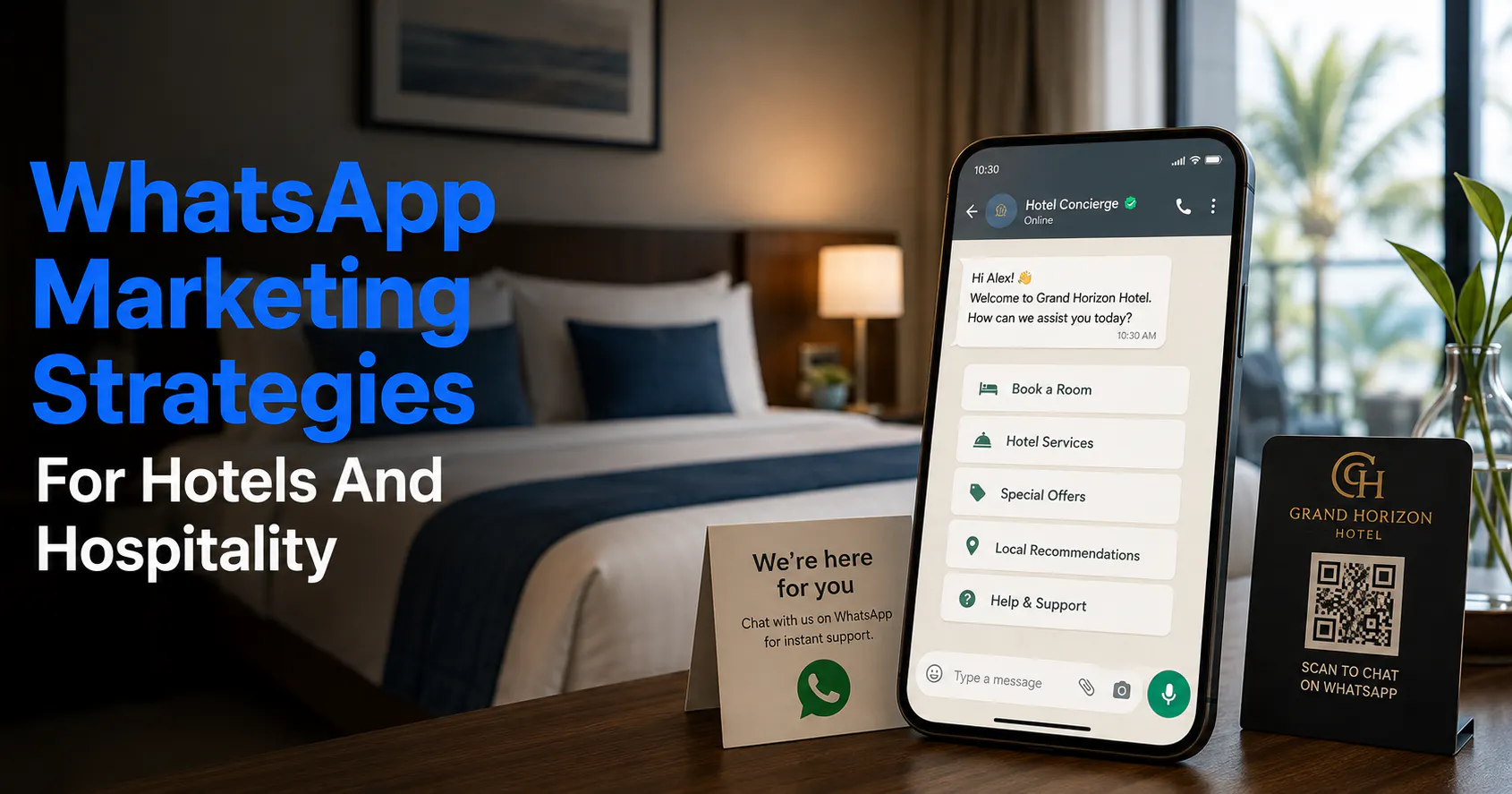
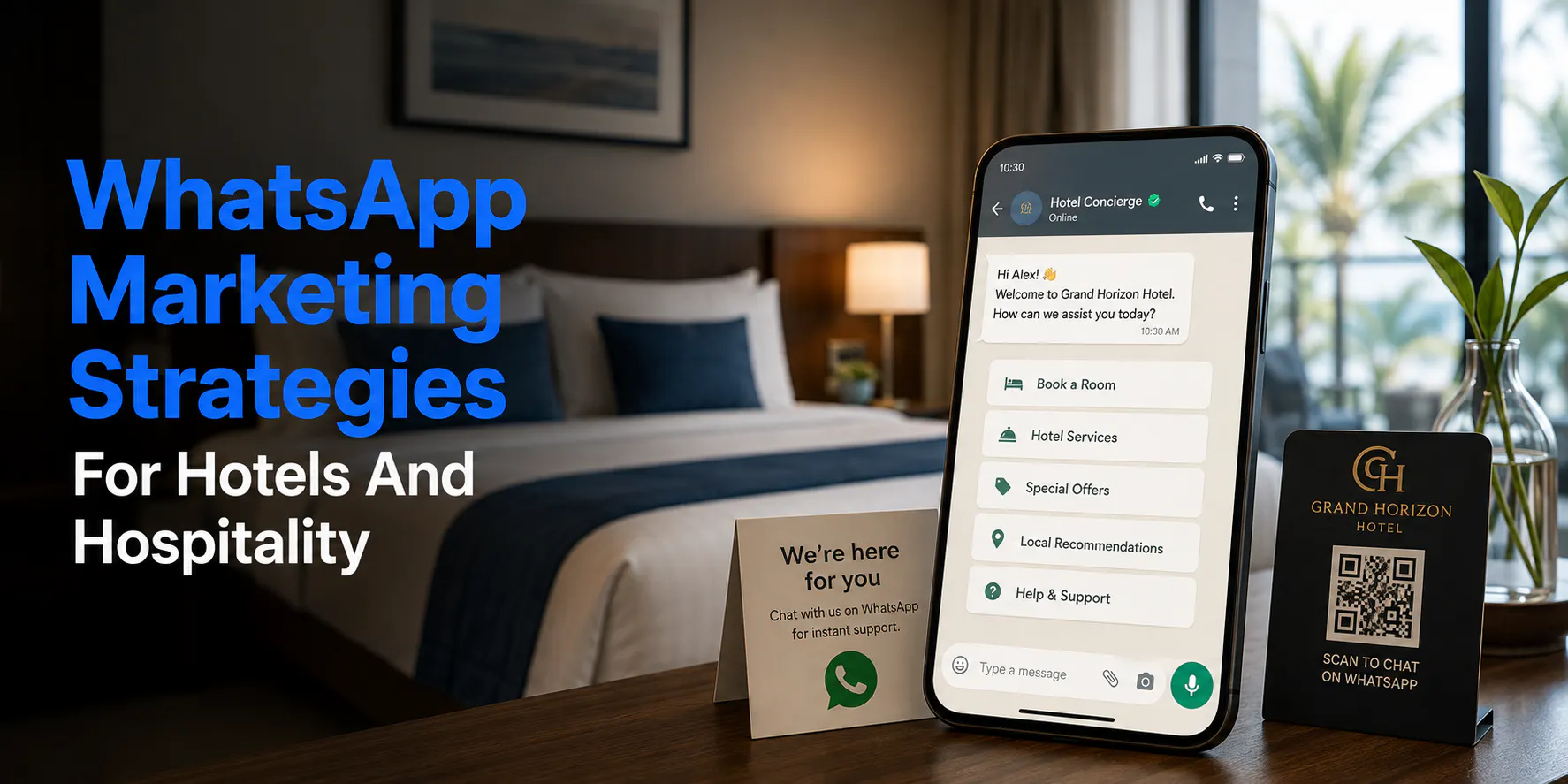
WhatsApp can become an additional service desk during the guest's stay. Guests can message the hotel when they need extra towels, housekeeping, room service, maintenance assistance, restaurant bookings, spa appointments, or local recommendations.
This is particularly useful because the conversation remains in one place. Staff can handle routine requests through structured flows while escalating more complicated issues to the appropriate team.
Tip: Create simple options such as Room service | Housekeeping | Maintenance | Concierge | Front desk so guests do not have to explain everything from scratch.
Template:
“Hi [Guest Name], how can we help you during your stay?
- Room service
- Housekeeping
- Maintenance
- Concierge
- Other request”
Read more: Loyalty Points vs Cashback vs Rewards: Which Drives Retention?
4. Personalised Offers Based On Guest Behaviour
Generic hotel promotions can easily get ignored. WhatsApp gives hotels an opportunity to make their communication more relevant by using information from previous stays, preferences, booking history, and spending behaviour.
For example, a guest who regularly books weekend stays could receive a weekend package, while a previous spa customer could receive a spa-inclusive offer. Personalisation makes the message feel like a continuation of the guest relationship rather than another mass promotion.
Tip: Segment guests by stay frequency, room preference, travel purpose, spending level, and previous services used before sending campaigns.
Template:
“Hi [Guest Name], enjoyed your last stay with us? We’ve created a [Weekend/Family/Spa] package that we thought you might like. View the details here: [Link]”
5. Seasonal Campaigns And Last-Minute Offers
WhatsApp can also help hotels fill demand gaps. Instead of waiting for rooms to remain unsold, properties can communicate relevant offers to opted-in past guests.
Campaigns can focus on festive stays, long weekends, seasonal packages, local events, weekend escapes, or last-minute availability. The message should have a clear reason to act and a simple booking path.
Tip: Do not send every offer to your entire database. Match the campaign with guests who are most likely to respond.
Template:
“Hi [Guest Name], planning a getaway this [Weekend/Holiday]? We have a special offer at [Hotel Name] for [Dates]. Enjoy [Offer]. Book here: [Booking Link]”
6. Loyalty Programmes And Repeat Bookings
Loyalty is where WhatsApp can move from communication to long-term customer retention. Hotels can use the channel to show points, rewards, member benefits, milestone offers, and personalised return-stay incentives.
Instead of asking guests to download another loyalty app, the hotel can keep the relationship within a familiar conversation. WhatsApp can then become the channel for reminding guests about rewards and encouraging their next direct booking.
Tip: Reward behaviour that drives valuable repeat business, such as direct bookings, additional services, or multiple stays, rather than giving discounts indiscriminately.
Template:
“Hi [Guest Name], you’ve unlocked [Reward Name] with [Hotel Name]. Your reward is available until [Date]. Planning your next stay? Reply to BOOK and we’ll help you find the right dates.”
Read more: Are Loyalty Programs Worth It?
7. Feedback, Issue Recovery, And Review Requests
WhatsApp can be used to collect feedback while the guest experience is still fresh. A short message after checkout can ask whether everything went well and give guests an easy way to respond.
More importantly, negative feedback can be routed to the hotel team before the guest immediately turns to a public review. Positive experiences can then be followed by a review request.
Tip: Ask for feedback first. Once the guest responds positively, provide the review link rather than putting the review request before the conversation.
Template:
“Hi [Guest Name], thank you for staying with [Hotel Name]. How was your experience? Reply 1–5 and let us know how we did. We’d love to hear from you.”
Read more: WhatsApp Loyalty Programs vs Traditional Loyalty Apps
8. Post-Stay Re-Engagement
Checkout should not be the end of the relationship. Hotels can use WhatsApp to stay connected with previous guests and create a reason to return.
A post-stay journey could include a thank-you message, feedback request, loyalty update, seasonal offer, and eventually a personalised rebooking message. This helps the hotel turn guest data into an ongoing retention channel rather than relying entirely on OTAs for the next booking.
Tip: Give guests a reason to return directly, such as a returning-guest benefit, early access to packages, or a personalised offer.
Template:
“Hi [Guest Name], we hope you enjoyed your stay at [Hotel Name]. We’d love to welcome you back. As a returning guest, you can enjoy [Benefit] on your next stay. Interested? Reply YES.”
Best Practices For WhatsApp Marketing For Hotels
A successful hotel WhatsApp strategy should focus on relevance, timing, convenience, and guest consent, rather than simply increasing the number of messages sent.
- Segment guests: Separate new enquiries, upcoming guests, current guests, previous guests, frequent guests, and inactive guests.
- Personalise communication: Use booking history, room preferences, previous services, stay frequency, and guest interests where relevant.
- Send messages at the right time: Match communication with the guest journey, such as pre-arrival reminders, in-stay assistance, and post-stay re-engagement.
- Keep one clear action per message: Ask guests to BOOK, CONFIRM, UPGRADE, REPLY, or CLAIM rather than presenting several unrelated options.
- Use WhatsApp for service, not only promotions: Combine offers with booking support, concierge services, feedback, reminders, and useful guest information.
- Make direct booking easy: Provide a clear booking path when communicating with guests who are ready to reserve.
- Use relevant upsells: Recommend upgrades and additional services based on the guest's booking or previous behaviour.
- Reward repeat guests: Use loyalty benefits, milestones, exclusive access, and returning-guest offers to encourage direct repeat bookings.
- Respect consent and frequency: Only communicate with opted-in guests and avoid excessive promotional messages.
- Measure results: Track direct bookings, booking enquiries, upsell conversions, repeat stays, loyalty engagement, reward redemptions, and re-engagement.
Read more: Top 7 WhatsApp Marketing Strategies for Restaurants in 2026
How ArthaVerse Supports Hotel Customer Loyalty
ArthaVerse helps hotels connect customer enrollment, purchase activity, rewards, WhatsApp communication, and loyalty engagement through a WhatsApp-based loyalty program.
Guests can join through a QR code without downloading another application. Once enrolled, hotels can use WhatsApp to communicate rewards, milestones, personalised offers, and relevant opportunities to return.
With ArthaVerse, hotels can:
- Use QR-based enrollment: Let guests join the loyalty program through a QR code without requiring a separate app.
- Track guest purchase activity: Connect customer activity with stays and purchases to understand repeat behaviour.
- Reward repeat stays: Create points, rewards, or milestone benefits that encourage guests to book again.
- Send personalised WhatsApp messages: Communicate rewards, offers, reminders, and re-engagement messages based on guest activity.
- Encourage direct bookings: Give returning guests relevant loyalty benefits that provide an additional reason to book directly.
- Track loyalty performance: Monitor customer activity, purchase frequency, reward redemption, and engagement to understand which loyalty activities are generating results.
Conclusion
WhatsApp gives hotels a direct way to stay connected with guests before, during, and after their stay. From direct bookings and pre-arrival upsells to guest service, loyalty, and repeat bookings, the channel can support both guest experience and revenue.
For hotels looking to turn one-time guests into returning customers, ArthaVerse’s WhatsApp-Based Loyalty Program provides a simple way to manage rewards and customer engagement through WhatsApp, without requiring guests to download another app.