Key Takeaways
- Loyalty programs are worth the investment when they generate incremental profit through higher repeat purchases, retention, and customer lifetime value without reward costs outweighing the added revenue.
- Customer retention drives loyalty program value by encouraging repeat purchases, cross-selling, upselling, referrals, and longer customer relationships.
- Effective loyalty programs need simple participation and measurable results, with relevant rewards, easy redemption, targeted engagement, and metrics such as purchase frequency, retention rate, redemption rate, and incremental gross profit.
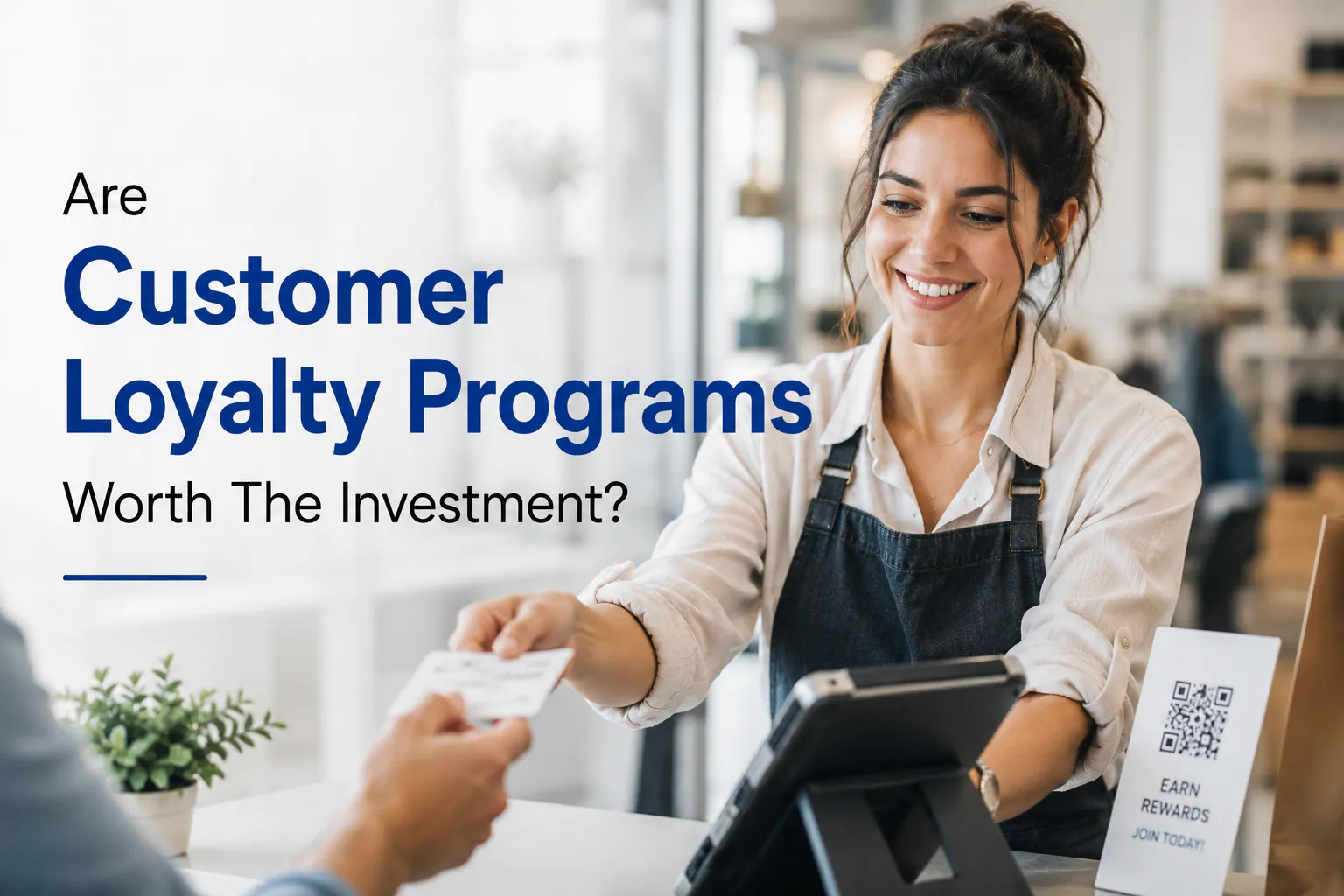
Customer loyalty programs are worth the investment when incremental gross profit from repeat purchases exceeds the cost of rewards and program management. Customer purchase frequency, retention rate, profit margin, and customer lifetime value determine whether a loyalty program creates measurable financial value.
In this blog, you will learn whether customer loyalty programs are really worth it, the pros and cons of loyalty programs, why customer retention matters, how loyalty programs support repeat purchases, and practical tips for creating a loyalty program that delivers measurable business value.
Are Loyalty Programs Worth It?
Yes, loyalty programs can be worth the investment because retaining existing customers can cost less than acquiring new customers, while loyal customers can generate more repeat purchases and higher spending.
According to Business Builders Co., retaining customers costs 5 times less than acquiring new customers. Review42 reports that a 5% increase in customer retention can increase profits by 25% to 95%. HubSpot reports that loyal customers are 50% more likely to try new products and spend 31% more than new customers.
Why Retention Matters More Than Acquisition
Customer retention matters because existing customers can create more value from repeat purchases while reducing the need to continuously spend on customer acquisition. Retention also increases customer lifetime value and creates more opportunities for cross selling, upselling, and referrals.
- Reduce acquisition pressure: Retained customers require fewer new customer acquisition efforts.
- Increase repeat purchases: Returning customers are more likely to purchase again because they already know the brand and its products.
- Increase customer lifetime value: More purchases over the customer relationship increase the potential value generated by each customer.
- Increase cross selling: Existing customers can be more receptive to additional products and services.
- Generate referrals: Loyal customers can recommend the brand to other potential customers, creating an additional acquisition channel.
Read more: Why Customer Retention Is More Profitable Than Customer Acquisition?
When Loyalty Programs Don’t Work
Loyalty programs underperform when customers do not see enough value to participate or the business does not manage the program as part of the customer experience. A loyalty program needs relevant rewards, simple redemption, clear communication, and regular performance tracking.
Customers can ignore a program when rewards are unattractive, earning rules are complicated, or the program is difficult to access. Low participation then limits repeat purchases and reduces the program’s potential return.
Program design also affects business results. A loyalty program that operates separately from the customer journey can create little behavioral change. Businesses can improve performance by connecting rewards with purchases, customer communication, and re engagement.
The strongest programs treat loyalty as an ongoing business activity rather than a one time promotion. Regularly reviewing participation, redemption, repeat purchases, and customer retention helps businesses identify what works and adjust the program accordingly.
Tips On Making The Most Of Your Brand Loyalty Program
A loyalty program performs better when the customer experience, reward structure, communication, and measurement work together. These 7 practices help businesses turn loyalty activity into repeat purchases and stronger customer retention.
1. Match Rewards With Customer Behavior
Design rewards around what customers actually value and purchase. A reward becomes more useful when it relates to customer spending patterns, product preferences, or purchase frequency. Free products, exclusive benefits, discounts, early access, and milestone rewards can serve different customer segments.
2. Make Every Loyalty Action Easy
Reduce the number of steps required to join, earn, track, and redeem rewards. Customers can disengage when registration requires lengthy forms or redemption involves multiple screens, codes, or unclear conditions. A simple loyalty journey makes participation easier to sustain.
3. Connect Loyalty With Every Purchase
Use loyalty interactions throughout the customer journey, not only after a purchase. Packaging, receipts, QR codes, checkout pages, WhatsApp messages, and post purchase communication can remind customers about available rewards and create another opportunity for engagement.
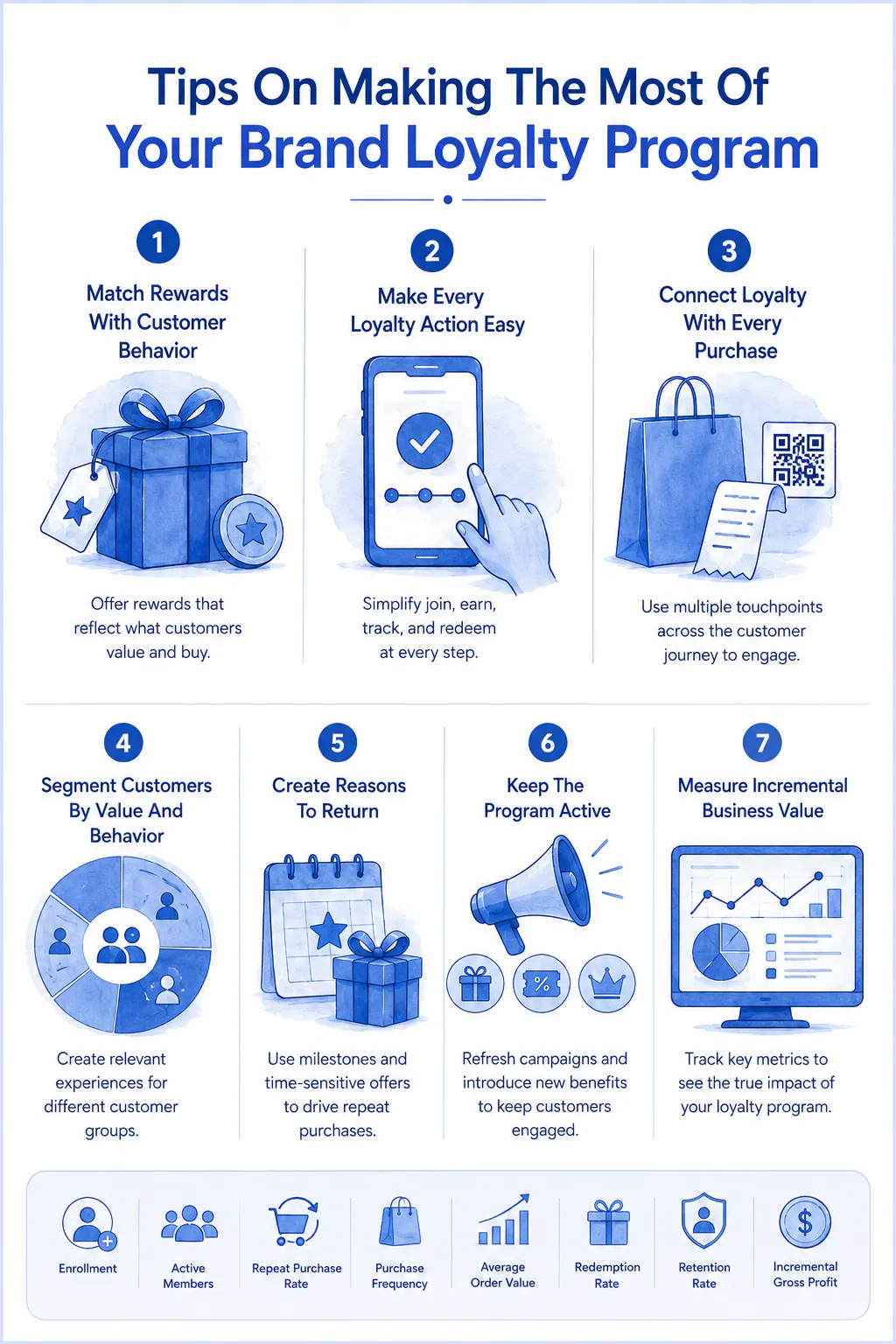
4. Segment Customers By Value And Behavior
Use customer purchase data to create relevant loyalty experiences for different customer groups. Frequent buyers, high value customers, new customers, inactive customers, and customers approaching a reward threshold can receive different incentives based on their relationship with the brand.
5. Create Reasons To Return
Use milestones and limited time benefits to encourage customers to make another purchase. Birthday rewards, purchase milestones, category based incentives, seasonal offers, and bonus reward periods can create additional purchase opportunities without applying the same incentive to every customer.
6. Keep The Program Active
Refresh loyalty campaigns when customer engagement starts declining. Businesses can introduce new rewards, seasonal benefits, member only offers, or temporary bonus opportunities to maintain customer interest. A loyalty program also benefits from regular testing of reward values, messages, and engagement channels.
7. Measure Incremental Business Value
Measure whether loyalty members actually purchase more frequently, remain customers longer, or generate more profit. Track enrollment, active members, repeat purchase rate, purchase frequency, average order value, redemption rate, retention rate, and incremental gross profit.
Read more: Seven Proven Customer Loyalty Strategies to Increase Retention
Final Thoughts: Are Loyalty Programs Worth It?
Yes, loyalty programs are worth it when they increase repeat purchases, customer retention, and customer value without allowing reward costs to outweigh the additional profit. The results depend on relevant rewards, simple participation, consistent engagement, and regular performance measurement.
For businesses looking to build a loyalty program without requiring customers to download another app, ArthaVerse’s WhatsApp Based Loyalty Program connects loyalty with WhatsApp through a QR code. Customers can scan the QR code, access the business on WhatsApp, receive rewards, and continue interacting with the brand through a familiar channel.
The program also connects customer profiles, purchase activity, rewards, milestone triggers, and engagement tracking. Businesses can monitor purchase frequency, customer activity, redemption, and repeat purchase behavior from one loyalty system.
For businesses where customers make repeat purchases, a WhatsApp based loyalty program can provide a practical way to turn existing customer relationships into measurable retention and repeat sales.