Key Takeaways
- Successful customer loyalty programs use different models, including points, cashback, memberships, tiered rewards, exclusive benefits, and personalized offers, based on customer behavior and purchase frequency.
- Loyalty programs can help B2C brands increase repeat purchases, strengthen customer relationships, collect customer data, and better understand purchasing behavior.
- WhatsApp-based loyalty programs can simplify customer engagement through QR enrollment, direct reward communication, personalized offers, purchase tracking, and re-engagement without requiring a separate loyalty app.
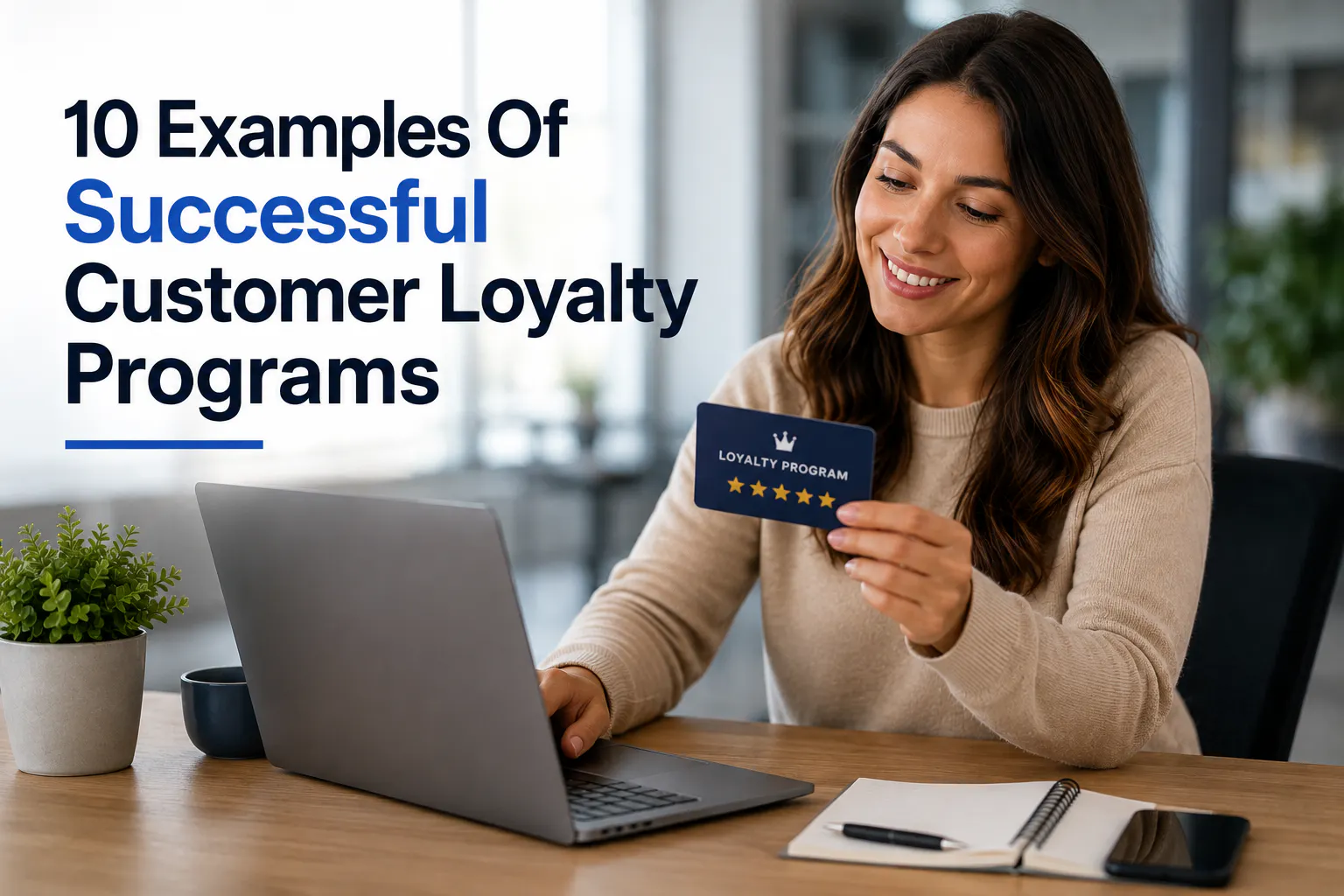
Competitors are always looking for ways to attract the same customers, which makes customer retention a key focus for B2C brands. A strong B2C loyalty program can give customers a clear reason to choose your brand again instead of switching to another option.
Brands use different loyalty models to create that reason, from points and tiered rewards to memberships, exclusive benefits, and personalised offers.
In this guide, we look at 10 customer loyalty program examples, why they work, and what businesses can learn from each approach.
Why Do Customer Loyalty Programs Matter?
Customer loyalty programs can help B2C brands retain customers, increase repeat purchases, and build stronger relationships. Their value goes beyond rewards because a well designed program can also give businesses useful customer data and reduce their reliance on constant acquisition.
- Increase revenue and retention: A 5% increase in customer retention can increase profits by 25% to 95%, according to Bain & Company. The National Retail Federation also reports that 43% of customers spend more with brands they are loyal to.
- Build stronger customer relationships: Loyalty programs give customers a reason to interact with a brand beyond a single purchase. Rewards, personalized offers, and exclusive benefits can encourage customers to return more often.
- Lower acquisition costs: When more customers return, businesses can depend less on continuously acquiring new buyers. Loyal customers can also recommend a brand to others, creating additional opportunities for growth.
- Understand customer behavior: Loyalty programs can record purchase history, reward activity, and customer preferences. Businesses can use this information to create more relevant offers and rewards.
- Collect customer feedback: Loyal customers interact with brands more frequently, giving businesses more opportunities to collect feedback and improve their products, services, and customer experience.
India's loyalty market also continues to grow. A 2024 market report projects the market to reach US$7.92 billion by 2028, growing at a 10.5% CAGR from 2024 to 2028.
Read more: 5 Must-Have Components of a Successful Loyalty Program
10 Examples Of Successful Customer Loyalty Programs
These 10 B2C loyalty programs show how brands use points, memberships, cashback, rewards, and exclusive benefits to encourage repeat purchases and build stronger customer relationships.
1. Fabindia — Fabfamily
Fabfamily is Fabindia’s loyalty program that rewards customers with Fabcoins on every purchase, with up to 10% back. Members can redeem Fabcoins across eligible shopping, dining, stays, and partner services.
The program uses a points-based loyalty model and positions rewards around Fabindia’s wider lifestyle ecosystem. Its Fabcoin Multiplier can make 1 Fabcoin worth ₹5 to ₹30, depending on the selected reward.
Why It Stands Out:
- Gives customers up to 10% back through Fabcoins.
- Lets customers use rewards across different categories.
- Gives Fabcoins different redemption values through the multiplier.
- Uses referral bonuses to encourage customer acquisition.
How It Works: Customers earn Fabcoins through eligible purchases and other activities. They can redeem their coins against available rewards, with the value depending on the selected redemption option.
2. Westside — WestStyleClub / NeuPass
Westside’s loyalty membership gives customers a welcome style voucher, birthday discounts, periodic vouchers, treats, and exclusive event invitations.
The program uses a membership-based loyalty model and targets frequent shoppers who want additional benefits from their Westside purchases. Customers must meet a ₹3,000 spending threshold to join the membership.
Why It Stands Out:
- Uses a clear ₹3,000 spending threshold for membership.
- Gives members a welcome voucher.
- Uses birthday discounts and treats to create personal benefits.
- Adds exclusive events to make membership feel more valuable.
How It Works: Customers who meet the applicable spending requirement can join the membership and receive vouchers, birthday benefits, discounts, and other member offers.
Read more: How to Increase Customer Loyalty?
3. Pantaloons — Green Card
Pantaloons Green Card is a tiered points-based loyalty program that rewards customers based on their purchases. Members can receive 0.5% to 7% cashback in reward points, depending on their tier.
The program positions loyalty around increasing customer value. Customers receive better rewards as they move into higher tiers.
Why It Stands Out:
- Offers reward rates ranging from 0.5% to 7%.
- Gives customers a reason to reach higher tiers.
- Includes VIP sale previews.
- Provides extended exchange benefits.
- Gives members free paper-bag credits.
- Keeps reward points valid for 1 year.
How It Works: Customers earn reward points from eligible purchases. Their membership tier determines the reward rate, and they can redeem their points on future bills.
4. Lifestyle Stores — Landmark Rewards
Landmark Rewards is a points-based loyalty program that connects Lifestyle with participating Landmark Group brands. Customers earn points when they shop and redeem them on future purchases.
The program positions loyalty across a wider retail ecosystem instead of keeping rewards within a single store.
Why It Stands Out:
- Connects rewards across participating brands.
- Gives customers more opportunities to earn points.
- Creates more opportunities to redeem rewards.
- Shows customers the points they can earn on product pages.
- Encourages repeat shopping across the retail ecosystem.
How It Works: Customers earn points through eligible purchases and redeem them later against qualifying purchases across participating brands.
Read more: Are Loyalty Programs Worth It?
5. Chumbak — In-house Rewards
Chumbak uses an in-house rewards approach to encourage customers to return for its lifestyle, gifting, and home products.
The program fits Chumbak’s D2C positioning by connecting rewards with repeat purchases, gifting occasions, seasonal shopping, and new product launches.
Why It Stands Out:
- Supports repeat purchases in a gifting-focused category.
- Creates opportunities around seasonal shopping.
- Uses rewards to encourage customers to return.
- Fits a lifestyle brand without requiring a complicated loyalty structure.
How It Works: Customers receive eligible rewards and member benefits through their purchases and interactions with the brand. These benefits give customers additional reasons to return for future purchases.
6. Spencer’s Retail — Smart Rewards
Spencer’s Smart Rewards is a loyalty program designed for frequent grocery shoppers. The program connects rewards with purchases made through Spencer’s stores.
It uses a points and rewards-based loyalty model that fits a category where customers make frequent, everyday purchases.
Why It Stands Out:
- Connects loyalty with regular grocery shopping.
- Integrates rewards with POS transactions.
- Lets customers earn and redeem rewards through offline purchases.
- Provides a straightforward model for frequent-purchase businesses.
How It Works: Customers earn and redeem rewards through eligible purchases. Their transactions are connected to the loyalty program, allowing the business to track customer activity and reward repeat shopping.
7. More Retail — More Smart Rewards
More Smart Rewards connects customer purchases across More’s shopping channels and uses rewards and personalized offers to encourage repeat purchases.
The program uses a multi-tier and personalized loyalty model. It connects online and offline purchases while using regional product preferences to make offers more relevant.
Why It Stands Out:
- Connects online and offline purchases.
- Uses personalized offers based on customer activity.
- Uses regional product preferences to improve relevance.
- Supports higher average transaction values.
- Reported improvements in member sign-ups and repeat purchases following technology upgrades.
How It Works: Customers earn rewards through eligible purchases and receive offers based on their purchase activity and preferences. The connected system allows More to engage customers across different shopping channels.
Read more: WhatsApp Loyalty Programs vs Traditional Loyalty Apps
8. Bata India — Bata Club
Bata Club is Bata India’s points-based loyalty program that rewards customers for their purchases and gives members access to selected offers and benefits.
The program fits Bata’s repeat-purchase category by connecting loyalty with different footwear needs, including school, work, festive, and seasonal purchases.
Why It Stands Out:
- Fits a category where customers return for different footwear needs.
- Rewards purchase frequency and basket size.
- Uses targeted offers to encourage future purchases.
- Connects loyalty with recurring shopping occasions.
How It Works: Customers earn points through eligible Bata purchases and can use available rewards and offers during future shopping. Targeted promotions can encourage customers to return when they have another footwear need.
9. Decathlon India — Membership + Sporty Rewards
Decathlon combines membership benefits with Sporty Rewards to connect purchases, rewards, and customer services.
The program uses a membership and points-based loyalty model and positions loyalty around the wider sporting experience rather than purchases alone.
Why It Stands Out:
- Links warranties to the customer’s membership ID.
- Uses Sporty Rewards as a points or wallet balance.
- Allows rewards to be used for eligible purchases and refunds.
- Can provide goodwill credits or vouchers for minor customer issues.
- Connects loyalty with the customer’s wider sporting activities.
How It Works: Customers use their membership ID to access benefits and collect Sporty Rewards. Their rewards balance can be used for eligible purchases, while membership also connects them with services such as warranties.
10. JioMart — Super Discount Membership
JioMart uses Super Discount Membership, coupons, and cashback offers to encourage customers to return and make additional purchases.
The program uses a membership and cashback-based loyalty model and focuses on immediate monetary value rather than a complex points system.
Why It Stands Out:
- Gives customers direct savings through membership offers.
- Uses time-bound coupons to encourage purchases.
- Can offer benefits such as ₹100 off on a first quick order.
- Uses cashback promotions such as 10% cashback with applicable caps.
- Keeps the reward structure simple and easy to understand.
How It Works: Customers access eligible membership offers, coupons, and cashback promotions and apply them to qualifying purchases. Time-bound discounts and cashback give customers an immediate reason to return and shop.
Read more: The Hidden Cost of Managing Leads Across Multiple Platforms
How ArthaVerse Can Help Businesses Build A WhatsApp-Based Loyalty Program?
The examples above show that successful loyalty programs do not follow one fixed model. Some brands use points, others use cashback, memberships, tiers, or personalized offers. What matters is making the program easy to join, relevant to customers, and valuable enough to encourage repeat purchases.
Why WhatsApp?
WhatsApp is a natural channel for loyalty in India, with more than 500 million users. Customers already use it daily, so businesses can engage them without asking them to download another app.
For loyalty programs, WhatsApp enables:
- Easy access: Customers can join through a QR code.
- Direct communication: Send rewards, offers, and reminders instantly.
- Two-way engagement: Customers can respond and interact with the brand.
- Personalized offers: Use purchase activity to make rewards more relevant.
How ArthaVerse Helps
ArthaVerse brings these capabilities together through its WhatsApp-Based Loyalty Program. Customers scan a QR code to start a WhatsApp conversation with the brand, without needing to download a separate loyalty app.
The program can connect customer profiles with purchase activity, track rewards and redemption, and send milestone-based rewards, personalized offers, and re-engagement messages through WhatsApp.
For businesses, this provides a way to build loyalty around the same principles seen in the examples above while making the customer entry point simpler.
ArthaVerse can help businesses:
- Create a loyalty program without requiring a dedicated mobile app.
- Connect customer profiles with their WhatsApp numbers.
- Track purchase frequency, rewards, and redemption activity.
- Send reward updates and personalized offers directly through WhatsApp.
- Re-engage customers who have not purchased or interacted recently.
- Monitor customer activity and repeat purchase patterns.
- Adapt the loyalty structure to different sectors and customer behaviors.
The key idea is simple: customers are more likely to engage with a loyalty program when it fits naturally into the channels they already use. By combining loyalty mechanics such as rewards, points, and personalized offers with WhatsApp communication, ArthaVerse gives businesses a practical way to encourage repeat purchases without adding another app to the customer journey.
Conclusion
Customer loyalty programs give B2C brands a practical way to encourage repeat purchases while building stronger relationships with existing customers. The examples above show that there is no single loyalty model that works for every business. Points, cashback, memberships, tiered rewards, personalized offers, and exclusive benefits can all work when they are aligned with customer behavior and purchasing frequency.
The most effective programs make rewards easy to understand, valuable enough to motivate customers, and relevant to the brand’s products or services. For businesses looking to improve retention, the key is not simply offering more rewards, but creating a loyalty experience that gives customers a clear reason to come back.