
Key Takeaways
- Customer loyalty grows when businesses make repeat purchases easier through personalized communication, convenient experiences, relevant rewards, and consistent post-purchase engagement.
- Loyalty programs can encourage repeat purchases by rewarding purchases, referrals, reviews, and milestones while giving customers clear and meaningful benefits.
- WhatsApp, customer segmentation, and loyalty analytics help businesses deliver timely engagement, re-engage inactive customers, and measure repeat purchase and retention behavior.
As customer acquisition costs continue to rise, businesses are looking beyond the first purchase and focusing more on keeping existing customers engaged. Turning a first time buyer into a returning customer can create more value from the relationship already established with the brand.
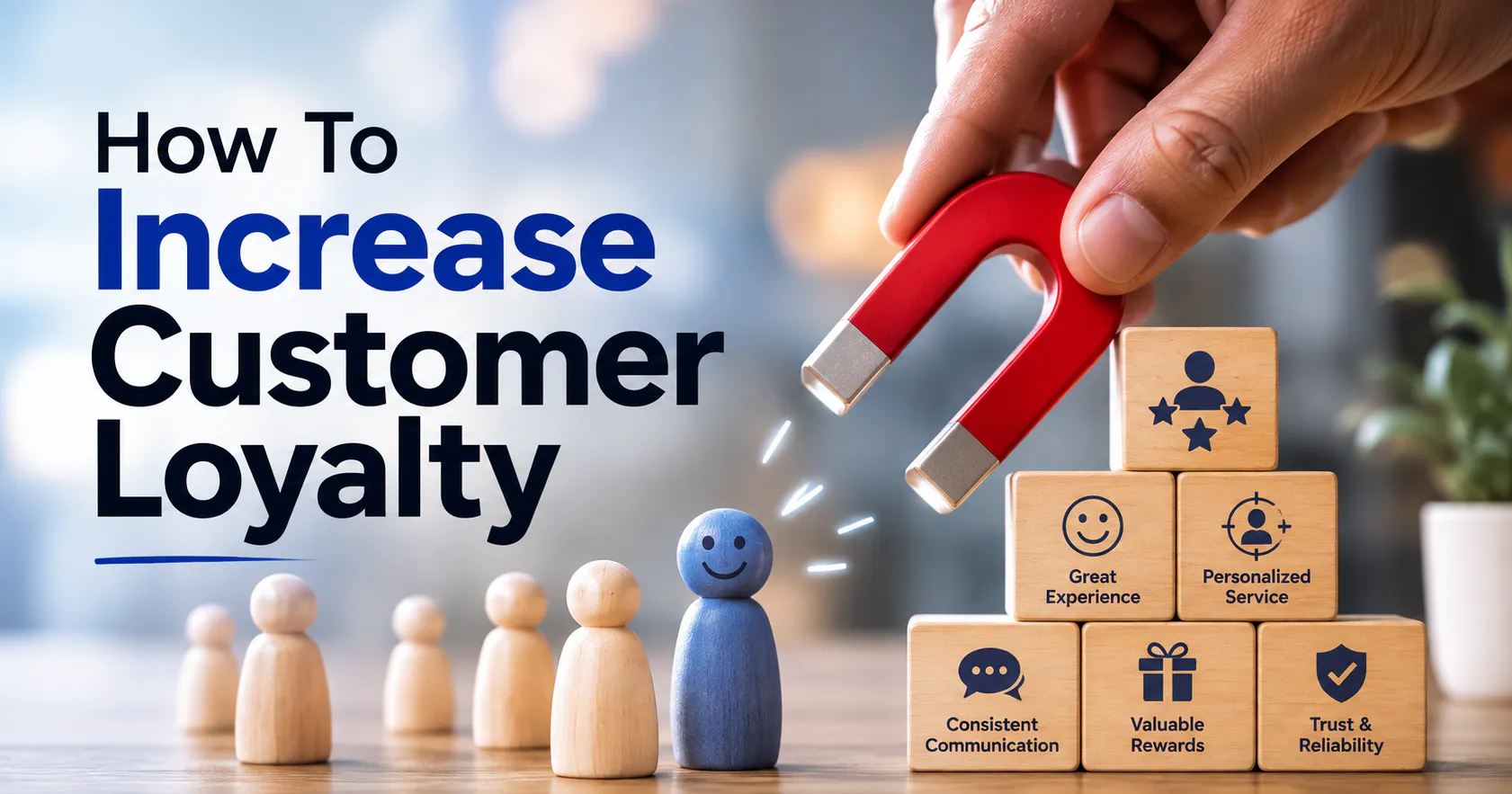
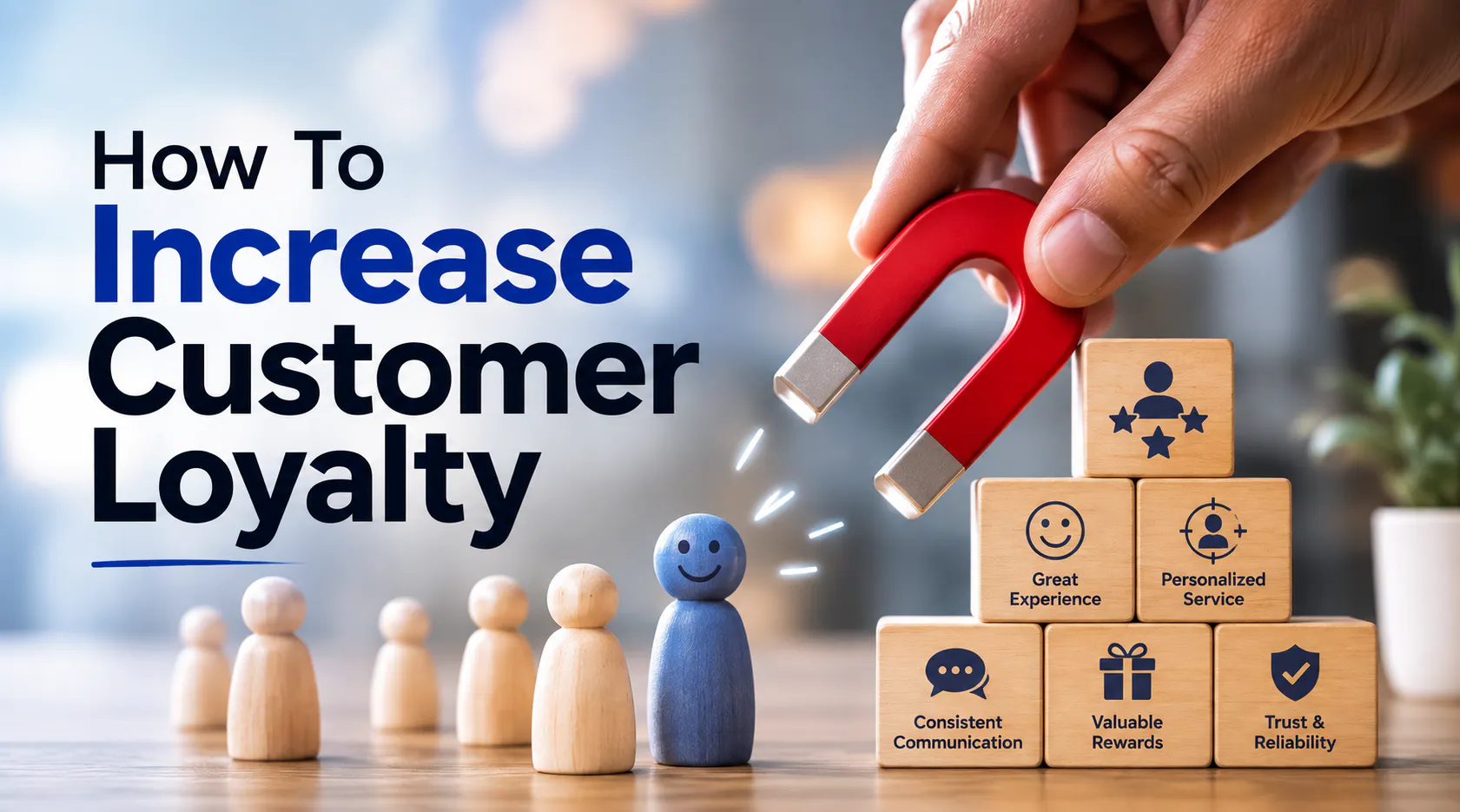
Customer loyalty grows when customers consistently receive relevant experiences, reliable service, personalized communication, and meaningful incentives. A strong loyalty strategy can encourage repeat purchases while strengthening the relationship between customers and the brand.
In this article, we’ll look at practical ways businesses can increase customer loyalty, encourage repeat purchases, and build stronger long term customer relationships.
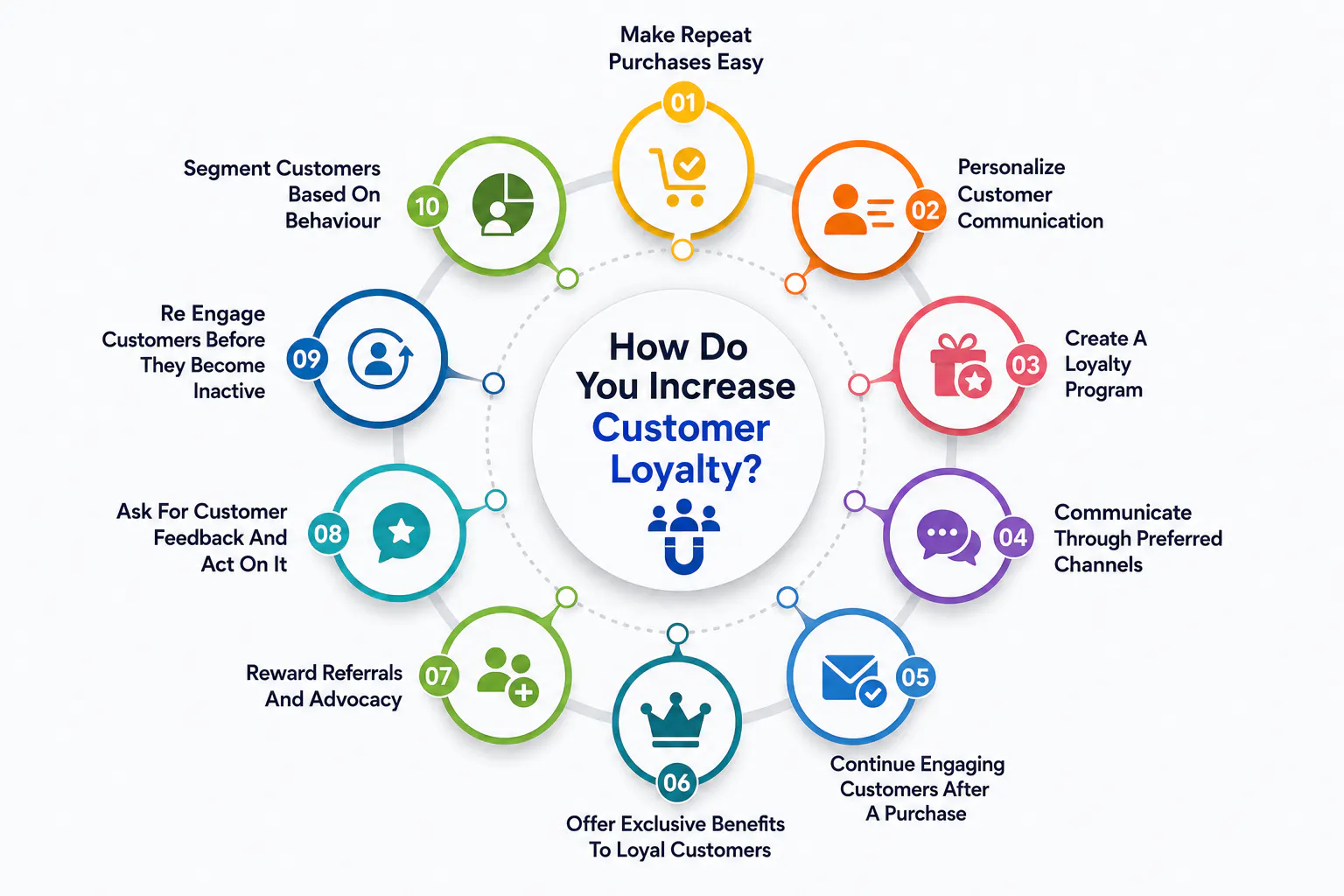
How Do You Increase Customer Loyalty?
You can increase customer loyalty by making it easier and more valuable for customers to continue choosing your brand. This involves more than offering discounts. Businesses should combine personalized experiences, reliable customer service, relevant rewards, convenient communication, and ongoing engagement to build stronger relationships with existing customers.
1. Make Repeat Purchases Easy
The customer journey should not end after the first purchase. Businesses should look for ways to make the next purchase simple and relevant based on what the customer has already bought.
For products that customers purchase regularly, businesses can provide timely reorder reminders. For other products, they can recommend complementary products, relevant bundles, or new products based on previous purchases.
Making the next purchase easier reduces friction and gives customers a practical reason to return.
2. Personalize Customer Communication
Customers are more likely to engage with communication that is relevant to their interests and previous interactions with a business. Personalization can therefore go beyond using a customer's name in an email.
Businesses can use information such as previous purchases, product preferences, purchase frequency, spending behaviour, and engagement history to determine what to communicate.
For example, a customer who regularly purchases a particular product could receive a relevant replenishment reminder, while a customer who has not purchased recently could receive a re-engagement message based on their previous interests.
The objective is to make communication useful rather than sending the same message to every customer.
Read more: Why Customer Retention Is More Profitable Than Customer Acquisition?
3. Create A Loyalty Program
A loyalty program can give customers an additional reason to continue engaging with a business. Instead of rewarding only purchases, businesses can design programs around behaviours they want to encourage.
Customers could earn points or benefits for:
- Purchases: Reward customers for buying products or reaching spending thresholds.
- Repeat orders: Give customers additional benefits when they purchase again.
- Referrals: Reward customers who bring new customers to the business.
- Reviews: Encourage customers to share feedback about their purchases.
- Milestones: Provide rewards when customers reach specific purchase or spending targets.
Rewards could include discounts, free products, free shipping, exclusive offers, or access to special experiences.
A good loyalty program should be simple to understand. Customers should know how they earn rewards, what they have earned, and how they can redeem them.
Read more: What is a B2C Loyalty Program?
4. Communicate Through Preferred Channels
Customer loyalty can be strengthened when businesses communicate through channels that customers already use and prefer.
Depending on the audience, this could include:
- SMS
- Social media
- Websites
- Mobile applications
The important factor is not simply being present across multiple channels but providing relevant and consistent communication.
For example, a business could use WhatsApp for customer support, order updates, and loyalty notifications while using email for newsletters, product education, and longer form content.
5. Continue Engaging Customers After A Purchase
Post purchase communication is an important part of customer retention. Businesses that stop communicating immediately after a sale miss opportunities to strengthen the relationship.
After a purchase, businesses can send:
- Thank you messages: Acknowledge the customer's purchase and reinforce the relationship.
- Product guidance: Help customers get more value from what they purchased.
- Feedback requests: Ask customers about their experience.
- Support information: Make it easy for customers to get help when needed.
- Product recommendations: Suggest relevant products based on previous purchases.
- Reorder reminders: Remind customers when they may be ready to purchase again.
Read more: Are Loyalty Programs Worth It?
6. Offer Exclusive Benefits To Loyal Customers
Customers do not always need another discount to feel valued. Exclusive benefits can create a stronger sense of recognition and give loyal customers something that other customers do not receive.
Businesses can offer:
- Early access to new products
- Members only offers
- Free samples
- Priority customer service
- Limited edition products
- Special events
- Exclusive experiences
For example, a business launching a new product could give its most engaged customers early access before making it available to everyone else.
7. Reward Referrals And Advocacy
Loyal customers can become valuable advocates for a business. When people have a positive experience, they may recommend the brand to friends, family, or colleagues.
A referral program can encourage this behaviour by giving existing customers a reward when someone they refer makes a qualifying purchase. The new customer can also receive an incentive, creating value for both sides.
Businesses can also encourage:
- Customer reviews
- Product recommendations
- User generated content
- Social media mentions
- Customer referrals
Read more: 5 Must-Have Components of a Successful Loyalty Program
8. Ask For Customer Feedback And Act On It
Customer feedback provides businesses with direct insight into what customers like, what frustrates them, and what could be improved.
Feedback can be collected through:
- Reviews
- Surveys
- Customer service conversations
- Social media
However, collecting feedback is only the first step.
Businesses should identify recurring issues and use customer feedback to improve products, services, and experiences. When customers see that their opinions lead to meaningful improvements, they are more likely to feel heard and valued.
9. Re Engage Customers Before they Become Inactive
A customer who has stopped purchasing may not necessarily be permanently lost. A decline in engagement can be an early indication that the relationship is weakening.
Businesses can monitor:
- Time since the last purchase
- Purchase frequency
- Message engagement
- Loyalty activity
- Reward usage
- Previous purchase behaviour
Customers showing signs of becoming inactive can then receive relevant re engagement communication.
Instead of sending a generic discount to everyone, businesses can use previous behaviour to determine what might encourage a customer to return.
10. Segment Customers Based On Behaviour
Different customers have different needs, so treating the entire customer base as one audience can make loyalty campaigns less effective.
Businesses can create segments such as:
- First time customers: Encourage the second purchase.
- Repeat customers: Reward continued purchasing.
- High value customers: Provide exclusive benefits and recognition.
- Frequent buyers: Offer milestone rewards or additional incentives.
- Inactive customers: Use targeted re engagement campaigns.
- Loyalty members: Encourage reward earning and redemption.
Each segment can then receive communication suited to its behaviour.
Customer segmentation makes loyalty efforts more relevant and can reduce unnecessary promotional communication.
How Can Businesses Use WhatsApp To Increase Customer Loyalty?
WhatsApp can help businesses strengthen customer loyalty by providing a direct and convenient way to stay connected with customers throughout the customer journey.
A WhatsApp loyalty program can allow customers to join, earn, receive, and redeem rewards through WhatsApp, without downloading a separate app.
Businesses can use WhatsApp to send:
- Loyalty updates: Inform customers about points and available rewards.
- Personalized offers: Send relevant incentives based on customer behaviour.
- Reward notifications: Tell customers when they have unlocked a benefit.
- Replenishment reminders: Remind customers when they may need to purchase again.
- Product recommendations: Suggest products based on previous purchases.
- Feedback requests: Collect customer opinions after a purchase.
- Re engagement messages: Encourage inactive customers to return.
For example, a customer who regularly purchases a particular product could receive a timely reorder reminder through WhatsApp. A returning customer could be notified when they have earned a reward, while an inactive customer could receive a relevant offer based on previous purchases.
The key is to keep every interaction relevant and useful. A WhatsApp based loyalty program should not simply become another channel for mass promotions. When businesses combine personalized communication with convenient rewards and timely engagement, WhatsApp can help turn individual purchases into longer term customer relationships.
Don't Rely On Discounts Alone
Discounts can encourage customers to purchase, but they should not become the foundation of customer loyalty.
If customers only return when a product is discounted, the relationship can become heavily price driven. This can make it harder for businesses to maintain margins and build genuine preference for the brand.
Long term loyalty is more likely when customers receive:
- Consistent product value
- Reliable customer service
- Convenient purchasing experiences
- Relevant communication
- Meaningful rewards
- Exclusive benefits
- Personalized experiences
Discounts can support this relationship, but they should be one part of a broader loyalty strategy.
How Do You Measure Customer Loyalty?
Customer loyalty should be measured by how customers behave over time, rather than simply by counting how many people have joined a loyalty program.
The following metrics can help businesses understand whether customers are returning, spending more, and engaging with the brand:
- Repeat purchase rate: Measures the percentage of customers who return to make another purchase.
- Purchase frequency: Shows how often customers purchase within a specific period.
- Customer lifetime value (CLV): Estimates the total value a customer generates throughout their relationship with the business.
- Customer retention rate: Measures how effectively a business keeps customers over a given period.
- Churn rate: Shows the percentage of customers who stop purchasing or engaging.
- Average order value (AOV): Indicates how much customers typically spend per transaction.
- Loyalty program engagement: Measures how actively customers earn and use rewards.
- Reward redemption rate: Shows how often customers redeem rewards they have earned.
- Referral rate: Measures how frequently existing customers refer to new customers.
Read more: Why Businesses Are Moving From Marketing Vendors to Growth Ecosystems?
How ArthaVerse Helps Increase Customer Loyalty?
ArthaVerse connects QR based enrollment, WhatsApp communication, purchase tracking, rewards, and loyalty analytics to help businesses build stronger relationships with existing customers.
Businesses can use ArthaVerse to:
- Enroll customers through QR codes: Customers can join the loyalty program without downloading a separate app.
- Engage customers through WhatsApp: Send rewards, offers, milestone notifications, and re engagement messages.
- Track purchase behaviour: Connect customer purchases with their loyalty profile.
- Create reward triggers: Use points, milestones, and incentives to encourage repeat purchases.
- Identify inactive customers: Use customer activity and purchase patterns to identify customers who may be at risk of becoming inactive.
- Measure loyalty performance: Track purchase frequency, repeat purchases, redemption rates, customer activity, and engagement.
Conclusion
Increasing customer loyalty requires more than giving customers discounts. Businesses need to make repeat purchases easier, communicate at the right time, provide meaningful rewards, and use customer behaviour to create more relevant experiences.
A WhatsApp based loyalty program can bring many of these activities into one familiar channel. With ArthaVerse, businesses can connect QR enrollment, WhatsApp engagement, purchase tracking, rewards, re engagement, and loyalty analytics to create a clearer path from first purchase to long term customer loyalty.