
Key Takeaways
- Loyalty points encourage customers to accumulate value over multiple purchases, while cashback provides a simpler and more immediate monetary benefit.
- Reward-based programs can use free products, vouchers, exclusive access, and milestones to encourage specific customer behaviors and create differentiated experiences.
- The right loyalty reward structure depends on purchase frequency, customer behavior, profit margins, and retention goals, with businesses able to combine points, cashback, and other rewards.
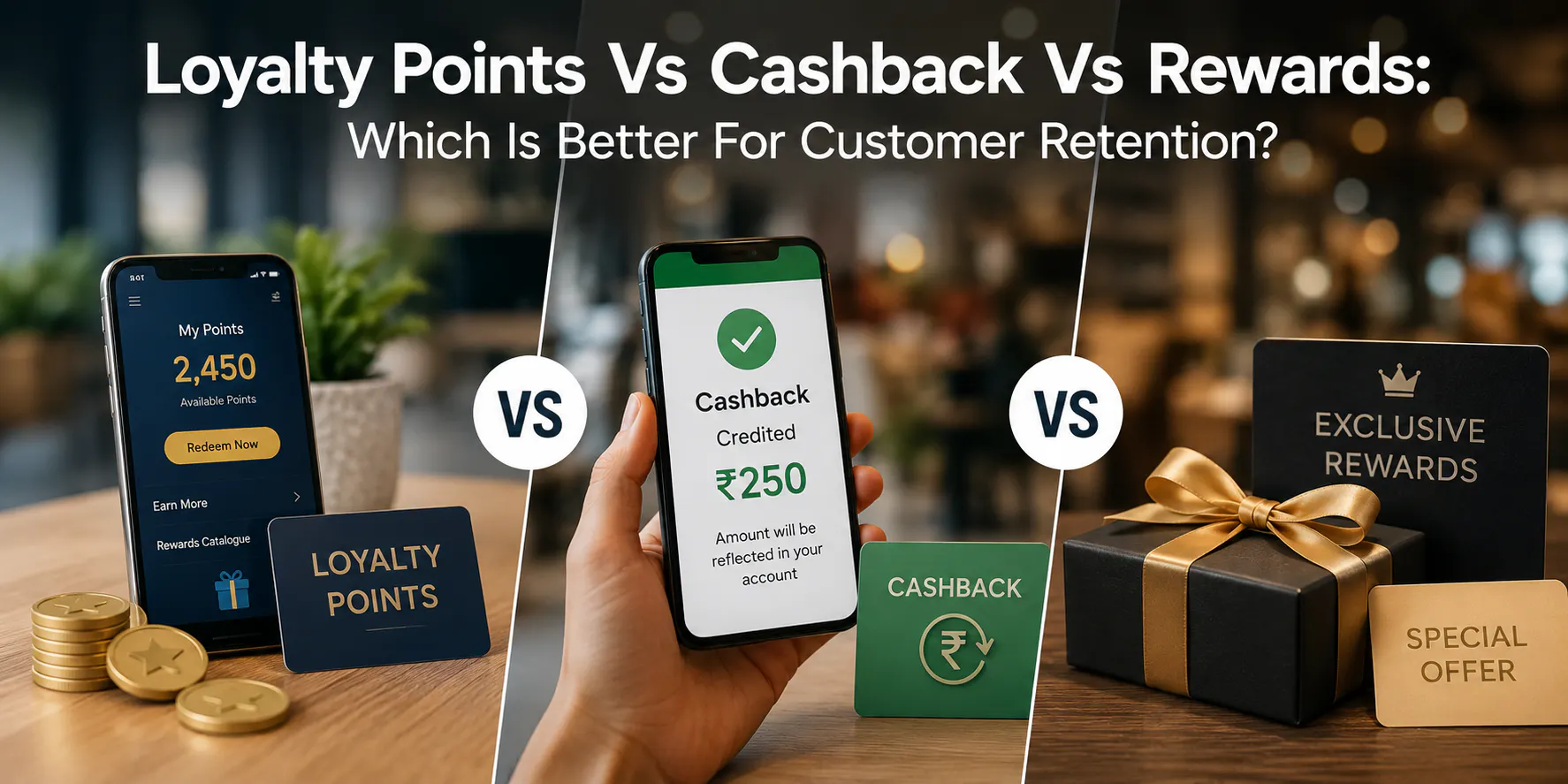
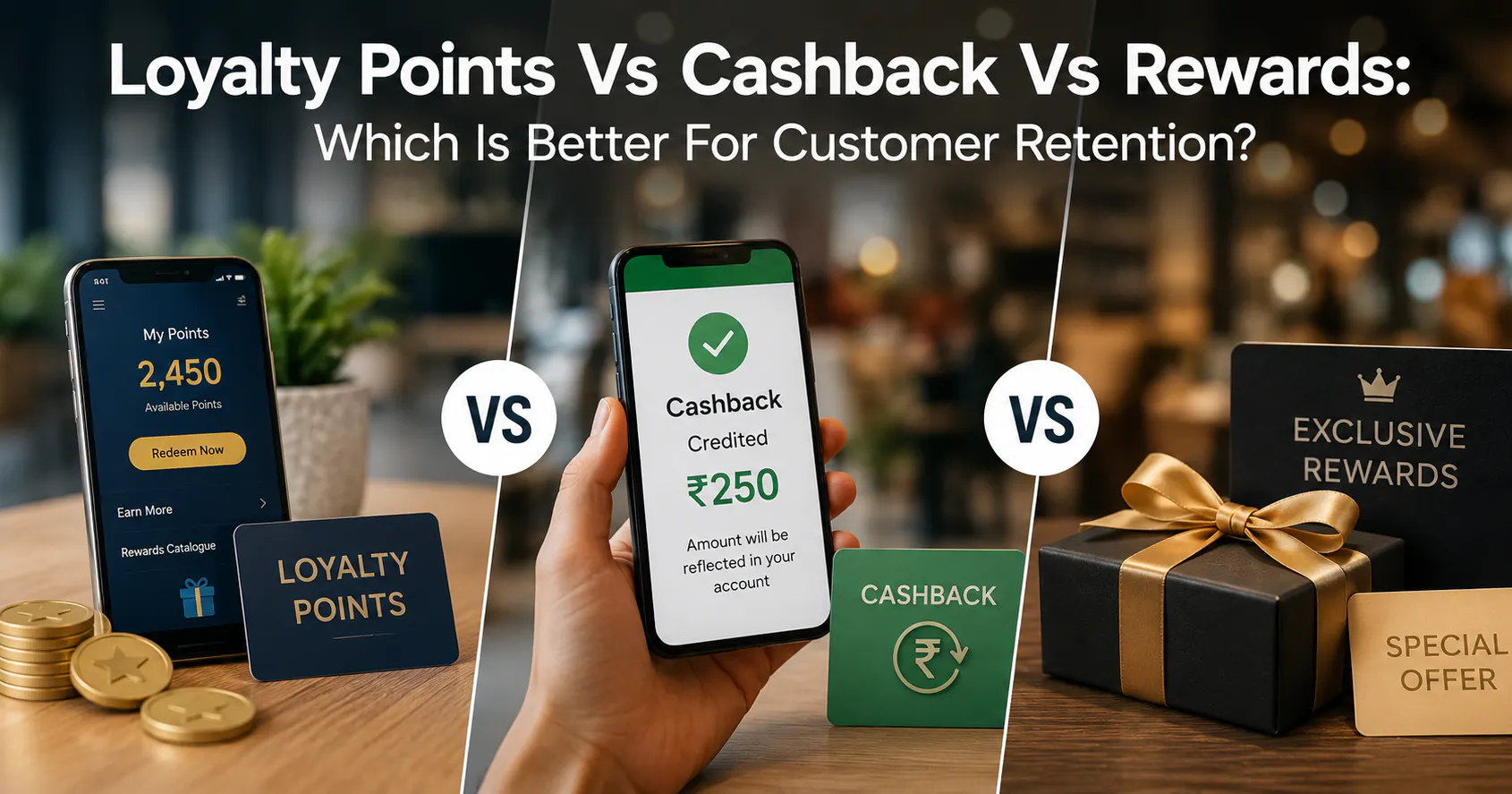
Customer loyalty depends on more than simply offering rewards. The type of reward can influence how customers perceive value, engage with a program, and decide whether to purchase again. Loyalty points encourage customers to build value over time, cashback provides a more immediate monetary benefit, while other rewards can create additional reasons for customers to engage and return.
According to the Deloitte 2025 Consumer Loyalty Program Survey, 72% of consumers say loyalty programs make them more likely to spend with their preferred brand. Deloitte 2025 Consumer Loyalty Program Survey
For businesses, the important question is not simply whether to offer rewards, but which reward mechanic is more effective at encouraging customers to return and purchase again. This article compares loyalty points, cashback, and other rewards, how each mechanism influences customer behavior, and when one may be more suitable than the other.
What Is a Cashback Loyalty Program?
A cashback loyalty program gives customers a monetary benefit based on their purchase value. The reward can appear as cashback, store credit, account balance, or credit toward a future purchase. Customers can understand the value without converting points or calculating redemption rates.
The main strength of cashback is its direct connection between purchase → reward → future value. Customers can immediately see what they have earned, making the reward easy to understand and use.
According to Deloitte's 2025 research, 86% of loyalty program participants consider financial rewards, simplicity, and ease of use important or very important when deciding whether to engage with a loyalty program.
Pros Of Cashback
- Easy to understand: Customers immediately see the monetary value they have earned.
- Immediate motivation: Cashback gives customers a clear financial reason to make another purchase.
- Simple redemption: Store credit or account balances can make rewards easier to use.
- Direct purchase connection: Higher spending can generate higher cashback rewards.
Read more: Why Customer Retention Is More Profitable Than Customer Acquisition?
Cons Of Cashback
- Higher reward cost: Each qualifying transaction can create a direct financial cost for the business.
- Limited emotional engagement: Cash value may not create the same sense of progression or exclusivity as points or tiered rewards.
- Lower differentiation: Competitors can easily match or exceed cashback rates, potentially turning loyalty into a price comparison.
What Is a Points Based Loyalty Program?
A points based loyalty program gives customers a reward currency that accumulates through purchases and other qualifying activities. Customers can later exchange their points for discounts, products, vouchers, experiences, or other benefits.
Points create a longer customer journey because the reward value builds across multiple interactions. Brands can also use points to encourage specific behaviors such as purchases, referrals, reviews, milestones, or higher spending.
Deloitte's 2025 research found that 60% of consumers aged 18 to 24 prefer point based loyalty programs, showing that accumulation and progression can be particularly relevant for younger customers. Deloitte 2025 Consumer Loyalty Program Survey
Pros Of Loyalty Points
- Encourages accumulation: Customers have a reason to continue purchasing to reach the next reward.
- Flexible reward design: Points can be linked to purchases, referrals, milestones, reviews, or other activities.
- Supports loyalty tiers: Points can help customers progress toward higher value benefits.
- Greater business control: Businesses can define earning rates, redemption values, qualifying activities, and expiry rules.
Read more: Are Loyalty Programs Worth It?
Cons Of Loyalty Points
- Requires customer understanding: Customers need to understand how points are earned and redeemed.
- Delayed value: Customers may need several purchases before reaching a meaningful reward.
- Redemption friction: Complicated rules or limited redemption options can reduce participation.
- Ongoing management: Businesses need to maintain accurate balances, reward rules, expiry policies, and availability.
What are Reward Based Loyalty Programs?
Reward based programs go beyond points and cashback by giving customers a specific benefit for completing an action or reaching a milestone. Examples include free products, vouchers, exclusive access, birthday benefits, upgrades, samples, or special experiences.
This structure is useful when a brand wants to encourage a specific customer behavior rather than simply return part of the purchase value.
Pros Of Reward Based Programs
- Greater variety: Businesses can offer benefits beyond discounts or monetary rewards.
- Stronger differentiation: Exclusive products, experiences, and access can make a loyalty program more distinctive.
- Behavioral flexibility: Rewards can encourage purchases, referrals, reviews, milestones, and engagement.
- Higher perceived value: A reward with strong customer appeal may cost the business less than an equivalent monetary discount.
Read more: 10 Customer Loyalty Program Examples From Top Indian Retail Brands
Cons Of Reward Based Programs
- Different customer preferences: Customers may value different types of rewards.
- Inventory requirements: Physical rewards require stock and operational planning.
- Redemption complexity: Offering many reward options can make program management more demanding.
- Weak perceived value: Customers may disengage if rewards are difficult to earn or do not feel worthwhile.
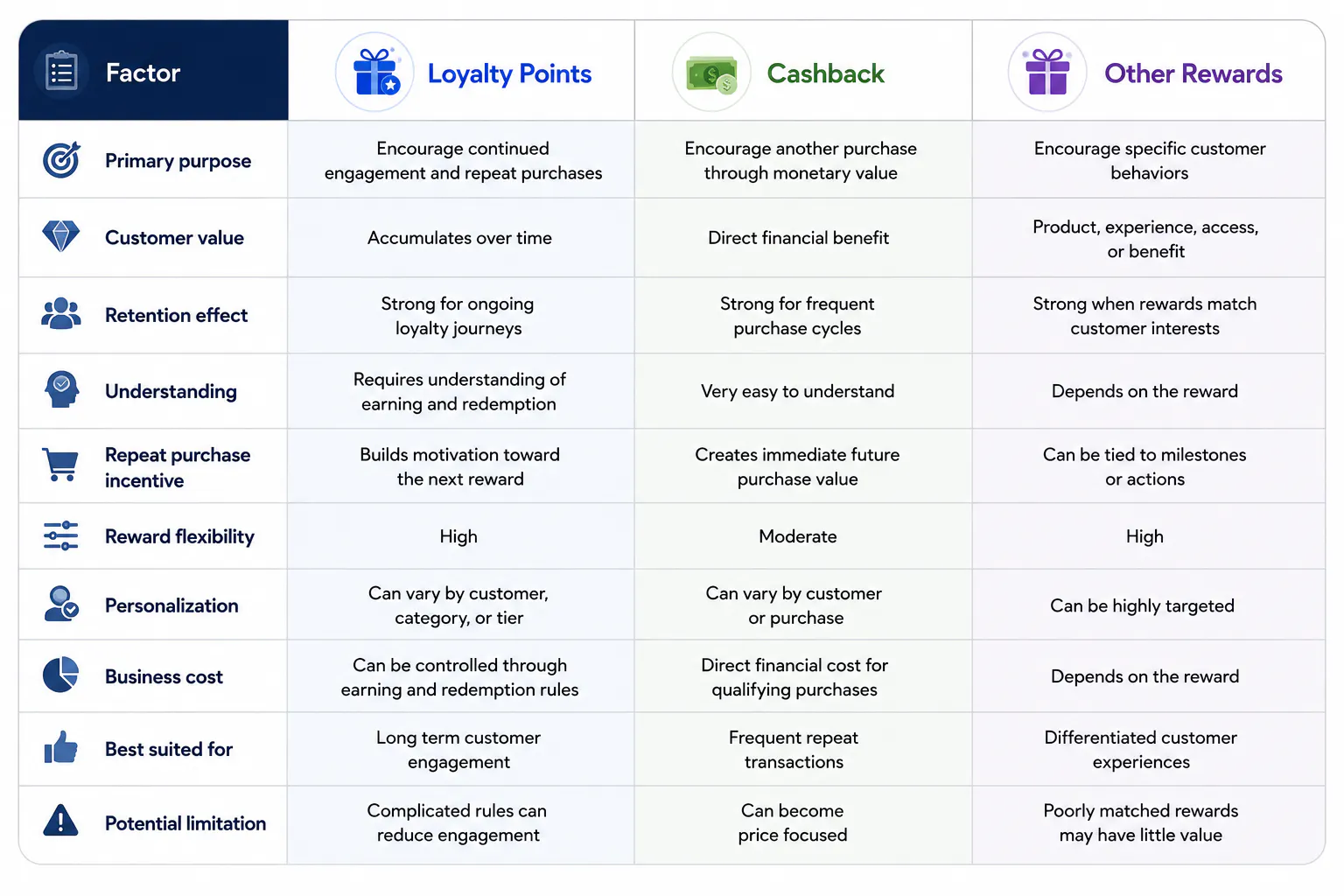
Loyalty Points Vs Cashback Vs Rewards: Which Is Better For Retention?
Loyalty points are generally stronger for long term engagement, while cashback can be effective for immediate purchase incentives. Other rewards can work particularly well when businesses want to encourage specific behaviors or create differentiated customer experiences.
Read more: 5 Must-Have Components of a Successful Loyalty Program
Which Loyalty Structure Should You Choose?
There is no single reward mechanic that works best for every business. The right option depends on purchase frequency, profit margins, customer behavior, and the action the business wants to encourage.
- Choose points when you want customers to accumulate value across multiple purchases and remain engaged over time.
- Choose cashback when customers respond strongly to an immediate monetary benefit that can support their next purchase.
- Choose other rewards when you want to provide free products, vouchers, exclusive access, experiences, or milestone benefits.
- Combine reward types when different customer segments respond to different incentives.
- Base rewards on customer behavior rather than giving every customer the same incentive.
For long term retention, points can create a stronger ongoing purchase journey, cashback can encourage immediate repeat purchases, and other rewards can provide additional reasons for customers to engage with the brand.
How Does ArthaVerse Support Customer Loyalty?
ArthaVerse’s WhatsApp loyalty program allows businesses to structure customer loyalty around points, rewards, incentives, and purchase milestones. Businesses can configure rewards around their products and customer activity while tracking purchase history, reward engagement, redemption rates, and repeat purchase cycles through WhatsApp-based customer engagement.
With a points based approach, customers can earn points through qualifying purchases and receive updates when they reach reward thresholds. Businesses can also use milestone based rewards and incentives to encourage customers to return.
ArthaVerse connects these activities with customer profiles and WhatsApp engagement, allowing businesses to communicate rewards and loyalty updates through a channel customers already use.
Conclusion
A successful loyalty program is not simply about giving customers more rewards. The right reward structure should make customers feel that returning to the brand provides clear and worthwhile value.
Points can encourage long term engagement, cashback can create an immediate financial incentive, and other rewards can give customers more personalized reasons to return. The best choice depends on customer behavior, purchase frequency, margins, and the business's retention goals.
With ArthaVerse, businesses can combine points, rewards, purchase milestones, customer data, and WhatsApp engagement to create a loyalty experience that encourages repeat purchases while giving businesses greater visibility into customer behavior.