
Key Takeaways
- Performance marketing is only the starting point. It can generate traffic and leads, but sustainable growth requires systems for conversion, engagement, retention, and loyalty.
- Customer retention is essential for profitable growth. Rising acquisition costs make it increasingly important to nurture existing customers, increase lifetime value, and drive repeat purchases and referrals.
- Connected growth systems outperform channel focused strategies. Combining performance marketing with AI, CRM, automation, customer intelligence, and WhatsApp based loyalty programs creates a complete customer journey from acquisition to advocacy.
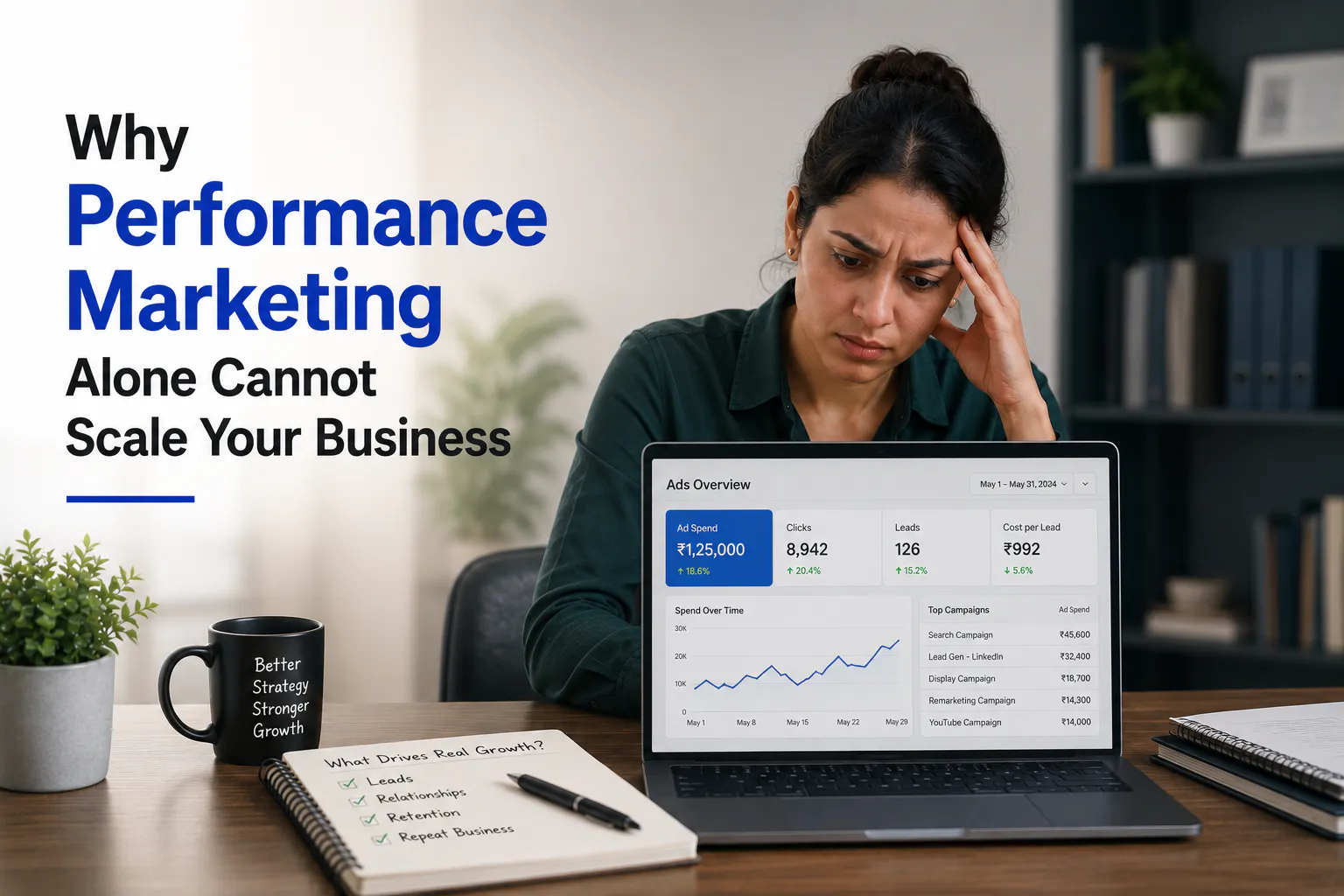
Performance marketing has become the go-to growth strategy for many SMEs. Businesses invest in Google Ads, Meta Ads, SEO, and other digital channels to attract more visitors, generate leads, and increase sales. While these campaigns can deliver measurable results, they represent only one part of the customer journey.
The challenge is that performance marketing primarily targets a fixed pool of customers who are already looking to buy. As competition increases, customer acquisition costs continue to rise, making it harder for businesses to scale profitably by relying on paid campaigns alone. More importantly, performance marketing focuses on generating leads rather than building long term customer relationships, brand loyalty, or sustainable business growth.
The real work begins after a lead is generated. Without a connected system to engage prospects, manage enquiries, nurture relationships, automate follow ups, and retain customers, many businesses struggle to turn marketing investments into consistent revenue. In this guide, you'll learn why performance marketing alone cannot scale a business and how combining customer acquisition with CRM, AI, marketing automation, customer intelligence, and loyalty programs creates a complete growth system for long term success.
Why Performance Marketing Alone Isn't Enough
Performance marketing is highly effective at attracting qualified traffic and generating leads, but acquiring attention is only the first step in the customer journey. Sustainable business growth depends on what happens after someone clicks on your ad or visits your website. Without the right systems in place, many leads never become loyal customers.
- Focuses only on customer acquisition: Performance marketing is designed to attract new prospects, but it does not manage customer engagement, retention, or long term relationship building.
- Targets a limited pool of active buyers: Paid campaigns primarily reach people who are already searching for a solution. This limits growth opportunities and increases competition for the same audience.
- Customer acquisition costs continue to rise: As more businesses compete for the same keywords and audiences, advertising costs increase, making it more difficult to scale profitably through paid channels alone.
- Leads require nurturing before they convert: Many prospects are not ready to buy immediately. Without follow ups, personalized communication, and automation, valuable opportunities are often lost.
- No centralized customer management: Performance marketing generates leads, but businesses still need a CRM to organize enquiries, track customer interactions, and manage sales pipelines effectively.
- Retention drives long term profitability: Acquiring a customer is only the beginning. Repeat purchases, referrals, and customer loyalty generate greater long term value than relying solely on new customer acquisition.
Read more: Why Customer Retention Is More Profitable Than Customer Acquisition?
The Customer Journey Framework: What Businesses Need Beyond Performance Marketing
Performance marketing helps businesses generate visibility and attract potential customers, but it represents only the first stage of the customer journey. To achieve sustainable growth, businesses need a connected system that supports customers from their first interaction through to long term loyalty and advocacy.
1. Awareness
This is where customers first discover your business through Google Search, paid advertising, SEO, social media, content marketing, or referrals. Performance marketing plays a vital role in increasing visibility and attracting qualified traffic.
Goal: Generate awareness and attract potential customers.
2. Consideration
After discovering your business, customers begin evaluating their options. They compare products or services, visit your website, read reviews, ask questions, and determine whether your business meets their needs. AI agents, informative content, and personalized engagement help build trust during this stage.
Goal: Educate prospects and build confidence in your business.
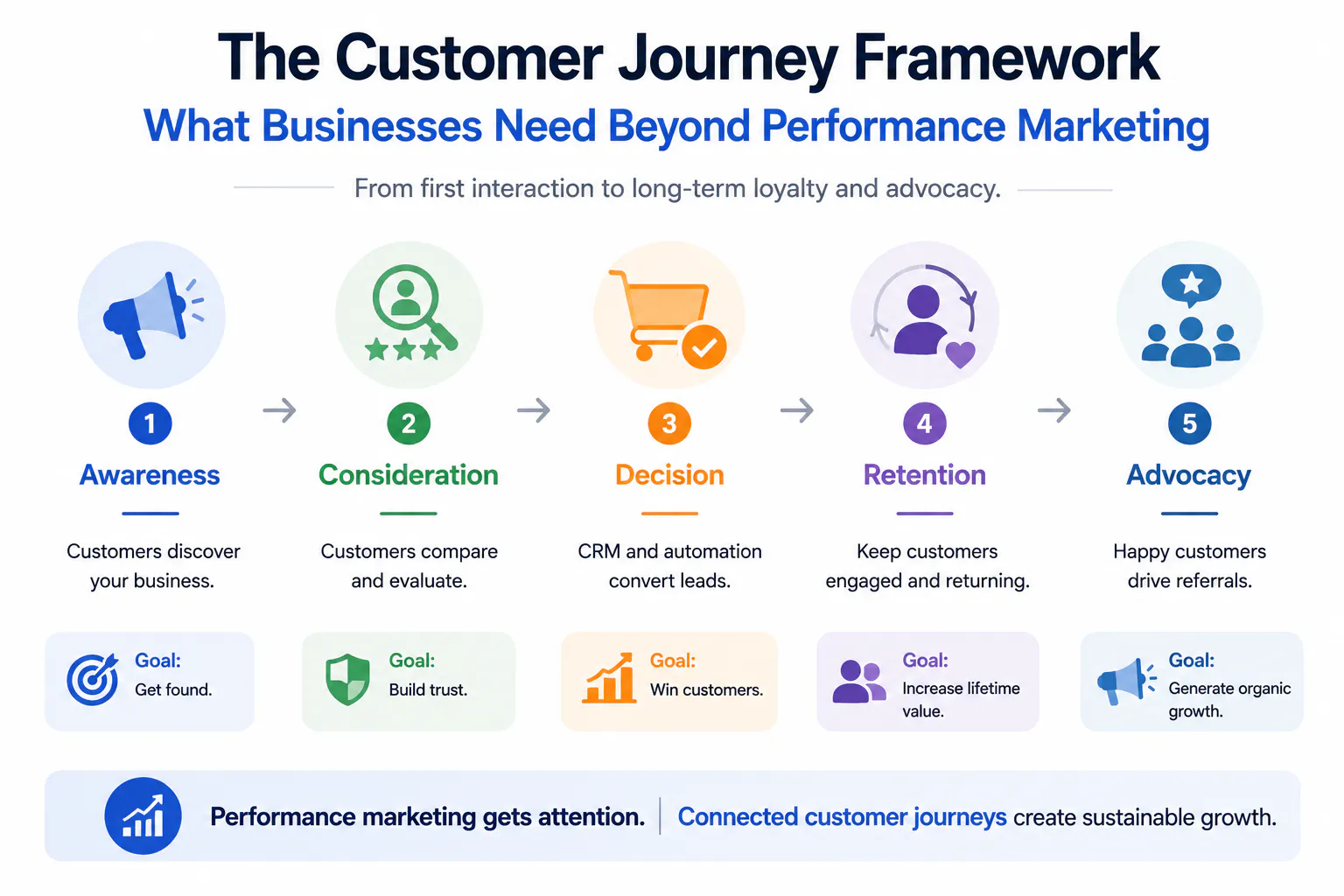
3. Decision
Once customers are ready to move forward, the buying experience becomes critical. CRM and lead management, automated follow ups, WhatsApp conversations, quotations, and sales workflows help convert enquiries into paying customers while reducing delays and missed opportunities.
Goal: Convert qualified prospects into customers.
4. Retention
The customer journey doesn't end after the first sale. Businesses need to continue engaging customers through personalized communication, marketing automation, customer intelligence, loyalty programs, and proactive support. Strong retention strategies encourage repeat purchases and increase customer lifetime value.
Goal: Strengthen customer relationships and encourage repeat business.
5. Advocacy
Satisfied customers become brand advocates who recommend your business to others. Positive reviews, referral programs, testimonials, loyalty rewards, and consistently excellent customer experiences help turn existing customers into a valuable source of new business.
Goal: Generate referrals, strengthen brand trust, and create sustainable long term growth.
Why Customer Acquisition Without Retention Limits Growth?
Acquiring new customers is essential for business growth, but focusing only on acquisition creates an expensive and unsustainable growth model. Long term success depends on balancing customer acquisition with retention, engagement, and loyalty. Businesses that continue investing in existing customers often achieve stronger profitability and more predictable revenue than those constantly chasing new leads.
- Rising customer acquisition costs: As competition for keywords and advertising placements increases, generating new leads becomes more expensive, reducing overall marketing efficiency.
- Lower profitability: Businesses that rely solely on acquiring new customers spend more on marketing while missing the long term revenue generated by repeat customers.
- Short customer lifetime value: Without retention strategies, customers may purchase once and never return, limiting the revenue generated from each acquisition.
- Missed upselling and cross selling opportunities: Existing customers are more likely to purchase additional products or services, but businesses focused only on acquisition often overlook these opportunities.
- Higher customer churn: Without consistent engagement, personalized communication, and loyalty initiatives, customers are more likely to switch to competitors.
- Unpredictable revenue: Relying entirely on new customer acquisition creates inconsistent sales, while repeat customers provide a more stable and reliable revenue stream.
Read more: Why Businesses Are Moving From Marketing Vendors to Growth Ecosystems?
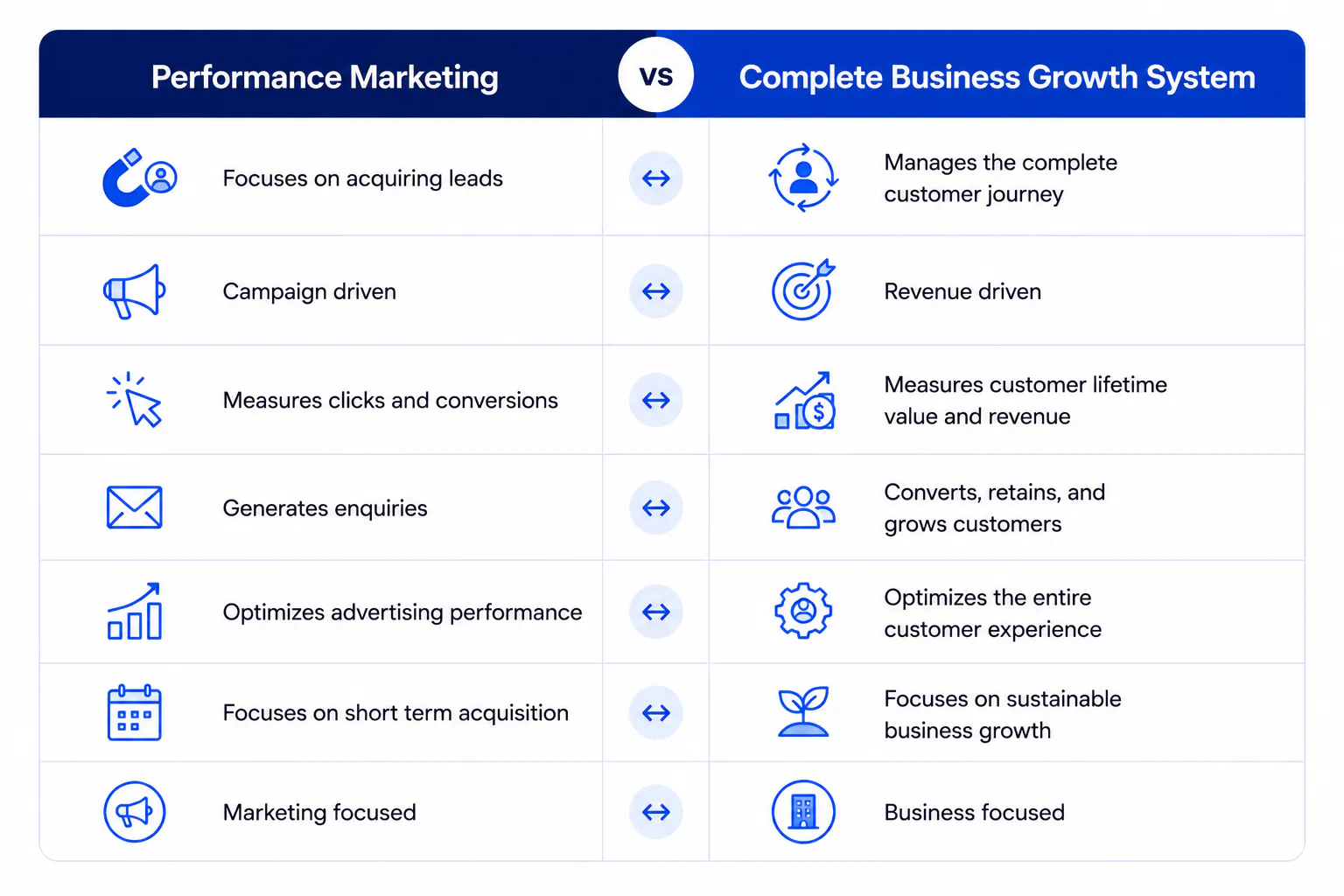
Performance Marketing vs Business Growth System
Performance marketing plays an important role in attracting customers, but a complete business growth system manages every stage of the customer journey. The difference lies in moving beyond lead generation to building long term customer relationships.
How ArthaVerse Helps Businesses Build Beyond Performance Marketing
Performance marketing is only one component of business growth. ArthaVerse brings together the technology, expertise, and integrated solutions businesses need to manage the complete customer journey from acquisition to advocacy.
- Performance Marketing: Generate qualified traffic through data driven digital campaigns across search, social media, and other online channels.
- ArthaGPT AI Agents: Engage website visitors instantly, answer enquiries, qualify leads, and provide 24/7 conversational support.
- CRM & Lead Management: Capture, organize, and manage every lead through one centralized sales pipeline while tracking every customer interaction.
- WhatsApp Based Loyalty Programs: Strengthen customer relationships through WhatsApp based loyalty program where you can send personalized campaigns, giveaway exclusive offers, and repeat purchase initiatives.
- Business Growth Ecosystem: Integrate customer acquisition, engagement, conversion, retention, and advocacy into one connected system that supports sustainable business growth.
The Future of Growth Is Connected, Not Channel Based
Performance marketing will continue to play an important role in helping businesses attract new customers. However, generating clicks is only the starting point of the customer journey.
Businesses that combine customer acquisition with AI powered engagement, CRM, marketing automation, unified customer intelligence, and retention strategies are better equipped to convert more leads, increase customer lifetime value, and build stronger customer relationships.
The future of business growth is no longer about optimizing individual marketing channels. It is about connecting every stage of the customer journey into a single revenue system where marketing, sales, and customer success work together toward the same business goals.
Sustainable growth doesn't come from running more campaigns. It comes from building a connected system that transforms visitors into customers, customers into loyal advocates, and every interaction into long term business value.
Conclusion
Performance marketing remains an important part of customer acquisition, but it cannot drive sustainable business growth on its own. Businesses need to look beyond clicks and leads and focus on what happens throughout the entire customer journey.
By combining performance marketing with AI powered engagement, CRM, marketing automation, customer intelligence, and WhatsApp based loyalty programs, businesses can convert more leads, strengthen customer relationships, increase repeat purchases, and build long term customer value. Sustainable growth comes from creating a connected system that turns prospects into customers and customers into loyal advocates.

