Key Takeaways
- A B2C loyalty program is a structured program that encourages individual consumers to keep buying from a business by offering rewards such as points, discounts, cashback, exclusive benefits, or other incentives.
- A successful loyalty program should be simple and valuable, with easy enrollment, relevant rewards, straightforward redemption, personalised communication, and consistent engagement.
- Tracking loyalty metrics helps improve performance, including purchase frequency, repeat purchases, redemption rates, customer engagement, churn risk, and customer value.
Every business wants to generate revenue and grow. But growth does not only come from acquiring new customers. Businesses also need to bring existing customers back and turn one time buyers into repeat customers.
The numbers show why this matters. Acquiring a new customer can cost 5–25 times more than retaining an existing one, according to Harvard Business Review. 84% of consumers say loyalty programs influence their decision to keep shopping with a brand, according to Capital One Shopping.
A customer loyalty program gives customers a clear reason to return while helping businesses improve customer retention, repeat purchases, and long term customer value.
In this blog, we cover what a customer loyalty program is, the different types, examples, and how to choose the right program for your B2C business.
What Is a B2C Loyalty Program?
A B2C loyalty program is a structured program that encourages individual customers to keep buying from a business by offering points, discounts, cashback, exclusive benefits, or other rewards. Customers earn these rewards through purchases or other actions, giving them a reason to return to the same brand.
For example, Domino’s Rewards lets customers earn points from eligible purchases and redeem them for free food. Myntra Insider rewards members with benefits and points based on their shopping activity, giving customers additional reasons to keep engaging with the platform.
These programs help B2C brands turn one time purchases into repeat purchases while building a stronger relationship with customers.
The Business Case for B2C Loyalty Programs
A loyalty program can do more than reward customers. It can help a business increase repeat purchases, improve retention, and generate more revenue from its existing customer base.
The research supports this business case:
According to Antavo's Global Customer Loyalty Report 2025, 83% of loyalty program owners report a positive ROI, with an average return of 4.9x their investment.
According to Capital One Shopping, 84% of consumers say loyalty programs influence their decision to continue shopping with a brand,
The retention numbers also show why keeping existing customers matters. The probability of selling to an existing customer is 60–70%, compared with 5–20% for a new prospect, according to Marketing Metrics.
Read more: Why Customer Retention Is More Profitable Than Customer Acquisition?
Why Customer Loyalty Programs Matter for B2C Brands
B2C brands compete for customers who can switch to another brand with very little effort. A loyalty program gives customers a reason to return, buy again, and stay engaged with the brand.
For businesses, the benefits go beyond repeat sales:
- Increase repeat purchases: Rewards can encourage customers to choose the same brand again.
- Improve customer retention: Regular rewards and relevant communication can keep customers engaged for longer.
- Increase customer lifetime value: More frequent purchases can increase the total value a customer generates over time.
- Encourage referrals: Satisfied loyalty members can recommend the brand to friends and family.
- Understand customer behaviour: Loyalty activity can show businesses what customers buy, how often they buy, and which rewards they respond to.
- Create a direct customer relationship: A loyalty program gives brands more opportunities to communicate with customers after the first purchase.
Read more: The Complete Customer Journey Framework Explained
What Are the Most Common Types of Loyalty Programs?
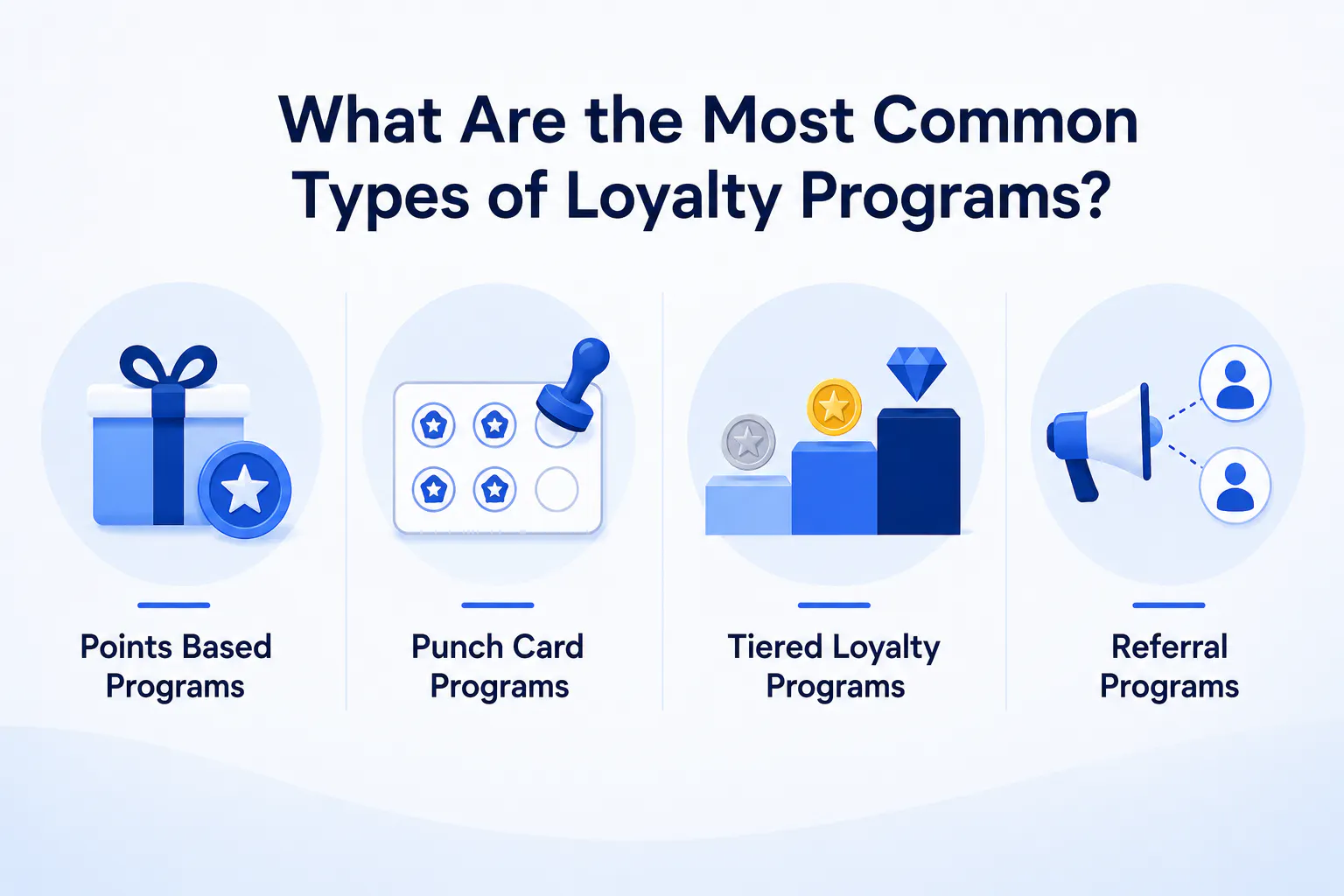
The most common B2C loyalty programs are points based programs, punch card programs, tiered loyalty programs, and referral programs. Each model gives customers a different reason to buy again, stay engaged, or recommend the brand.
Points Based Loyalty Programs
Points based programs give customers points for purchases or selected actions. Customers collect points and redeem them for rewards such as discounts, free products, or cashback.
Example: Walgreens myWalgreens gives members Walgreens Cash on eligible purchases. Members use their rewards on future purchases.
Punch Card Loyalty Programs
Punch card programs give customers a stamp or digital mark after each eligible purchase. Customers receive a reward after reaching a set number of purchases.
Example: Pret A Manger uses digital loyalty rewards to encourage repeat purchases. Customers earn rewards as they buy from the brand.
Tiered Loyalty Programs
Tiered programs give customers different reward levels based on their spending or engagement. Customers unlock better benefits when they reach higher tiers.
Example: Hilton Honors uses membership tiers such as Silver, Gold, and Diamond. Members receive additional benefits as they move to higher tiers.
Referral Loyalty Programs
Referral programs reward customers when they bring new customers to a brand. Customers receive rewards after their referrals complete a required action, such as making a purchase.
Example: Dropbox gives users additional storage when their referrals sign up and meet the program requirements.
What Makes a B2C Customer Loyalty Program Successful?
A successful B2C loyalty program gives customers a clear reason to return and buy again. The program should make joining simple, rewards useful, and communication relevant. These factors help businesses build stronger customer relationships and increase repeat purchases.
Simple Joining Process
A loyalty program should make customer registration quick and easy. A QR code can start the loyalty journey by taking customers directly to the brand’s loyalty channel, such as WhatsApp.
Rewards Customers Value
A loyalty program should offer rewards that customers actually want. Discounts, free products, cashback, exclusive offers, and milestone rewards can give customers a clear reason to return.
Easy Earning and Redemption
A loyalty program should make rewards easy to earn and use. Customers should understand how they earn points, reach milestones, and redeem their rewards without dealing with complicated rules.
Relevant Communication
A loyalty program should send customers useful messages at the right time. Reward updates, milestone messages, new offers, and re engagement messages can keep customers connected with the brand.
Personalised Rewards
A loyalty program should use customer purchase behaviour to improve the customer experience. Businesses can offer relevant rewards based on what customers buy, how often they purchase, and how they interact with the brand.
Consistent Engagement
A loyalty program should give customers regular reasons to return. Businesses can use new rewards, purchase milestones, special offers, and timely messages to maintain engagement.
Measurable Results
A loyalty program should track customer activity and business results. Businesses can measure repeat purchases, redemption rates, purchase frequency, customer lifetime value, and loyalty driven revenue to understand whether the program is working.
Read more: The Future of Lead Generation
How to Build a B2C Customer Loyalty Program?
Building a B2C loyalty program starts with understanding what you want customers to do and what you can offer in return. A clear structure helps businesses create a program that customers can join easily, use regularly, and understand without confusion.
1. Define Your Goal
Start by deciding what the loyalty program should achieve. You may want to increase repeat purchases, improve customer retention, increase purchase frequency, or encourage referrals. A clear goal helps you choose the right loyalty structure and rewards.
2. Understand Your Customers
Identify what your customers buy, how often they buy, and what motivates them to return. This information helps you create rewards that match their behaviour instead of offering incentives they do not value.
3. Choose the Right Loyalty Model
Choose a program structure that fits your customers and purchase behaviour. Points can work well for frequent purchases, while punch cards can suit businesses with simple repeat transactions. Tiered programs can encourage higher spending, and referral programs can turn existing customers into advocates.
4. Decide How Customers Will Join
Make enrollment quick and convenient. A QR code can give customers a simple entry point by taking them directly to your loyalty channel, such as WhatsApp. Customers can then register and start interacting with the program without downloading another app.
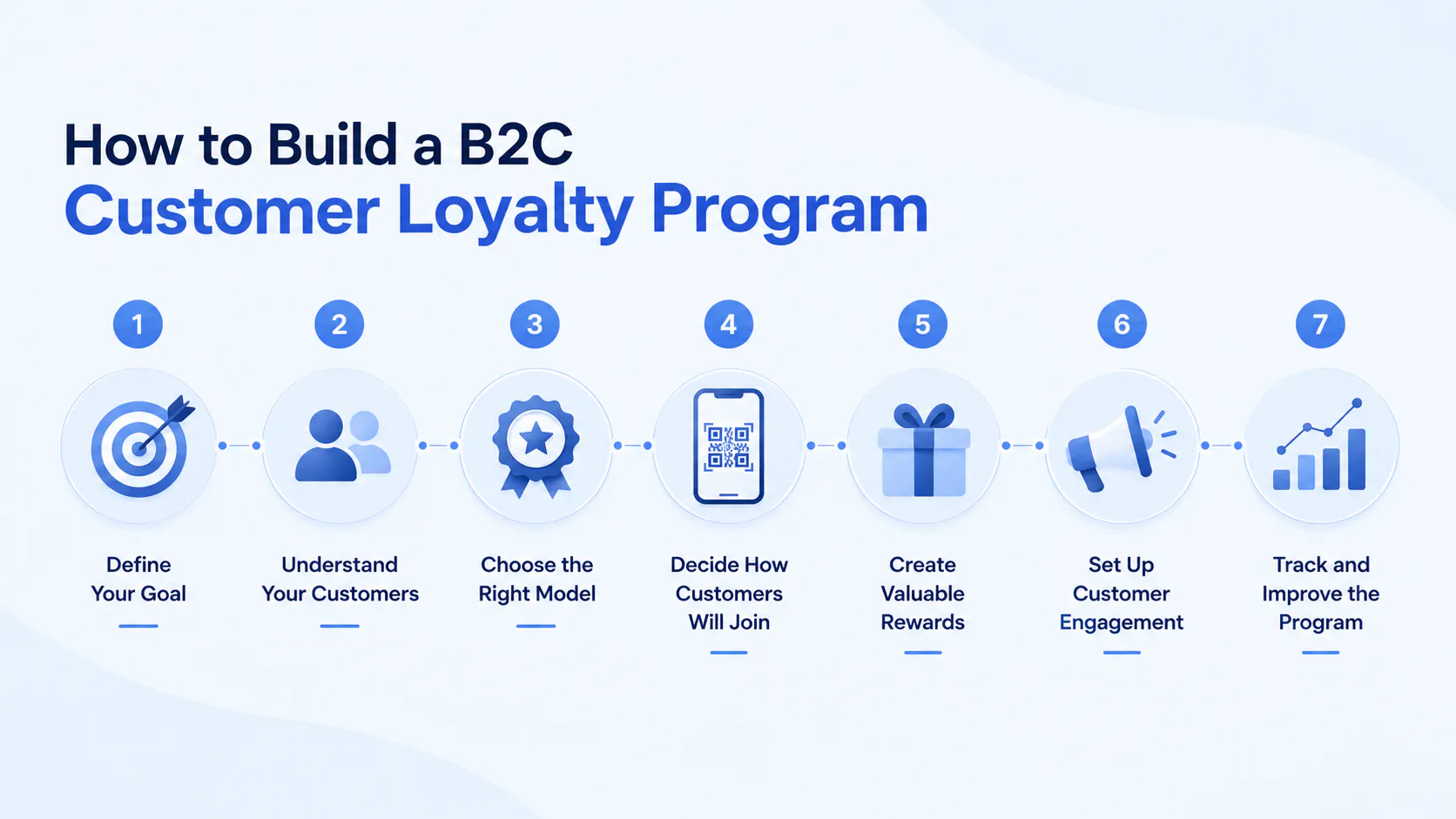
5. Create Valuable Rewards
Choose rewards that give customers a real reason to return. You can offer discounts, free products, cashback, exclusive offers, or rewards for reaching specific milestones. Keep the earning and redemption rules clear.
6. Set Up Customer Engagement
Plan how you will communicate with loyalty members after they join. Send reward updates, purchase related messages, milestone notifications, and relevant offers to keep customers engaged and encourage repeat purchases.
7. Track and Improve the Program
Measure how customers interact with the loyalty program and how it affects sales. Track enrollment, repeat purchases, redemption rates, purchase frequency, and customer lifetime value. Use these results to improve your rewards, communication, and overall program.
Read more: From Clicks to Conversations
What Customer Loyalty Program Metrics Should You Track?
The right metrics help businesses understand customer activity, purchase behaviour, reward usage, and loyalty engagement.
- Purchase frequency: Track how often customers purchase from your business.
- Customer engagement: Measure how actively customers interact with the loyalty program.
- Reward redemption rate: Track how often customers redeem their rewards.
- Customer activity: Monitor which customers are actively engaging with the program.
- Repeat purchase cycles: Identify patterns in how often customers return and purchase again.
- Churn risk: Identify customers who are becoming less active and may be at risk of leaving.
- Customer value: Identify your most valuable customers based on their activity and purchase behaviour.
What Are the Common Customer Loyalty Program Mistakes to Avoid?
A loyalty program can lose customers when it becomes difficult to join, difficult to use, or difficult to understand. Avoiding common mistakes helps businesses create a program that keeps customers engaged and encourages repeat purchases.
- Making rewards difficult to earn: Customers may lose interest when rewards take too long to reach.
- Using complicated rules: Too many conditions can make the program difficult to understand and use.
- Offering rewards customers do not value: Rewards should match what customers actually want.
- Making redemption difficult: Customers should be able to use their rewards without unnecessary steps.
- Ignoring inactive customers: Businesses can miss opportunities when they do not re-engage customers who stop interacting with the program.
- Sending irrelevant messages: Loyalty communication should match customer activity and purchase behaviour.
- Not tracking customer behaviour: Without purchase and engagement data, businesses cannot see what is working or where customers are dropping off.
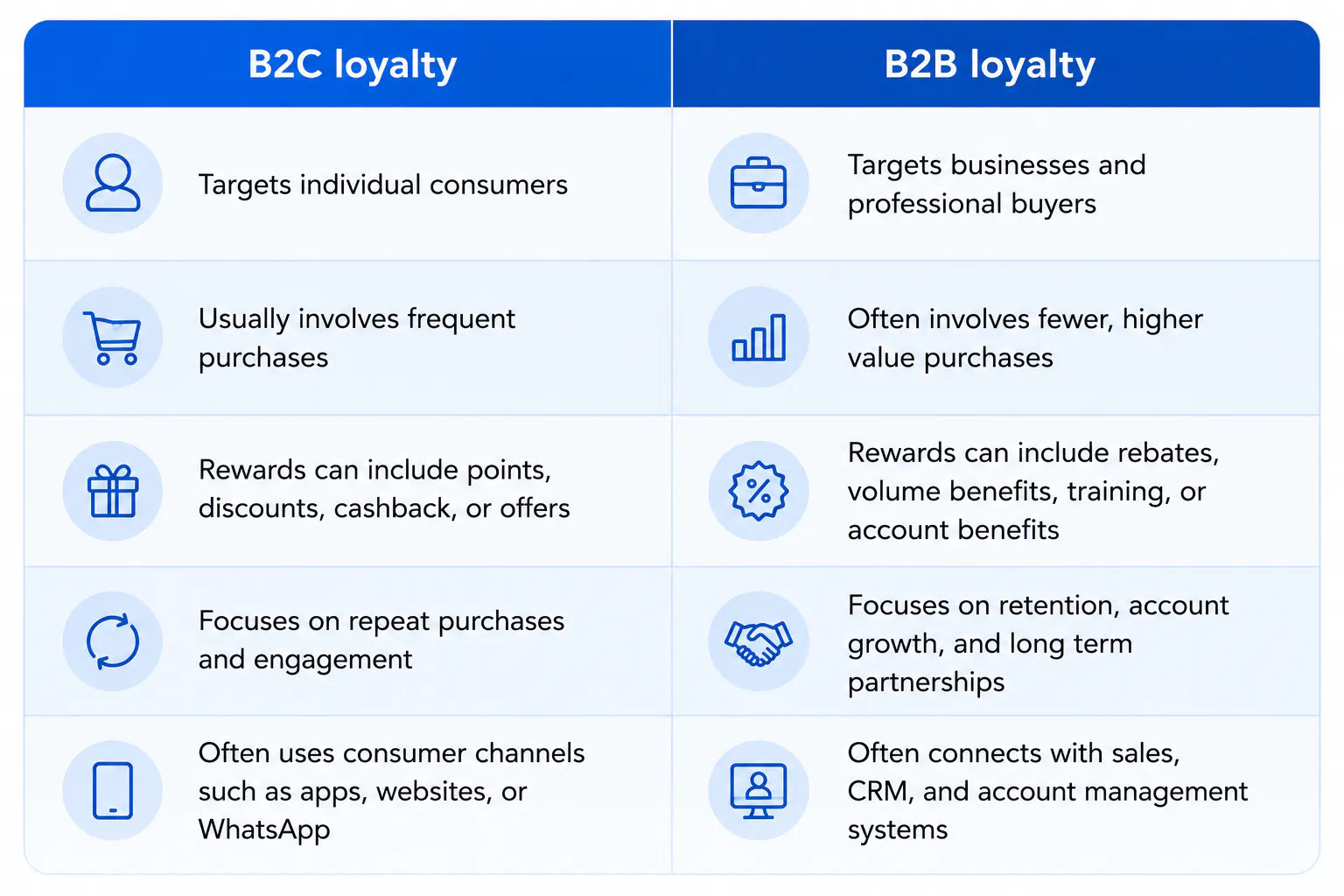
How Does a B2C Loyalty Program Differ From B2B?
A B2C loyalty program rewards individual consumers for buying from or engaging with a brand, while a B2B loyalty program focuses on business customers and their longer purchasing relationships. The main difference is the customer, buying process, and reward structure.
How Does ArthaVerse Help Businesses Build Smarter Loyalty Programs?
ArthaVerse helps businesses run a trackable WhatsApp-based loyalty program. Customers can join through a QR code, receive rewards, and stay connected with the business without downloading a separate app.
- QR based joining: ArthaVerse lets customers scan a QR code to start their loyalty journey.
- WhatsApp communication: Businesses can send reward updates, offers, and other loyalty messages directly through WhatsApp.
- Purchase tracking: ArthaVerse links purchase history to each customer’s WhatsApp profile.
- Reward tracking: Businesses can track points, rewards, and redemption activity.
- Customer re engagement: ArthaVerse supports milestone triggers and re engagement messages for inactive customers.
- Loyalty insights: Businesses can view customer activity, purchase frequency, loyalty engagement, repeat purchase cycles, and customers at risk of churning.
Conclusion
A B2C loyalty program can help businesses turn one time buyers into repeat customers by giving them clear reasons to return, engage, and purchase again.
The right program should be simple to join, offer rewards to customers' value, and use customer data to create relevant experiences. By tracking repeat purchases, engagement, redemption, and customer value, businesses can continuously improve their loyalty strategy.