Key Takeaways
- Repeat customers create more long-term value through higher customer lifetime value, more predictable revenue, larger orders, and stronger customer advocacy.
- Making the second purchase easier can improve retention, with direct reorder options, personalized post-purchase communication, replenishment reminders, and relevant recommendations.
- Loyalty and WhatsApp engagement can encourage repeat purchases by connecting rewards, milestone notifications, purchase tracking, and re-engagement in a familiar channel.
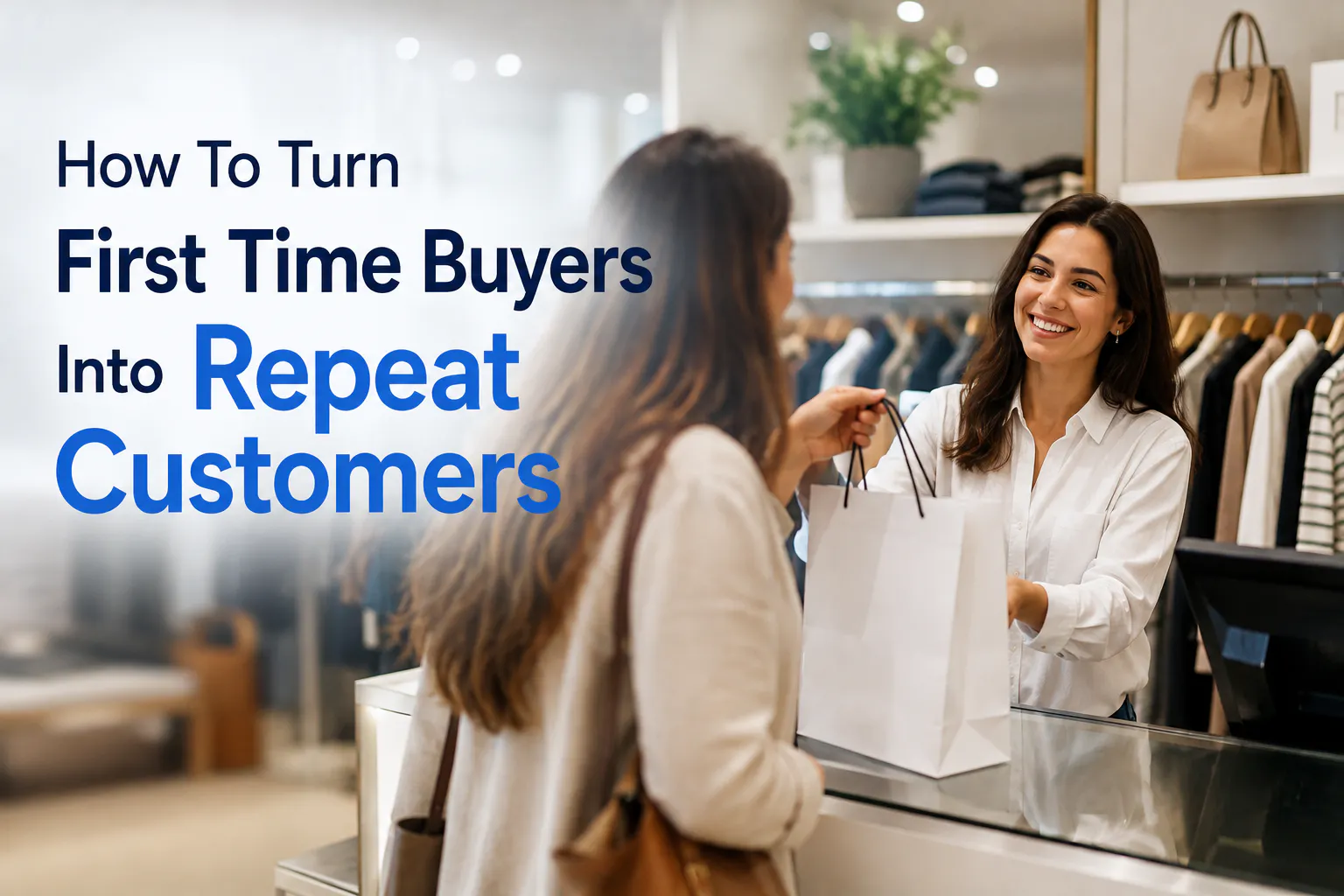
First-time buyers are valuable, but the real opportunity begins after the first purchase. Getting a customer to buy once does not guarantee they will return, especially when competitors are constantly giving them new reasons to switch. A well-designed customer loyalty program can encourage repeat purchases and help brands turn that first transaction into a longer customer relationship while reducing the pressure to constantly acquire new buyers.
According to Harvard Business Review, acquiring a new customer can cost 5 to 25 times more than retaining an existing one, depending on the industry and study. The same HBR research reports that increasing customer retention by 5% can increase profits by 25% to 95%.
According to LoyaltyPass, repeat customers spend around 67% more per transaction than first time buyers.
These numbers make retention difficult to ignore. In this blog, we’ll look at practical ways brands can turn first time buyers into repeat customers through better post purchase experiences, personalized communication, loyalty programs, WhatsApp engagement, and targeted re engagement strategies.
Why Repeat Customers Matter?
Repeat customers create value beyond a single transaction. As customers return, brands can build stronger relationships, increase purchase value, and create more predictable revenue.
- Higher customer lifetime value: Customers who purchase repeatedly can contribute significantly more revenue over their relationship with a brand than one time buyers.
- Lower acquisition costs: Retaining existing customers reduces the need to continually spend on campaigns to acquire new buyers.
- More predictable revenue: A consistent base of returning customers gives brands a more reliable source of sales and makes future demand easier to plan.
- Bigger orders over time: As trust grows, customers may purchase more frequently, try additional products, or increase their average order value.
- Stronger advocacy: Satisfied repeat customers are more likely to leave reviews, recommend products, refer others, and share positive experiences.
Read more: Why Customer Retention Is More Profitable Than Customer Acquisition?
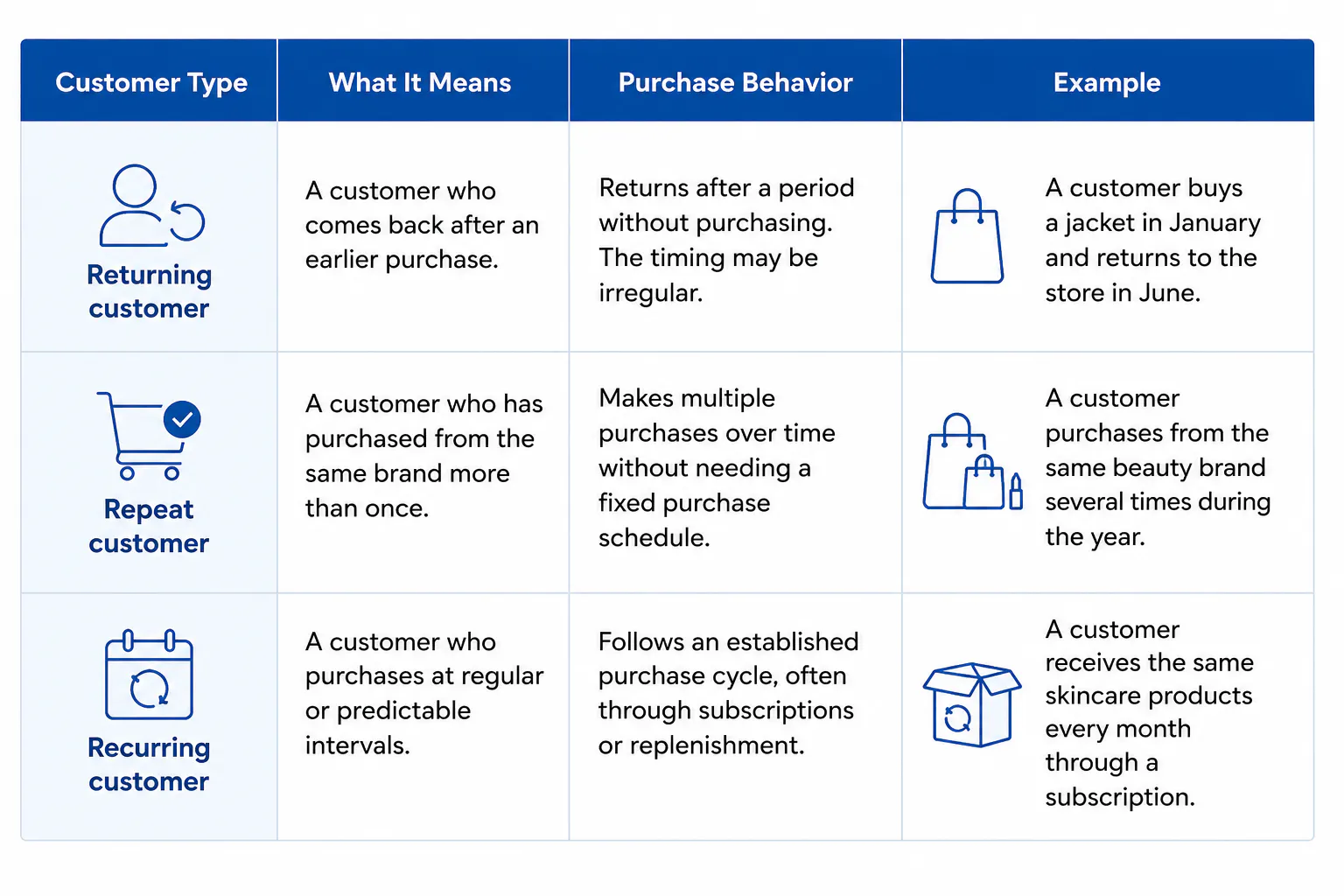
What Is the Difference Between Returning, Repeat, And Recurring Customers?
The main difference is how the customer returns and whether their purchases follow a predictable pattern.
What Strategies Can Increase Repeat Customers?
Turning first time buyers into repeat customers requires more than another discount. Brands need to understand what encourages customers to return, remove friction from the next purchase, and create relevant reasons to stay engaged. These seven strategies cover the key stages from post purchase engagement to loyalty and re engagement.
1. Build a Personalized Post Purchase Journey
The customer relationship should continue after the first transaction. A thoughtful post purchase journey helps customers get more value from their purchase while creating natural opportunities for another interaction.
Start with order confirmation and delivery updates, then provide product guidance based on what the customer purchased. Once they have had enough time to use the product, follow up with relevant recommendations, feedback requests, or support.
For example, a skincare brand can send usage guidance after delivery, check whether the customer is satisfied, and later recommend a complementary product based on the original purchase.
2. Make the Second Purchase Easier
The second purchase should require less effort than the first. Customers already know the brand and product, so businesses should use that existing relationship to simplify the buying journey.
- Add a direct Buy Again or reorder option.
- Keep previously purchased products easy to access.
- Use saved customer and payment information where appropriate.
- Include direct purchase links in post purchase communication.
A smoother second purchase reduces the number of steps between customer intent and completed order, making repeat buying more convenient.
Read more: Seven Proven Customer Loyalty Strategies to Increase Retention
3. Create a Loyalty Experience Customers Want To Use
A loyalty program should give customers a clear reason to return while making rewards easy to access. Businesses can connect purchase activity with points, cashback, milestones, exclusive benefits, and personalized offers.
A WhatsApp based loyalty program can make this experience more convenient by bringing enrollment, reward updates, and customer communication into a channel customers already use.
For example, a brand can use a QR code at checkout to enroll customers into its loyalty program. Customers can then receive reward updates and milestone notifications through WhatsApp instead of downloading another application.
4. Send Replenishment Reminders Based On Purchase Cycles
For products that customers regularly consume or replace, timing can make a significant difference. Rather than waiting for customers to remember that they need the product, brands can use previous purchase behavior to estimate the next purchase window.
A customer who typically buys a product every six weeks could receive a reminder around that period with the previously purchased product and a direct reorder option. Over time, purchase data can help businesses make these reminders more relevant and avoid unnecessary messages.
5. Give Customers Reasons To Return Beyond Discounts
Discounts are useful, but they should not be the only reason customers come back. Strong retention programs can create value through recognition, access, rewards, and experiences.
- Give loyal customers early access to new products.
- Offer milestones or VIP rewards.
- Provide member only benefits and exclusive experiences.
- Reward meaningful actions such as referrals and reviews.
6. Use Customer Feedback To Improve The Experience
Feedback can reveal why a first time buyer may not return. Reviews, ratings, surveys, and support conversations can show whether problems exist with the product, delivery, service, packaging, or buying experience.
Brands should not simply collect feedback. They should identify recurring issues, resolve individual problems, and use common feedback to improve the customer experience. A customer whose complaint is handled effectively may have a stronger reason to trust the brand on their next purchase.
Read more: Are Loyalty Programs Worth It? What the Research Says
7. Re-Engage Customers Before they Become Inactive
Brands should identify changes in customer behavior before a customer becomes completely inactive. Purchase frequency, last purchase date, reward activity, and engagement can help reveal when a customer is drifting away.
A customer who normally purchases every two months but has been inactive for four months could receive a personalized WhatsApp message featuring a previously purchased product, an unused loyalty reward, or a relevant recommendation.
The objective is to reach customers when they are becoming less active, rather than waiting until they have already stopped purchasing altogether.
Real World Examples Of Turning First Time Buyers Into Repeat Customers
These examples show how brands use different retention mechanisms based on their products, customer behavior, and purchase cycles.
1. The Souled Store
Industry: Apparel and pop culture merchandise
The Souled Store combines loyalty rewards, post purchase communication, and community engagement to encourage customers to return.
- SoulCoins: Customers earn points from purchases that can be redeemed against future orders.
- Post purchase engagement: Order updates, delivery notifications, feedback requests, and follow ups keep customers connected after the purchase.
- Community content: Memes, pop culture content, and social media engagement help build a relationship beyond the transaction.
What brands can learn: A combination of rewards, consistent communication, and community engagement can give customers multiple reasons to return.
2. Blue Tokai Coffee
Industry: Specialty coffee
Blue Tokai uses subscriptions and replenishment based engagement to turn a naturally recurring product into repeat purchases.
- Subscriptions: Customers can schedule regular coffee deliveries based on their consumption.
- Replenishment reminders: Timely communication can remind customers to reorder when they are likely to need more coffee.
- Education and storytelling: Brewing guides, coffee origins, and tasting information keep customers engaged with both the product and the brand.
What brands can learn: When customers consume a product regularly, subscriptions and well timed replenishment reminders can make repeat purchasing a natural part of the customer journey.
How ArthaVerse Helps Increase Repeat Customers
ArthaVerse offers a WhatsApp-based loyalty program that connects QR-based enrollment, WhatsApp communication, purchase tracking, rewards, and loyalty analytics to help businesses turn first-time buyers into repeat customers.
- Easy enrollment: Customers scan a QR code on packaging, receipts, or in store materials to join without downloading an app.
- WhatsApp engagement: Businesses send reward updates, milestone notifications, offers, and re engagement messages directly through WhatsApp.
- Purchase tracking: Customer purchases are linked to their WhatsApp profile, creating a record of purchase activity and frequency.
- Reward triggers: Businesses can use points, rewards, and milestone based incentives to encourage the next purchase.
- Retention insights: The dashboard tracks purchase frequency, repeat purchase cycles, redemption rates, customer activity, and customers at risk of churning.
Conclusion
Turning first time buyers into repeat customers requires more than discounts. Brands need to make the next purchase easier through personalized communication, timely engagement, useful rewards, and a consistent post purchase experience.
A WhatsApp based loyalty program can bring these activities into one familiar channel. With ArthaVerse, businesses can connect QR enrollment, purchase tracking, rewards, milestone triggers, re engagement, and loyalty analytics to create a clearer path from first purchase to repeat purchase.