

Key Takeaways
- RFM analysis segments customers by Recency, Frequency, and Monetary value to identify loyal, valuable, potential, at-risk, and inactive customers.
- RFM insights help businesses personalise loyalty and retention strategies by matching rewards, offers, and communication to specific customer segments.
- Connecting RFM analysis with a loyalty program can turn customer data into action, including targeted rewards, WhatsApp engagement, re-engagement campaigns, and repeat-purchase strategies.
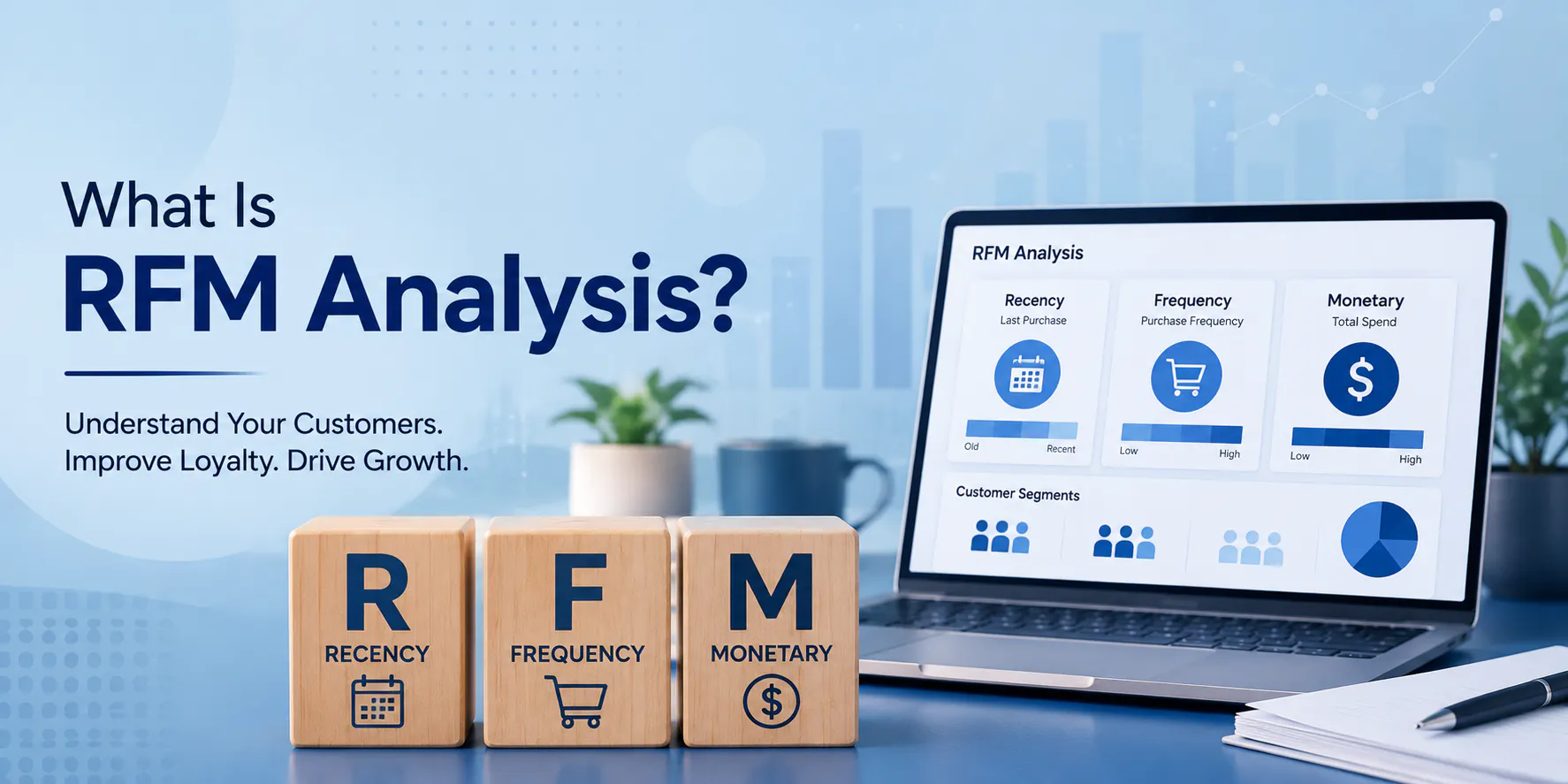
RFM analysis is a customer segmentation method that evaluates customers based on Recency, Frequency, and Monetary value. It helps businesses understand how recently customers purchased, how often they buy, and how much they spend.
As customer acquisition costs rise, retaining existing customers and increasing their long term value has become more important. RFM analysis helps businesses identify their most loyal customers, potential repeat buyers, and customers who may be at risk of becoming inactive.
By understanding these customer groups, businesses can create more relevant rewards, communication, and retention strategies instead of treating every customer the same.
In this blog, you will learn what RFM analysis is, how it works, the different customer segments it identifies, and how businesses can use RFM insights to increase customer loyalty and repeat purchases.
What Is RFM Analysis?
RFM analysis is a customer segmentation method that evaluates customers based on three purchasing behaviours: Recency, Frequency, and Monetary value. It helps businesses understand customer behaviour and identify which customers are most valuable, loyal, or at risk of becoming inactive.
- Recency: How recently a customer made a purchase.
- Frequency: How often a customer makes purchases.
- Monetary value: How much a customer spends over a specific period.
What Is The Purpose Of RFM Analysis?
The main purpose of RFM analysis is to help businesses understand different customer groups and tailor their marketing, loyalty, and retention efforts accordingly. Instead of sending the same offer to every customer, businesses can identify who deserves a reward, who needs encouragement to purchase again, and who may need a win back campaign.
RFM Analysis Example
For example, an online fashion store has three customers:
- Customer A: Purchased 5 days ago, has made 12 purchases, and spent ₹45,000.
- Customer B: Purchased 20 days ago, has made 4 purchases, and spent ₹12,000.
- Customer C: Purchased 180 days ago, has made 2 purchases, and spent ₹8,000.
RFM analysis would likely identify Customer A as a highly valuable and loyal customer, while Customer C may be considered an at risk or inactive customer. The business could reward Customer A with exclusive benefits while sending Customer C a personalised re engagement offer.
Read more: Are Loyalty Programs Worth It?
What Data Is Needed For RFM Analysis?
RFM analysis does not necessarily require a large or complicated dataset. Businesses primarily need customer level purchase history that can show:
- Customer ID: A way to associate transactions with individual customers.
- Purchase date: Used to calculate how recently each customer purchased.
- Transaction or order count: Used to determine purchase frequency.
- Order value: Used to calculate how much each customer has spent.
- Historical purchase data: Provides enough information to identify changes in customer behaviour over time.
For example, if a customer has purchased six times in the last year, the business can calculate their frequency and monetary value while also identifying how recently their latest purchase occurred.
Read more: 10 Customer Loyalty Program Examples From Top Indian Retail Brands
Why Is RFM Analysis Useful For Customer Loyalty?
The biggest advantage of RFM analysis is that it helps businesses move from broad loyalty campaigns to targeted customer strategies.
A business does not need to give every customer the same discount or reward. Instead, it can identify what each segment needs to move forward:
- Champions: Reward them with exclusive benefits, early access, or referral incentives to strengthen loyalty and advocacy.
- Loyal customers: Give them milestone rewards and personalised offers to encourage continued purchasing.
- New customers: Provide onboarding communication and incentives designed to encourage their second purchase.
- Potential loyal customers: Use relevant recommendations and rewards to increase purchase frequency.
- At risk customers: Send personalised re-engagement messages before their purchase activity declines further.
- Inactive customers: Use targeted win back campaigns to determine whether they can be brought back.
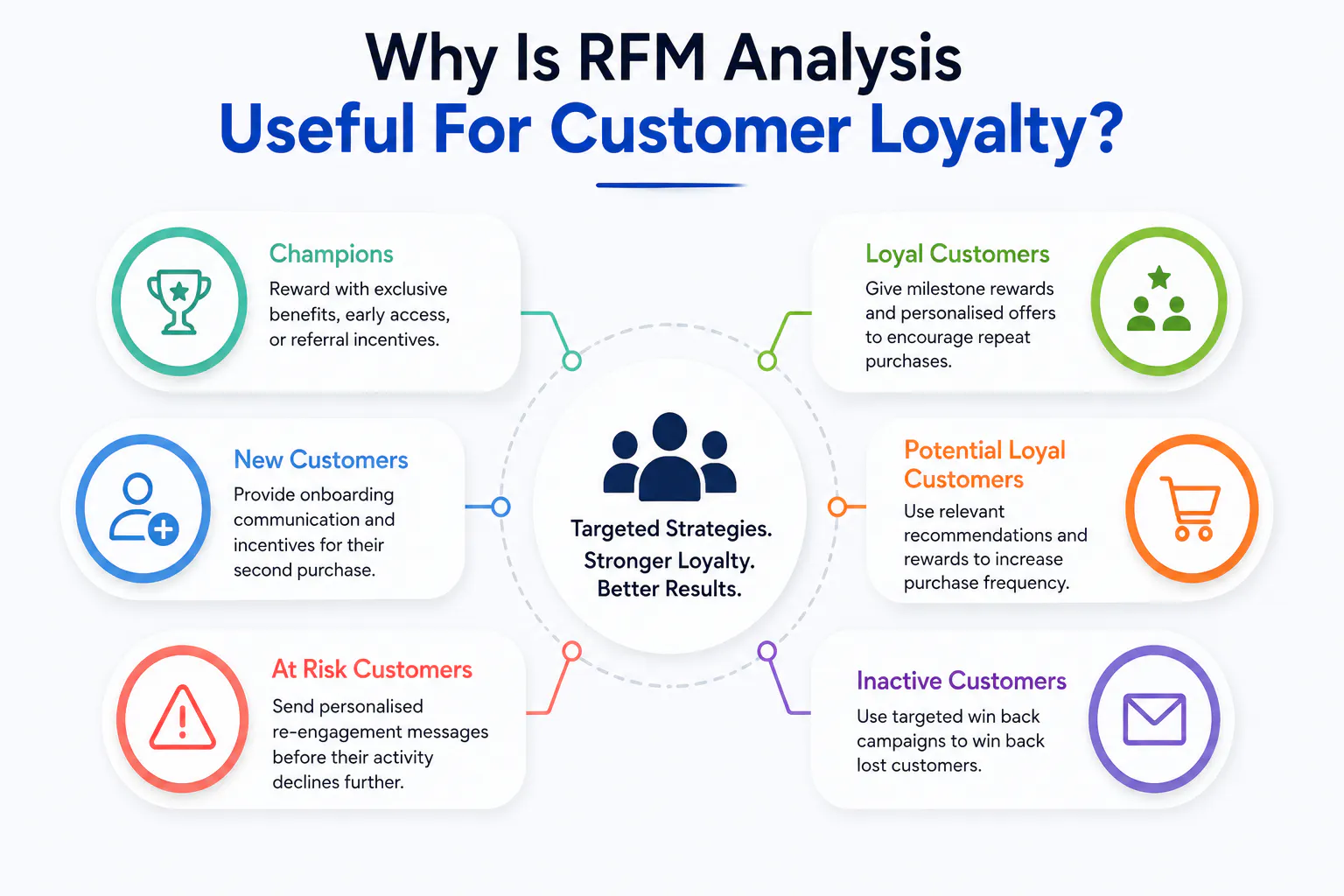
RFM analysis therefore helps answer three important loyalty questions: Who should we reward? Who should we encourage? And who should we try to win back?
By connecting customer data with specific actions, businesses can make their loyalty strategies more relevant and focus resources where they are most likely to influence customer behaviour.
Read more: 5 Best WhatsApp Loyalty Program Providers for Your Business in 2026
How Does A Loyalty Program Help Identify Customers Using RFM Analysis?
A loyalty program can help businesses use RFM analysis to better understand which customers are most active, valuable, and likely to remain loyal. By analysing customer purchase behaviour alongside loyalty activity, businesses can identify different customer groups and tailor their communication accordingly.
For example, businesses can identify high value customers who purchase frequently, potential loyal customers who are showing increasing engagement, and at risk customers whose purchase activity has declined.
These segments can then be used to create more relevant WhatsApp interactions, such as personalised rewards, reorder reminders, exclusive offers, feedback requests, and win back campaigns.
Conclusion
RFM analysis gives businesses a practical way to understand who their customers are, how they purchase, and where they are in the customer lifecycle. Instead of treating every customer the same, businesses can use Recency, Frequency, and Monetary value to identify their most valuable customers, strengthen relationships with repeat buyers, and re-engage customers showing signs of inactivity.
When RFM insights are connected with a loyalty program, businesses can turn customer data into specific actions. High value customers can receive exclusive rewards, frequent buyers can be encouraged to continue purchasing, and at risk customers can receive timely re-engagement messages.
For businesses using a WhatsApp-based loyalty program, RFM segments can help make customer communication more relevant. ArthaVerse can connect customer profiles, purchase activity, rewards, WhatsApp engagement, and loyalty insights, helping businesses use customer behaviour to create more targeted retention and repeat purchase strategies.
Ultimately, the value of RFM analysis comes from what businesses do with the data. The goal is not simply to segment customers, but to use those segments to reward, retain, re engage, and increase the long term value of each customer.


